Nature's Economic Value
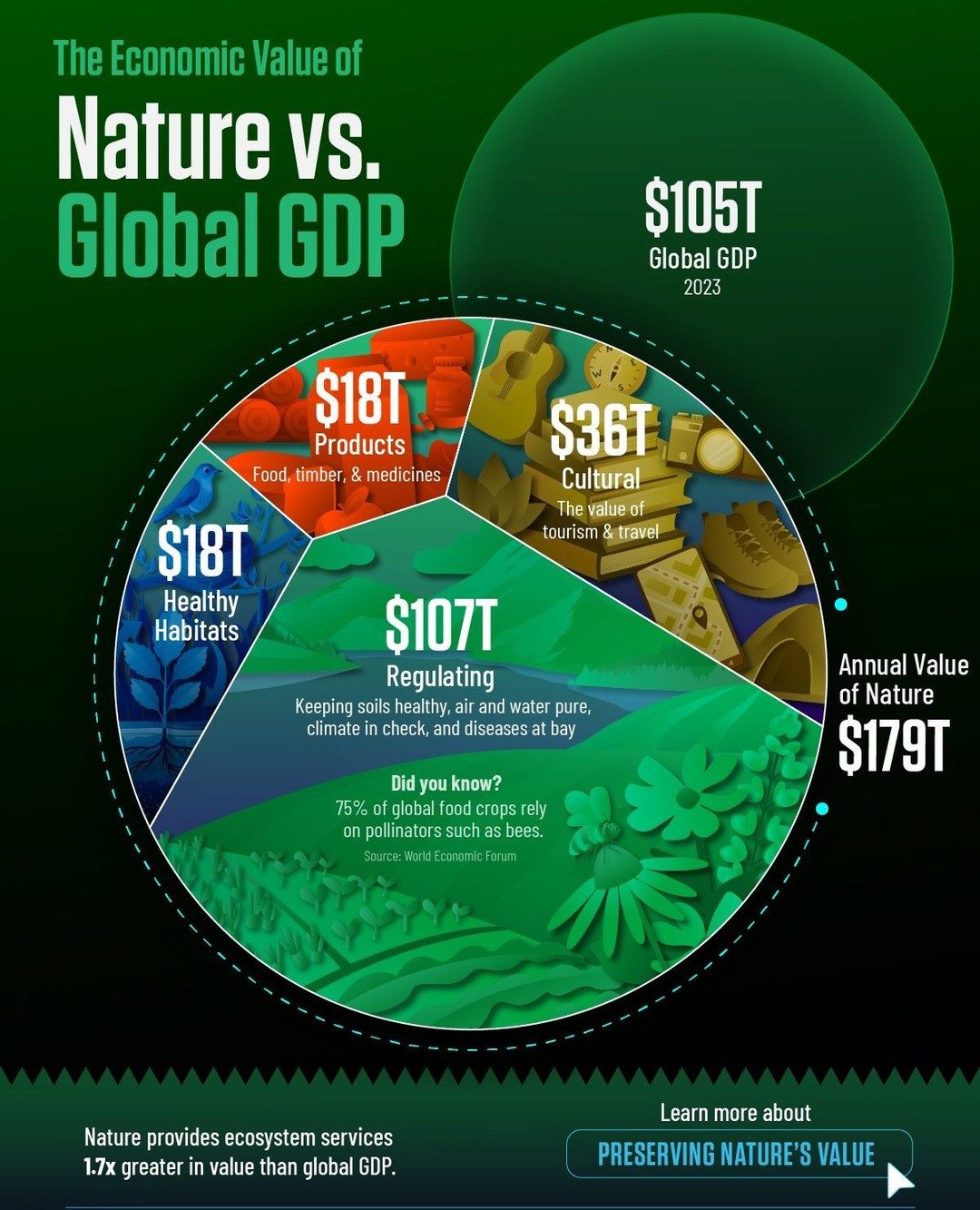
Nature provides an annual economic value of $179 trillion, which is 1.7 times greater than the global GDP of $105 trillion in 2023. This staggering figure underscores the immense economic significance of nature's ecosystem services, which encompass a wide range of benefits that sustain and support human life. Understanding this value is crucial for making informed decisions about environmental conservation and sustainable development.
Why This Matters
The economic value of nature extends far beyond its intrinsic worth. It encompasses a variety of ecosystem services that are vital for human well-being. These services include the provision of food, timber, and medicines; tourism and travel opportunities; healthy habitats that support biodiversity; and regulating services that maintain the health of soils, air, and water, as well as regulate climate and diseases.
Recognizing the economic value of these services is essential for several reasons. Firstly, it highlights the potential economic losses from environmental degradation. Secondly, it provides a compelling argument for investing in conservation efforts. Thirdly, it underscores the importance of integrating environmental considerations into economic policies and business strategies, ensuring a sustainable future.
Main Discussion
The Value of Nature's Products
Nature provides a wide range of products that are essential to human life. These include food crops, timber, and various medicinal plants. The value of these products is estimated to be $18 trillion annually. This figure underscores the economic importance of agriculture and farming, which are heavily reliant on natural ecosystems. Protecting and preserving these ecosystems is crucial for ensuring food security and supporting the livelihoods of millions of people worldwide.
Tourism and Travel
Tourism and travel contribute significantly to the global economy, with an estimated annual value of $36 trillion. Natural landscapes, wildlife, and cultural heritage sites are key attractions for tourists, contributing to local economies. For instance, many communities rely on tourism for their economic well-being, and the preservation of natural areas is vital for sustaining this industry.
Healthy Habitats
Healthy habitats are essential for maintaining biodiversity and supporting various ecosystem services. These habitats provide a range of benefits, including carbon sequestration, water purification, and pollution control. The economic value of healthy habitats is estimated to be $18 trillion, highlighting the importance of conservation efforts aimed at protecting these critical ecosystems.
Regulating Services
The regulating services provided by nature are invaluable. These services include maintaining soil health, purifying air and water, regulating climate, and controlling diseases. The economic value of these regulating services is estimated to be $107 trillion, underscoring their critical role in supporting human life and economic activities. For example, pollinators such as bees, which are essential for many crops, contribute to the economy to the tune of $18 trillion.
Practical Tips
Understanding the economic value of nature is the first step towards integrating environmental considerations into economic policies and business strategies. Here are some practical tips for individuals, businesses, and policymakers:
For Individuals
- Support Sustainable Products: Choose products that are sustainably sourced and support conservation efforts.
- Reduce, Reuse, Recycle: Minimize waste and conserve natural resources by adopting a sustainable lifestyle.
- Engage in Conservation Efforts: Participate in local conservation initiatives and support organizations working to protect natural habitats.
For Businesses
- Integrate Sustainability: Adopt sustainable practices and integrate environmental considerations into business strategies.
- Invest in Conservation: Support conservation efforts and initiatives aimed at protecting natural habitats.
- Promote Sustainable Supply Chains: Ensure that supply chains are sustainable and support the preservation of natural resources.
For Policymakers
- Develop Environmental Policies: Create policies that promote the conservation of natural habitats and sustainable use of natural resources.
- Support Research and Development: Invest in research and development focused on sustainable practices and technologies.
- Encourage Public Awareness: Raise public awareness about the importance of nature and the economic value of its ecosystem services.
Important Takeaways
Nature's economic value is immense, with ecosystem services providing an annual value of $179 trillion. This value underscores the importance of protecting and preserving natural habitats for the well-being of humans and the economy. Key takeaways include:
- Economic Value of Products: Nature provides products worth $18 trillion annually, highlighting the importance of agriculture and farming.
- Tourism and Travel: The economic value of tourism and travel is $36 trillion, emphasizing the role of natural landscapes in supporting local economies.
- Healthy Habitats: Healthy habitats contribute $18 trillion, underscoring the need for conservation efforts.
- Regulating Services: Regulating services, valued at $107 trillion, are crucial for maintaining soil health, purifying air and water, and regulating climate and diseases.
Conclusion
The economic value of nature is a compelling argument for protecting and preserving natural habitats. By recognizing the value of ecosystem services, individuals, businesses, and policymakers can make informed decisions that support a sustainable future. Investing in conservation efforts, adopting sustainable practices, and integrating environmental considerations into economic policies are essential steps towards ensuring the well-being of humans and the planet. Embrace the economic value of nature and take action to preserve it for future generations.
Watch the Reel
Questions readers ask
How does the annual economic value of nature compare to the global GDP?
In 2023, nature's annual economic value is $179 trillion, which is significantly higher than the global GDP of $105 trillion. This means that nature's contributions are 1.7 times greater than the entire global economic output.
What are the key economic benefits that nature provides?
Nature provides a wide range of economic benefits, including the provision of food, timber, and medicines, as well as supporting tourism and travel. Additionally, nature's role in climate regulation and maintaining healthy habitats for biodiversity are crucial economic services.
How do ecosystem services contribute to the global economy?
Ecosystem services, such as pollination, water purification, and carbon sequestration, are essential for various industries, including agriculture and healthcare. The value of these services is estimated to be immense, contributing significantly to the global economy.
What is the economic value of nature's role in tourism?
Nature's contribution to tourism is substantial, driving economies through recreational activities, adventure travel, and wildlife tourism. This sector alone generates billions of dollars annually, highlighting the economic importance of preserving natural landscapes and habitats.
Why is understanding nature's economic value important for sustainable development?
Understanding nature's economic value helps in making informed decisions about conservation efforts and sustainable development. By recognizing the economic benefits nature provides, policymakers and businesses can better prioritize environmental protection and sustainable practices.
How do pollinators contribute to the economic value of nature?
Pollinators, such as bees and butterflies, play a crucial role in agriculture by facilitating plant reproduction. This service supports the production of many crops, contributing significantly to the global food supply and economy. The economic impact of pollinators is estimated to be in the hundreds of billions of dollars annually.
Related deep dives
Similar reads based on topic and creator.



Recent articles
Fresh deep dives from the latest Reels we unpacked.




Comments
Be the first to comment.