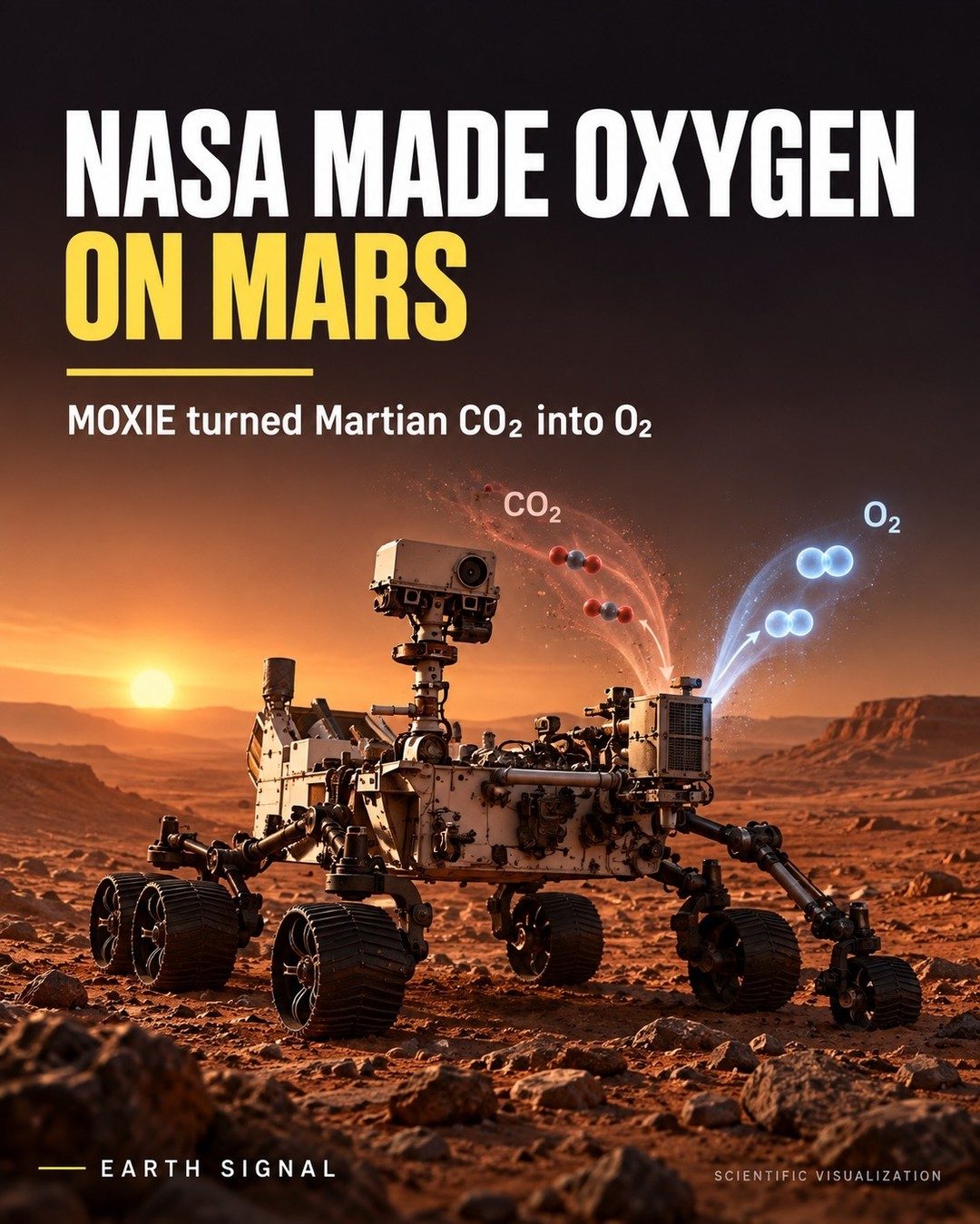
Transforming Mars into a Breathable Planet
NASA's MOXIE experiment stands as a testament to human ingenuity, demonstrating the possibility of creating breathable air on Mars. The successful conversion of Martian carbon dioxide (CO2) into oxygen (O2) marks a pivotal moment in space exploration. While the Earth’s surface boasts plenty of breathable Oxygen, a similar function to support life on Mars will likely require in-situ resource utilization (ISRU), a method that looks to process local resources for human consumption and use. The process is remarkably efficient. MOXIE, an instrument about the size of a car battery, was able to produce enough oxygen to support a small dog for approximately 10 minutes. Although this may seem modest, the implications are vast. Other missions have shown that the same process, scaled up, can produce enough oxygen for a human. Scalability will not only allow astronauts to breathe on Mars but also to fuel rockets for the return journey to Earth. MOXIE works by pulling in carbon dioxide, which makes up 96% of the Martian atmosphere, and then electrochemically separates the oxygen from the carbon. The development of this technology for Mars does not simply apply to Mars - it opens avenues for similar applications on Earth. The same principles could be used to create oxygen for industrial processes or even clean up polluted air.
The MOXIE Experiment Up Close
The experiment aboard NASA's Perseverance Rover showcased the conversion of Martian carbon dioxide (CO2) into oxygen (O2). The rover serves as a mobile laboratory. It highlights the cutting-edge scientific research needed to sustain human life in extraterrestrial environments. The rover is a testament to decades of scientific and engineering innovation. Researchers from NASA’s Jet Propulsion Laboratory developed the ingenious machine that could, quite literally, alter the course of Mars exploration. This modern day oxygenator, which operates autonomously. Its operation is entirely controlled from Earth, where signals travel to Mars in approximately 20 minutes. This delayed feedback loop underscores the resilience and accuracy of the MOXIE technology. The visualization underscores the complex and delicate process of oxygen creation on Mars. The visual includes a rover on the Martian surface and animated representations of the chemical process. It highlights the complexity of the technology. Another highlight is the rover itself. It’s a marvel of modern engineering, designed to withstand the harsh Martian environment and operate with precision despite the immense distance from Earth Because of its success, scientists anticipate further breakthroughs in the field. Much of the effort now will need to focus on developing infrastructure to utilize the created oxygen: infrastructure to plan how to harness the created oxygen for our benefit.
Watch the Reel
Related deep dives
Similar reads based on topic and creator.


Recent articles
Fresh deep dives from the latest Reels we unpacked.




Comments
Be the first to comment.