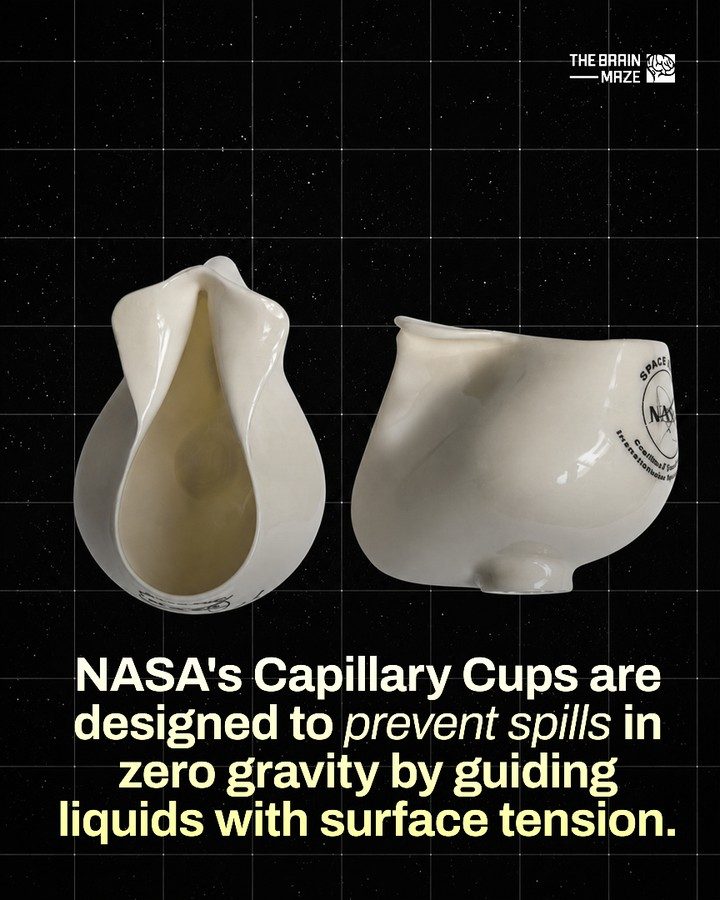
NASA's Space Cups: Innovative Designs for Zero Gravity Drinking
NASA's Space Cups are designed to help astronauts drink liquids safely in the unique environment of microgravity, where conventional cups simply do not work because liquids float instead of staying at the bottom. The specially shaped interior of these cups leverages surface tension and capillary action to guide the liquid directly to the rim, enabling controlled sipping without spills or the need for a straw.
Why This Matters
Drinking in space presents unique challenges due to the absence of gravity. In microgravity, liquids behave differently than they do on Earth. They don't settle at the bottom of a cup; instead, they float and adhere to surfaces. This makes drinking from a standard cup impractical and messy. NASA's Space Cup addresses this issue with an innovative design that ensures liquids can be consumed safely and efficiently, which is crucial for the health and comfort of astronauts during long-duration space missions.
Main Discussion
The Science Behind the Design
The key to NASA's Space Cup lies in its unique shape and the principles of surface tension and capillary action. Surface tension is the property of a liquid that allows it to resist an external force. In the context of the Space Cup, this means that the liquid adheres to the cup's surface and is guided towards the rim as the astronaut sips.
Capillary action, on the other hand, is the ability of a liquid to flow in narrow spaces without the assistance of, or even in opposition to, external forces like gravity. The Space Cup's design incorporates this concept by creating a narrow passage that the liquid can travel through, ensuring it flows smoothly to the drinking edge.
How It Works
The cup's interior features a series of channels and grooves that work together to guide the liquid. When an astronaut sips from the cup, the liquid is pulled towards the rim through these channels. The design ensures that the liquid stays in contact with the cup's surface, preventing it from floating away and causing a spill.
This design eliminates the need for a straw, which can be cumbersome and impractical in a microgravity environment. By allowing controlled sipping, the Space Cup provides a more natural and comfortable drinking experience for astronauts.
Variations and Improvements
NASA has developed several iterations of the Space Cup, each building on the success of the previous designs. Early versions of the cup were designed to work with specific types of liquids, such as water or juice. More recent designs are more versatile, able to handle a wider range of beverages.
One of the key improvements in later models is the addition of a valve system that helps regulate the flow of liquid. This ensures that the liquid is released in a controlled manner, further reducing the risk of spills and making the cup even more user-friendly.
Practical Tips
For Space Enthusiasts
If you're a space enthusiast looking to explore the principles behind NASA's Space Cup, there are a few experiments you can try at home. One simple experiment is to observe how liquids behave in different containers. Fill a glass with water and tilt it at various angles to see how the liquid reacts. Compare this to how liquids behave in the Space Cup, noting the differences in flow and adhesion.
For Educators
NASA's Space Cup can be a valuable teaching tool for educators looking to explain concepts like surface tension and capillary action. By demonstrating how the cup works, you can help students understand these scientific principles in a real-world context. You can also use the cup as a starting point for discussions about innovation and problem-solving in extreme environments.
Important Takeaways
Innovation in Extreme Conditions
NASA's Space Cup is a testament to the ingenuity of human innovation. It shows how, with the right design, even the most mundane tasks can be adapted to extreme conditions. The cup's success highlights the importance of understanding and applying scientific principles to solve real-world problems.
The Future of Space Design
The Space Cup is just one example of how NASA is working to improve the quality of life for astronauts in space. As space travel becomes more common, the need for innovative designs that address the unique challenges of microgravity will only grow. The principles behind the Space Cup could be applied to other areas of space design, from food preparation to waste management.
Conclusion
Drinking in space might seem like a simple task, but in a microgravity environment, it presents a unique set of challenges. NASA's Space Cup addresses these challenges with an innovative design that leverages surface tension and capillary action to guide liquids to the rim, ensuring a safe and controlled drinking experience. Whether you're an astronaut, a space enthusiast, or an educator, the Space Cup offers a fascinating look into the world of space innovation and the principles that make it possible.
Watch the Reel
Questions readers ask
How do NASA's space cups prevent liquid spills in zero gravity?
NASA's space cups are engineered with a unique shape that utilizes surface tension and capillary action. This design guides liquids to the rim of the cup, allowing astronauts to sip their drinks without spills, even in microgravity. The cups do not require straws or lids, making them convenient for astronauts.
What makes drinking in space different from drinking on Earth?
In space, liquids do not behave as they do on Earth due to the absence of gravity. Instead of settling at the bottom of a container, liquids float and adhere to surfaces. This makes traditional cups impractical and drinking more challenging.
How do NASA's space cups utilize capillary action?
The interior of NASA's space cups is designed with a specific shape that directs liquids to the rim. Capillary action occurs when the liquid molecules adhere to the cup's surface, creating a force that draws the liquid upwards. This allows astronauts to drink safely and efficiently.
Why are space cups important for astronauts?
Space cups are crucial for astronauts as they provide a reliable and convenient way to drink liquids in space. The innovative design ensures that astronauts can stay hydrated without the risk of spills, which is essential for maintaining health and performance in a microgravity environment.
Can surface tension be used for activities other than drinking in space?
Yes. Surface tension is a fundamental principle that can be applied to various activities in space. For instance, it can be used in experiments and equipment design to manage liquids effectively. This property ensures that liquids remain in place and can be manipulated without floating away.
What challenges do astronauts face when drinking in microgravity?
The absence of gravity makes it difficult for liquids to stay in one place. Liquids don't settle as they do on Earth, and instead, float and adhere to surfaces. Traditional drinking methods are ineffective in space, making it essential to have specialized equipment like space cups to ensure safe and controlled drinking.
Related deep dives
Similar reads based on topic and creator.



Recent articles
Fresh deep dives from the latest Reels we unpacked.




Comments
Be the first to comment.