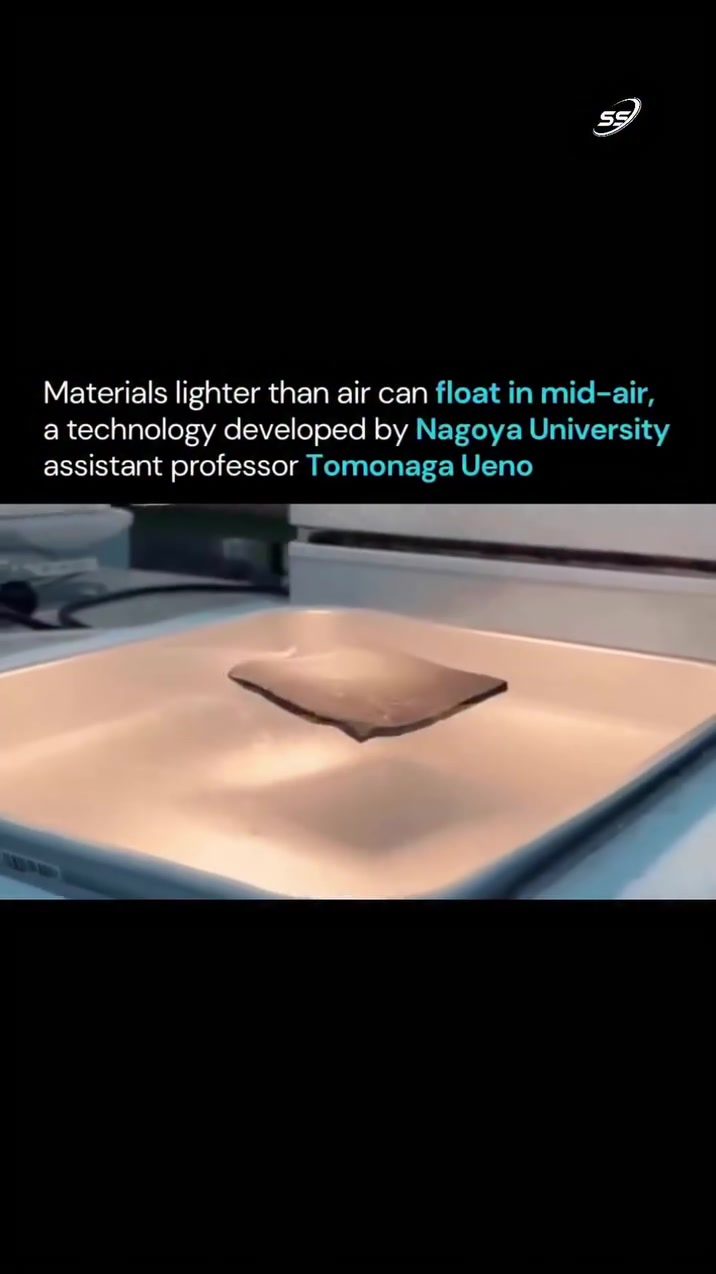
Floating Material: A Revolutionary Advancement in Materials Science
The future of transportation and aerospace systems may soon be revolutionized by a groundbreaking material developed by Assistant Professor Tomonaga Ueno at Nagoya University. This innovative material, which becomes lighter than air when heat is applied, has the potential to transform mobility and aerospace systems.
Why This Matters
Traditional propulsion systems, such as engines, rotors, and balloons, rely on external energy sources to achieve flight. However, the material developed by Professor Ueno changes its behavior in response to heat and airflow interactions, allowing it to float without these conventional systems. The implications of this technology are vast, encompassing everything from next-generation mobility to ultra-light aerospace systems and new forms of energy-efficient flight.
Materials Science and the Future of Transportation
Material Composition and Properties
The material developed at Nagoya University is designed to become light enough to float when heat is applied. By leveraging the material's unique properties, researchers hope to unlock new possibilities in aerospace and transportation. The material can be around 0.5 to 10 times lighter than air under certain conditions, making it an ideal candidate for applications where weight reduction is critical.
Heat and Airflow Interactions
One of the most fascinating aspects of this material is its behavior in response to heat and airflow. Unlike traditional materials, which may require complex propulsion systems to achieve lift, this material can float and hover without any additional mechanisms. This intrinsic ability to change its properties in response to environmental factors makes it a significant breakthrough in materials science.
Practical Applications and Future Possibilities
Next-Generation Mobility
One of the most exciting potential applications of this technology is in next-generation mobility. Imagine vehicles that can float and hover without the need for traditional engines or fuel. This could lead to a new era of transportation, where personal vehicles and public transit systems are more efficient, quieter, and environmentally friendly.
Ultra-Light Aerospace Systems
For the aerospace industry, the prospect of ultra-light materials is a game-changer. Current aerospace systems are limited by the weight of their materials, which in turn affects their fuel efficiency and payload capacity. With materials that can be lighter than air, spacecraft could achieve greater altitudes, longer flight durations, and reduced operational costs.
Energy-Efficient Flight
Energy efficiency is a growing concern in both the transportation and aerospace sectors. The material developed by Professor Ueno could contribute significantly to this goal by reducing the need for heavy propulsion systems. By relying on intrinsic material properties to achieve flight, these new systems could be more energy-efficient, leading to reduced fuel consumption and lower emissions.
Practical Tips for Future Innovations
Heat Management Technologies
To fully exploit the potential of this material, it will be crucial to develop advanced heat management technologies. These technologies will ensure that the material can be effectively heated and cooled as needed, allowing it to maintain its floating properties. Research in this area will be essential for realizing the full potential of this breakthrough.
Materials Engineering
Materials engineering will play a critical role in integrating this new material into existing and future systems. Researchers will need to explore how the material can be manufactured, shaped, and optimized for various applications. This will involve both theoretical and practical approaches, from developing new manufacturing techniques to testing the material in real-world conditions.
Collaboration and Research
Collaboration between academia, industry, and government will be key to advancing this technology. Researchers at Nagoya University are already at the forefront of this innovation, but further development will require input from a wide range of experts. Ongoing research and development efforts will be essential to maximize the impact of this breakthrough.
Important Takeaways
The development of this floating material by Assistant Professor Tomonaga Ueno at Nagoya University represents a significant advancement in materials science. This breakthrough has the potential to revolutionize transportation and aerospace systems by offering a new way to achieve flight without relying on traditional propulsion systems. As researchers continue to explore the possibilities of this material, we can expect to see exciting new applications in mobility, aerospace, and energy efficiency.
Conclusion
The floating material developed by Nagoya University is a testament to the ingenuity and innovation of modern materials science. By leveraging the unique properties of this material, researchers are paving the way for a future where transportation and aerospace systems are more efficient, sustainable, and versatile. As this technology continues to evolve, it will undoubtedly play a crucial role in shaping the future of mobility and flight.
Watch the Reel
Questions readers ask
What makes Nagoya University's floating material unique?
Nagoya University's floating material stands out because it becomes lighter than air when heat is applied, unlike traditional materials that require external energy sources for propulsion. Developed by Assistant Professor Tomonaga Ueno, this material reacts to heat and airflow, enabling it to float without conventional propulsion systems.
How does the floating material developed by Tomonaga Ueno work?
The floating material developed by Tomonaga Ueno leverages a unique interaction with heat and airflow. When heated, the material's density decreases, causing it to become lighter than the surrounding air, which results in buoyancy. This process leads to floating without the need for traditional propulsion methods.
What are the potential applications of this innovative floating material?
The potential applications of this floating material are vast and include advancements in future mobility and aerospace systems. It could be used in developing next-generation vehicles, airships, and even spacecraft that require efficient and lightweight propulsion solutions.
Can this floating material replace traditional propulsion systems entirely?
While the floating material shows promise in reducing the reliance on traditional propulsion systems, it may not replace them entirely. Instead, it could supplement or work alongside existing technologies to enhance efficiency and reduce energy consumption. Further research and development are needed to fully understand its integration into current systems.
What are the benefits of using this heat-activated floating material in aerospace systems?
The heat-activated floating material offers several benefits for aerospace systems. It can reduce the need for heavy and complex propulsion systems, leading to lighter and more efficient aircraft and spacecraft. This can result in lower fuel consumption, reduced emissions, and increased maneuverability. Additionally, it could enhance safety and stability in flight.
What stage of development is the floating material technology at?
The floating material technology developed by Nagoya University is in an advanced research phase. While it has shown promising results, further testing and development are necessary to fully optimize its performance and explore its practical applications. Ongoing research aims to refine the material's properties and integration into various systems.
Related deep dives
Similar reads based on topic and creator.



Recent articles
Fresh deep dives from the latest Reels we unpacked.




Comments
Be the first to comment.