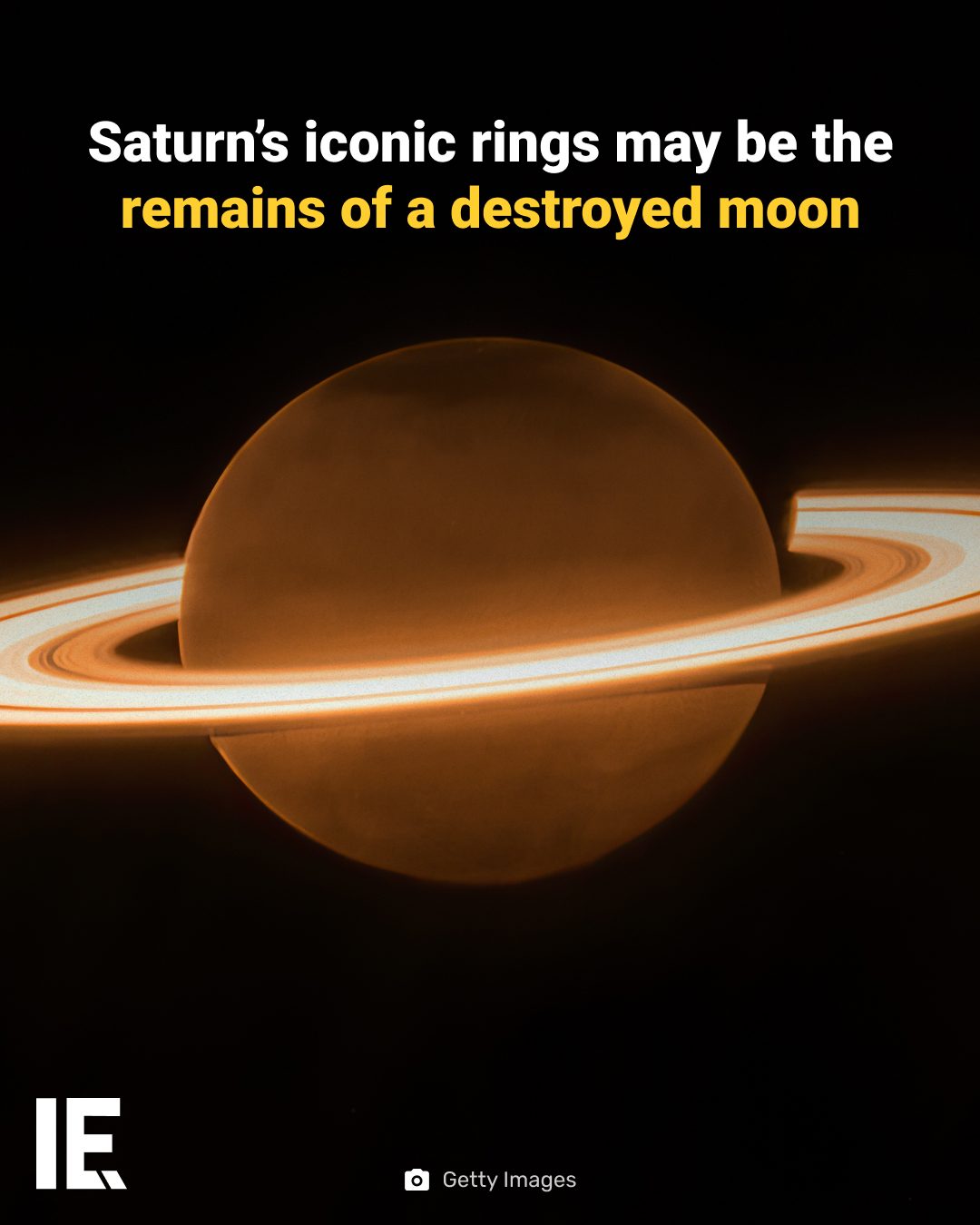
Saturn’s Rings: The Remains of a Lost Moon
Saturn's rings are one of the most striking features in our solar system. These icy debris fields encircling the planet have long captivated scientists and stargazers alike. Recent theories suggest that these rings may be the remnants of a lost moon, providing new insights into the dynamic history of our solar system.
Context: Why This Matters
Saturn is the sixth planet from the Sun and is known for its stunning ring system, which is primarily composed of ice particles with a smaller amount of rocky debris and dust. The rings extend out to a diameter of nearly 175,000 miles, but their thickness is only about 30 feet. Understanding the origin of these rings is crucial for comprehending the complex processes that shape our solar system.
The Chrysalis Theory: A New Perspective
The Destruction of Chrysalis
Scientists now propose that Saturn's rings could be the remains of a lost moon, tentatively named "Chrysalis." According to this theory, Chrysalis drifted too close to Saturn and was torn apart by the planet's powerful gravity. Most of the moon's material was likely swallowed by Saturn, but a small fraction of the icy debris spread out to form the rings we observe today.
The Formation Timeline
This catastrophic event is believed to have occurred between 100 and 200 million years ago. This timeline makes the rings surprisingly young compared to the planet itself, which is estimated to be around 4.5 billion years old. The relative youth of the rings suggests that they are not primordial, but rather a result of a more recent and dramatic event.
Other Theories on the Origin of Saturn's Rings
The Primordial Ring Theory
One of the earlier theories suggests that the rings are as old as the planet itself. According to this idea, the rings formed from the same cloud of gas and dust that gave birth to Saturn and the other planets in our solar system. This theory posits that the rings are made up of material that failed to coalesce into moons.
The Comet Collision Theory
Another theory proposes that a comet or a group of comets collided with one of Saturn's moons, breaking it apart and forming the rings. This hypothesis is supported by the observation that the rings are composed primarily of water ice, similar to the composition of comets.
The Destroyed Moon Theory
The theory that Saturn's rings are the remains of a destroyed moon is one of the most compelling and recent explanations. This idea is supported by detailed simulations and observations of the dynamics of the ring system.
Practical Tips for Observing Saturn's Rings
Using a Telescope
For anyone interested in observing Saturn's rings, a good-quality telescope is essential. While binoculars can provide a glimpse of the planet, a telescope with at least a 6-inch aperture will offer a clearer view of the rings. Ideally, a telescope with a 8-inch or larger aperture will provide even more detailed observations.
Best Times to View
The best times to view Saturn are during its opposition, when the planet is closest to Earth. During opposition, Saturn appears larger and brighter in the night sky, making it easier to see the details of the rings. Additionally, viewing Saturn during the summer months can be advantageous, as the planet is higher in the sky and the air is generally more stable, reducing atmospheric turbulence.
Tips for Amateur Astronomers
- Choose a Clear Night: Atmospheric conditions can greatly affect visibility. Opt for a night with clear skies and minimal light pollution.
- Use a High-Quality Telescope: Investing in a good-quality telescope with a stable mount can make a significant difference in the clarity of the view.
- Equip with a Filter: Using a Moon filter can enhance contrast and make the rings stand out more clearly.
Important Takeaways
- Saturn’s rings are a dynamic and complex system, with their origin still a subject of ongoing research.
- The most recent and compelling theory suggests that the rings are the remains of a lost moon named Chrysalis.
- The rings are relatively young, forming between 100 and 200 million years ago.
- Observing Saturn’s rings with a good-quality telescope during its opposition can provide a stunning view of this celestial wonder.
Conclusion
Saturn's rings are a testament to the dynamic and ever-changing nature of our solar system. The Chrysalis theory offers a fascinating glimpse into the potential origins of these iconic rings, highlighting the ongoing process of discovery and understanding in the field of planetary science. Whether you're an amateur astronomer or simply fascinated by the cosmos, the story of Saturn's rings is a reminder of the mysteries that still await exploration in our vast universe.
Watch the Reel
Questions readers ask
What is the Chrysalis moon theory and why is it significant?
The Chrysalis moon theory suggests that Saturn's rings are the remnants of a lost moon named Chrysalis. This theory is significant because it offers a new perspective on the origin of Saturn's rings and the dynamic processes that have shaped our solar system.
How did the lost moon Chrysalis contribute to the formation of Saturn's rings?
According to the theory, the lost moon Chrysalis was destroyed by Saturn's gravitational forces, and the debris from this destruction formed the icy debris fields that we now observe as Saturn's rings.
What are Saturn's rings primarily composed of?
Saturn's rings are primarily composed of ice particles, with a smaller amount of rocky debris and dust. This composition has been a key factor in understanding the origin and evolution of the rings.
What is the size and structure of Saturn's rings?
Saturn's rings extend out to a diameter of nearly 175,000 miles, but their thickness is only about 30 feet. This vast, thin structure adds to the mystery and fascination surrounding their origin.
Why is understanding the origin of Saturn's rings important?
Understanding the origin of Saturn's rings is crucial for comprehending the complex processes that have shaped our solar system. It provides insights into the interactions between planets and their moons, as well as the forces that drive planetary evolution.
Are there other theories about the formation of Saturn's rings?
Yes, there are several theories about the formation of Saturn's rings. Some suggest that the rings are remnants of comets or asteroids that were captured by Saturn's gravity, while others propose that they are leftover material from the planet's formation. The Chrysalis moon theory is a more recent addition to these discussions.
What evidence supports the Chrysalis moon theory?
The Chrysalis moon theory is supported by simulations and observations that suggest the gravitational forces of Saturn could have torn apart a moon of a similar size and composition to Chrysalis. The resulting debris would match the characteristics of Saturn's rings, particularly their icy composition and thin structure.
Related deep dives
Similar reads based on topic and creator.



Recent articles
Fresh deep dives from the latest Reels we unpacked.




Comments
Be the first to comment.