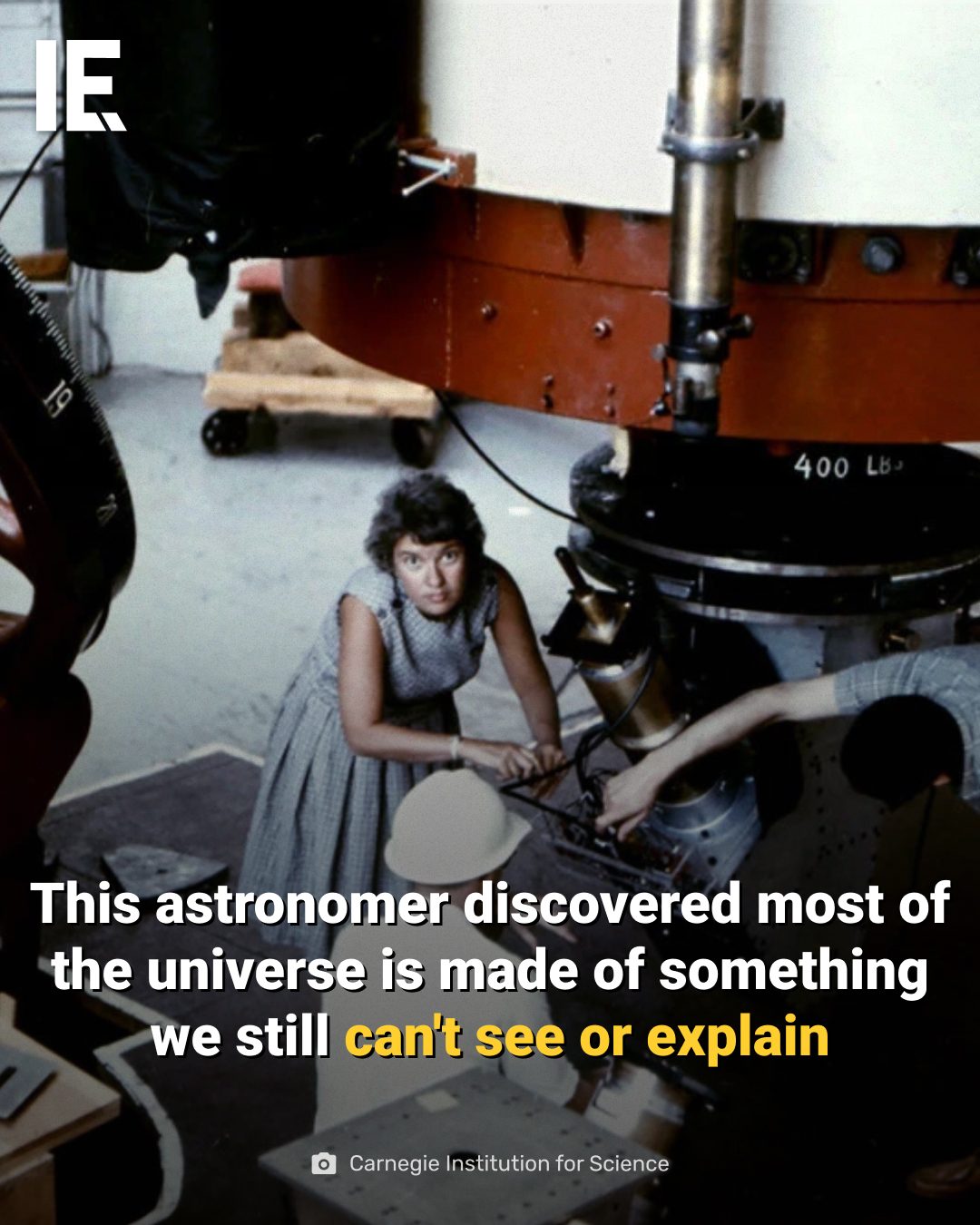
The Pioneering Work of Vera Rubin: Unraveling the Mystery of Dark Matter
Dark matter, an elusive substance that makes up approximately 85% of all matter in the universe, remains one of the most intriguing mysteries in modern astrophysics. The quest to understand dark matter began in the 1970s when astronomer Vera Rubin made groundbreaking observations that challenged existing theories about the composition of the universe.
Context: The Discovery and Significance of Dark Matter
Vera Rubin's work revolved around the study of the rotation curves of galaxies. Rotation curves illustrate the orbital velocities of visible stars or gas in a galaxy at various distances from the galactic center. According to Newtonian mechanics and visible matter, the outer regions of galaxies should rotate more slowly than the inner regions. However, Rubin noticed that stars at the outer edges of galaxies were moving far too fast—almost as if an enormous invisible mass was holding them in place.
These unexpected observations led to the hypothesis of dark matter, a substance that does not emit or absorb light, making it invisible to telescopes. Despite its invisibility, dark matter's gravitational influence is crucial for explaining the structure and behavior of galaxies. Since Rubin's discovery, scientists have come to realize that dark matter plays a pivotal role in the formation and evolution of the universe, accounting for approximately 85% of all matter.
Understanding the Impact: Rubin’s Legacy and the Challenges in Astrophysics
A Decades-Long Quest
Rubin's dedication to building the observational case for dark matter spanned several decades. She faced numerous challenges, including working in environments that actively discouraged women from pursuing astronomy. Despite these obstacles, her meticulous work provided the most compelling evidence for dark matter, transforming our understanding of the universe.
Her observations showed that the visible matter in galaxies, such as stars and gas, was insufficient to account for the observed gravitational effects. The discrepancy between the observed and predicted rotation curves could only be explained by the presence of a significant amount of unseen mass, leading to the concept of dark matter.
The Nobel Prize Controversy
Despite her monumental contributions to astrophysics, Rubin was repeatedly passed over for the Nobel Prize. Her discovery is considered one of the most significant in 20th-century physics, yet she died in 2016 without receiving the prestigious award. This oversight highlights the historical gender bias in scientific recognition, emphasizing the need for greater acknowledgement of women's contributions to science.
The Nobel Prize controversy underscores the broader issue of gender disparity in scientific fields. Rubin's work not only advanced our understanding of dark matter but also challenged the norms of the scientific community, paving the way for future generations of women scientists.
Practical Tips: Exploring Dark Matter in Modern Astrophysics
Advanced Tools and Techniques
Modern astrophysicists use a variety of advanced tools and techniques to study dark matter. These include:
- Gravitational lensing: The bending of light by massive objects, which can reveal the presence of dark matter.
- X-ray and gamma-ray telescopes: These instruments can detect the high-energy particles produced by the annihilation or decay of dark matter particles.
- Particle accelerators: Experiments like the Large Hadron Collider (LHC) aim to produce and detect dark matter particles in lab settings.
Observational Techniques
Ongoing observational campaigns, such as those conducted by the Sloan Digital Sky Survey (SDSS) and the Dark Energy Survey (DES), provide valuable data on galaxy rotation curves and other gravitational phenomena. These surveys help refine our understanding of dark matter's distribution and properties.
Theoretical Frameworks
Several theoretical frameworks have been proposed to explain dark matter, including:
- Weakly Interacting Massive Particles (WIMPs): Hypothetical particles that interact weakly with ordinary matter and could account for dark matter.
- Axions: Light bosons that could solve the dark matter problem and other cosmological anomalies.
Important Takeaways: The Legacy of Vera Rubin and the Future of Dark Matter Research
Rubin's groundbreaking work on dark matter has left an indelible mark on astrophysics. Her legacy serves as a reminder of the power of perseverance and the importance of challenging conventional wisdom. Despite the challenges she faced, her contributions continue to inspire scientists around the world.
The Ongoing Mystery
Dark matter remains one of the most intriguing mysteries in modern astrophysics. While we have made significant progress in understanding its properties and distribution, much remains unknown. Ongoing research and technological advancements hold the promise of unraveling this cosmic enigma.
The Importance of Diversity in Science
Rubin's story also highlights the importance of diversity in scientific research. Her struggles and eventual recognition underscore the need for greater support and recognition of women in science. By fostering a more inclusive scientific community, we can unlock new insights and innovations.
Conclusion
Vera Rubin's pioneering work on dark matter has transformed our understanding of the universe. Her observations of galaxy rotation curves provided the most compelling evidence for dark matter, a substance that makes up a significant portion of the universe but remains largely invisible and unexplained. Despite facing numerous challenges, Rubin's dedication and perseverance have left a lasting legacy in astrophysics. As we continue to explore the mysteries of dark matter, her work serves as a reminder of the power of curiosity and the importance of challenging conventional wisdom.
Watch the Reel
Questions readers ask
What led Vera Rubin to the discovery of dark matter?
Vera Rubin's discovery of dark matter was a result of her observations of galactic rotation in the 1970s. She found that the outer regions of galaxies rotate at the same speed as the inner regions, which contradicted the expected behavior based on visible matter alone. This discrepancy led to the hypothesis that an unseen, massive substance—dark matter—must be present to account for the observed rotational speeds.
Why is dark matter considered a cornerstone of modern astrophysics?
Dark matter is considered a cornerstone of modern astrophysics because it makes up approximately 85% of the matter in the universe. Its presence is crucial for explaining the observed gravitational effects in galaxies and the large-scale structure of the cosmos. Understanding dark matter is essential for deepening our knowledge of the universe's composition and evolution.
How do scientists study dark matter if it is invisible?
Scientists study dark matter through its gravitational effects on visible matter. By observing the motion of stars and gas in galaxies, as well as the bending of light from distant objects, researchers can infer the presence and distribution of dark matter. Additionally, experiments are conducted to detect hypothetical dark matter particles through their interactions with ordinary matter.
What is the significance of galaxy rotation in understanding dark matter?
Galaxy rotation is significant because it provides one of the most compelling pieces of evidence for dark matter. The observed rotation curves of galaxies, which show that stars far from the galactic center orbit at the same speed as those closer in, cannot be explained by the visible mass alone. This inconsistency supports the idea that a substantial amount of unseen mass, or dark matter, is influencing the galaxy's rotation.
What challenges do scientists face in detecting dark matter?
Scientists face several challenges in detecting dark matter, primarily because it does not interact with light or other forms of electromagnetic radiation. This makes it difficult to observe directly. Additionally, the nature of dark matter particles is still unknown, complicating the design of experiments to detect them. Ongoing research aims to overcome these challenges by developing new detection methods and refining theoretical models.
How has Vera Rubin's work influenced the field of astronomy?
Vera Rubin's work has significantly influenced astronomy by shifting the focus towards understanding the unseen components of the universe. Her observations provided strong evidence for the existence of dark matter, which has become a central topic in astrophysical research. Her pioneering efforts continue to inspire new generations of scientists to explore the mysteries of the cosmos, particularly the nature and behavior of dark matter.
What is the current understanding of dark matter's role in the universe?
The current understanding is that dark matter plays a crucial role in the formation and structure of the universe. It provides the gravitational pull necessary to hold galaxies together and influence their motion. Dark matter also affects the large-scale structure of the universe, such as the distribution of galaxies and galaxy clusters, shaping the cosmic web that permeates the cosmos.
Related deep dives
Similar reads based on topic and creator.

Recent articles
Fresh deep dives from the latest Reels we unpacked.




Comments
Be the first to comment.