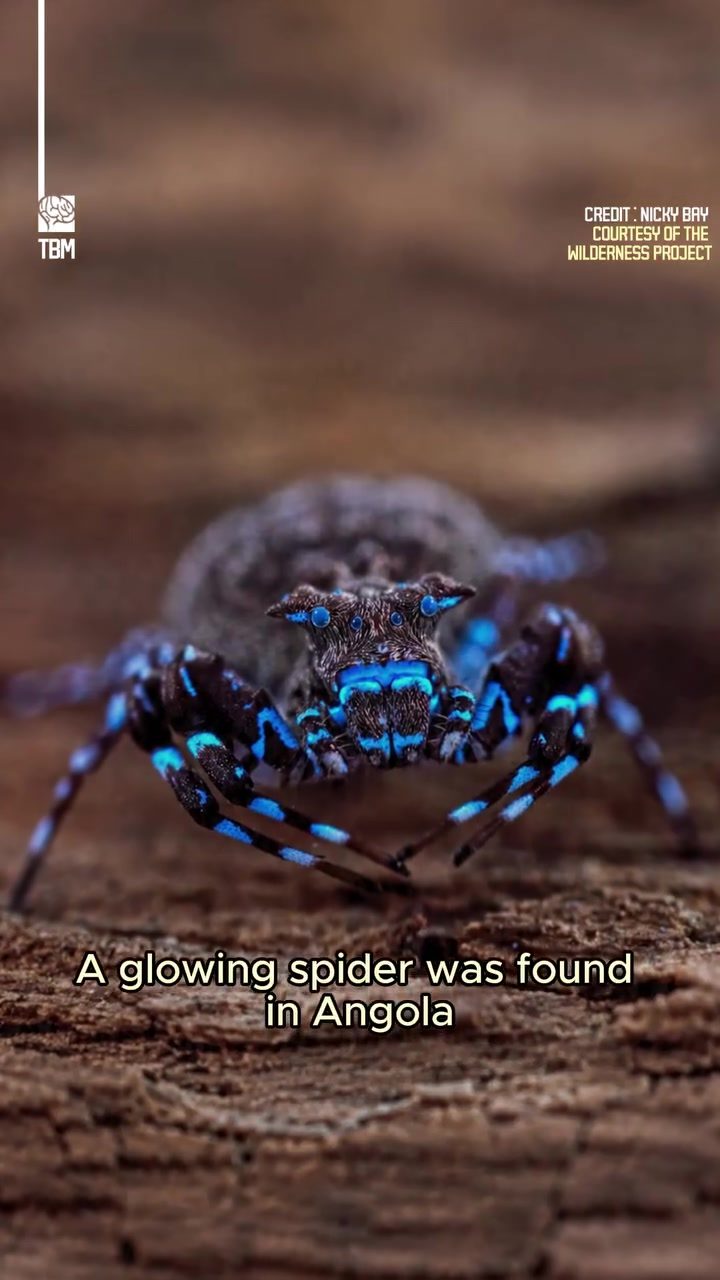
Glowing Spider of Angola
A glowing spider discovered in Angola has sparked intrigue among scientists, revealing a mystery that could hold the key to understanding many unknown species.
Context / Why this matters
The discovery of this unusual spider underscores the vast unknowns in the natural world, particularly in remote and poorly studied regions. The spider, a crowned crab spider, exhibits a rare bioluminescence that glows bright blue under ultraviolet light. This is just one of many species that may still be waiting to be discovered and protected, highlighting the importance of biodiversity expeditions.
The discovery and its significance
The crowned crab spider was found on Angola's Lissima Plateau during a biodiversity expedition. This species may be entirely new to science, as it has never been formally recorded. Its most striking feature is its bioluminescent property, which has puzzled scientists. The spider glows bright blue under ultraviolet light, a rare fluorescence that is not yet fully understood.
Scientists are investigating the potential purposes of this glow. It could serve various functions, such as camouflage, communication, mating, or even protection from predators. The discovery of this spider in such a remote and difficult-to-access region adds to the mystery and excitement, suggesting that there may be many more unique species waiting to be discovered in similar environments.
A tale of discovery: Who and where
The discovery of the glowing spider was made possible by the efforts of scientists and researchers conducting a biodiversity expedition. The expedition was likely part of a broader effort to explore and document the natural world in poorly studied regions, where the terrain is difficult and scientific access is limited.
Angola's Lissima Plateau is a particularly intriguing location for such discoveries. Its remote and rugged terrain has made it challenging for scientists to conduct extensive research, but it also means that it is likely home to many undiscovered species. The discovery of the glowing spider highlights the importance of continued exploration and documentation in these regions, as they hold the potential to reveal many more unique and fascinating species.
Exciting possibilities for research
The discovery of this glowing spider raises numerous questions and opens up new avenues for research. Scientists are now delving deeper into the specifics of its bioluminescence and its potential implications for the natural world.
The spider's ability to glow under ultraviolet light is particularly intriguing. This rare fluorescence is not fully understood, and scientists are investigating its potential functions. It could serve various purposes, such as camouflage, communication, mating, or even protection from predators. Understanding the function of this bioluminescence could provide valuable insights into the evolution and behavior of this species and potentially other bioluminescent organisms.
The significance of bioluminescence
Bioluminescence is a fascinating phenomenon found in various organisms, from bacteria and fungi to insects and marine creatures. The discovery of a bioluminescent crowned crab spider adds a new dimension to our understanding of this natural phenomenon.
Bioluminescence can serve various purposes, such as attracting mates, confusing predators, or signaling potential dangers. Understanding the specific function of the spider's bioluminescence could provide insights into the broader world of bioluminescent organisms and their diverse adaptations.
The challenges of discovery
The discovery of the glowing spider highlights the challenges and complexities of conducting scientific research in remote and poorly studied regions. The Lissima Plateau in Angola is a particularly difficult area to access, with rugged terrain and limited scientific infrastructure.
These challenges underscore the importance of continued exploration and documentation in these regions. Despite the difficulties, the potential for discovering new and fascinating species makes these efforts worthwhile. The discovery of the glowing spider is a testament to the value of such expeditions and the potential for future discoveries in similar environments.
Why remote locations matter
Remote locations, such as Angola's Lissima Plateau, are often home to unique and undiscovered species. The rugged terrain and limited scientific access make these regions difficult to study, but they also hold the potential for significant discoveries. The discovery of the glowing spider is a prime example of the importance of exploring and documenting these areas.
These regions are often rich in biodiversity, with unique ecosystems and species that have adapted to their specific environments. Continued exploration and documentation in these areas can help preserve these unique ecosystems and the species that call them home. The discovery of the glowing spider highlights the importance of biodiversity expeditions and the potential for future discoveries in similar environments.
Practical tips for observing bioluminescent organisms
If you're intrigued by bioluminescent organisms and want to observe them in the wild, there are a few tips to keep in mind. Firstly, it's important to be patient and persistent. Bioluminescent organisms often live in remote and difficult-to-access areas, so you may need to spend a lot of time and effort to find them.
Additionally, it's important to be respectful of the environment and the organisms you're observing. Avoid disturbing their habitats or causing them harm, as this can disrupt their natural behaviors and potentially harm the ecosystem.
If you're interested in studying bioluminescent organisms, consider joining a biodiversity expedition or collaborating with researchers in the field. This can provide valuable opportunities to learn more about these fascinating creatures and contribute to our understanding of the natural world.
Important takeaways
The discovery of the glowing spider in Angola highlights the potential for future discoveries in remote and poorly studied regions. This species, a crowned crab spider, exhibits a rare bioluminescence that glows bright blue under ultraviolet light, raising numerous questions and opening up new avenues for research. The discovery underscores the importance of continued exploration and documentation in these regions, as they hold the potential to reveal many more unique and fascinating species.
The future of discovery
The discovery of the glowing spider in Angola is just the beginning of what could be a wealth of new findings in the natural world. As scientists continue to explore and document remote and poorly studied regions, they are likely to uncover many more unique and fascinating species.
This discovery highlights the importance of biodiversity expeditions and the potential for future discoveries in similar environments. It also underscores the need for continued research and conservation efforts to protect these unique ecosystems and the species that call them home. The glowing spider of Angola is a reminder of the vast unknowns in the natural world and the excitement that awaits those who dare to explore.
Conclusion
The glowing spider of Angola is a testament to the mysteries that still await discovery in the natural world. This unique creature, with its bright blue bioluminescence, raises numerous questions and opens up new avenues for research. The discovery highlights the importance of continued exploration and documentation in remote and poorly studied regions, as they hold the potential to reveal many more unique and fascinating species. As scientists delve deeper into the specifics of the spider's bioluminescence, they may uncover valuable insights into the evolution and behavior of this species and potentially other bioluminescent organisms. The future of discovery is bright, and the glowing spider of Angola is just one of many exciting chapters in the ongoing story of the natural world.
Watch the Reel
Questions readers ask
Why does the newly discovered spider in Angola glow?
The crowned crab spider found in Angola exhibits a rare bioluminescence, glowing bright blue under ultraviolet light. The exact purpose of this glowing trait is still unknown and a subject of ongoing scientific inquiry. It could potentially serve purposes such as communication, attracting prey, or deterring predators, but more research is needed to determine the precise function.
Why is the discovery of this glowing spider significant?
The discovery of this glowing spider is significant because it highlights the vast unknowns in the natural world, particularly in remote and poorly studied regions like Angola's Lissima Plateau. It also underscores the importance of biodiversity expeditions in uncovering new species that may possess unique characteristics, such as bioluminescence.
What makes the crowned crab spider unique?
The crowned crab spider is unique due to its rare bioluminescent trait, which causes it to glow blue under ultraviolet light. This characteristic sets it apart from other known spider species and makes it a subject of great interest for scientists.
Where was the glowing spider discovered?
The glowing spider was discovered on Angola's Lissima Plateau during a biodiversity expedition. This remote and sparsely explored region is home to a variety of unique wildlife, making it a hotspot for potential new discoveries.
What challenges do scientists face in studying the glowing spider?
Scientists face several challenges in studying the glowing spider, including its remote habitat, which makes access and observation difficult. Additionally, understanding the purpose of its bioluminescence requires extensive research and observation, which can be time-consuming and complex.
What other species might be discovered in remote regions like Angola?
Remote regions like Angola could potentially be home to a wide variety of undiscovered species, many of which may possess unique characteristics similar to the glowing spider. These species could include new types of insects, plants, and other animals, all of which contribute to the rich biodiversity of the region.
Related deep dives
Similar reads based on topic and creator.




Recent articles
Fresh deep dives from the latest Reels we unpacked.




Comments
Be the first to comment.