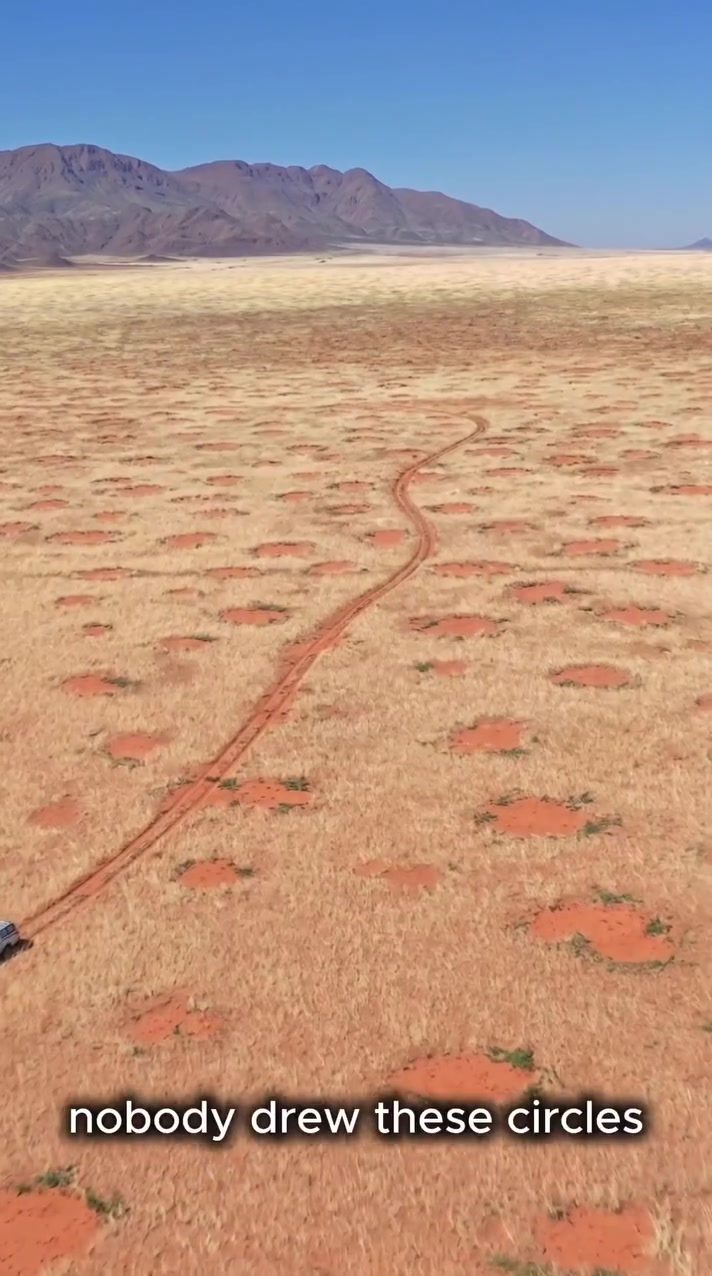
Strange Circle Patterns in Nature
Across the arid grasslands of Namibia and Angola, millions of bare patches repeat in an unusually regular pattern. These circular patterns, known as "fairy circles," are a fascinating natural phenomenon. Most circles are several meters wide and are surrounded by perennial grass. Some of these individual circles may persist for decades, making them a long-lasting feature of the landscape. The patterns are entirely natural, but their formation is still a subject of active study.
Context / Why This Matters
The fairy circles are not drawn by human hands, yet their uniformity and spacing make them appear almost engineered. This natural occurrence is a puzzle that has intrigued scientists and nature enthusiasts alike. Understanding these patterns can provide insights into the complex interactions between vegetation, soil, and local fauna in arid environments. The regularity and persistence of these circles suggest a delicate balance within the ecosystem that has been maintained over time.
Main Discussion
The Formation of Fairy Circles
The exact mechanisms behind the formation of fairy circles remain a mystery, but several scientific hypotheses have been proposed to explain this phenomenon. One of the most compelling theories involves competing grasses. In the arid grasslands, grasses must compete for scarce water resources. As they draw water through the sandy soil, they can self-organize into these circular patterns. This self-organization is a fascinating example of how plants can adapt to their environment in creative ways.
Another hypothesis suggests that sand termites play a crucial role in the formation of these circles. Termites are known to remove plants and alter underground moisture levels, which in turn affects the growth of grasses. Some research indicates that the interaction between vegetation and termite activity may be the key to understanding the emergence of these patterns. This interaction highlights the complex web of relationships within the ecosystem that contribute to the formation of fairy circles.
The Role of Water
Water is a critical factor in the formation of fairy circles. In arid environments, water is scarce, and plants must compete for what little is available. The circular patterns may be a result of grasses adapting to this competition by creating spaces where water can be more efficiently distributed. This adaptation allows the grasses to survive in an environment where resources are limited.
The Persistence of the Pattern
One of the most striking features of fairy circles is their persistence. Some circles can survive for decades, continuing to regenerate even after disturbances. This resilience suggests that the patterns are not just a temporary phenomenon but a stable feature of the landscape. The fact that nature keeps rebuilding these same patterns, despite various factors, underscores the intricate balance that exists within the ecosystem.
Practical Tips
Observing Fairy Circles
If you're interested in observing fairy circles firsthand, the arid grasslands of Namibia and Angola are the best places to start. The best time to visit is during the dry season when the circles are most visible. It's essential to respect the environment and avoid disturbing the delicate balance of the ecosystem. Remember to stay on designated paths and avoid trampling the grass.
Learning More
For those who want to delve deeper into the science behind fairy circles, there are numerous resources available. Scientific journals, books, and documentaries can provide a wealth of information. Engaging with scientific research and staying updated on the latest findings can help you understand the complex interactions that lead to the formation of these patterns.
Conservation Efforts
Conservation efforts are crucial for preserving the natural habitats where fairy circles are found. Supporting organizations that work to protect these environments can help ensure that future generations can appreciate and study these fascinating natural phenomena. Participating in volunteer programs or donating to conservation initiatives can make a significant difference.
Important Takeaways
Fairy circles are a testament to the remarkable adaptability and resilience of natural systems. The interplay between competing grasses, termites, and soil moisture creates a delicate balance that results in these striking patterns. Understanding these interactions can provide valuable insights into how ecosystems function and adapt to environmental challenges.
Conclusion
The fairy circles of Namibia and Angola are a captivating natural phenomenon that continues to intrigue scientists and nature enthusiasts. Their formation is a result of complex interactions between vegetation, soil, and local fauna, with water playing a crucial role. By appreciating and studying these patterns, we can gain a deeper understanding of the intricacies of natural ecosystems. Whether you're a scientist, a nature lover, or simply curious about the wonders of the natural world, the fairy circles are a reminder of the beauty and complexity of our planet.
Watch the Reel
Questions readers ask
What are the fairy circles of Namibia?
The fairy circles of Namibia are vast, naturally occurring patterns of bare earth, surrounded by lush grass. They are found across the arid grasslands of Namibia and Angola, forming a striking and regular pattern.
How large are the fairy circles and how long do they last?
Most fairy circles are several meters wide, creating a prominent feature in the landscape. Individual circles can persist for decades, making them a long-lasting and visible part of the environment.
What causes the fairy circles in Namibia?
The exact cause of the fairy circles is still unknown, but scientists have proposed several hypotheses, including the activity of termites and the competition among different types of grasses.
How do termites contribute to the formation of fairy circles?
According to one hypothesis, termites create these circles by feeding on the grass and preventing its regrowth. Their activity can lead to the formation and maintenance of these circular patterns, creating bare patches of earth surrounded by grass.
What are the specific hypotheses for the cause of fairy circles?
Scientists have proposed different theories to explain the fairy circles. Two of the most prominent hypotheses are the activity of termites, which create bare patches by consuming grass, and the competition among grasses, where certain grasses outcompete others, leading to the formation of circular patterns.
What makes the fairy circles of Namibia so intriguing?
The fairy circles are intriguing due to their uniformity and regular spacing, which makes them appear almost engineered. Despite being a natural occurrence, their consistency and longevity have captivated scientists and nature enthusiasts, sparking ongoing research into their formation.
How far apart are the fairy circles typically spaced?
The spacing between fairy circles is notably regular, enhancing their mysterious appearance. Their circular patterns are distributed across the landscape in a way that makes it seem as if they were deliberately placed, adding to the intrigue of this natural phenomenon.
Related deep dives
Similar reads based on topic and creator.




Recent articles
Fresh deep dives from the latest Reels we unpacked.




Comments
Be the first to comment.