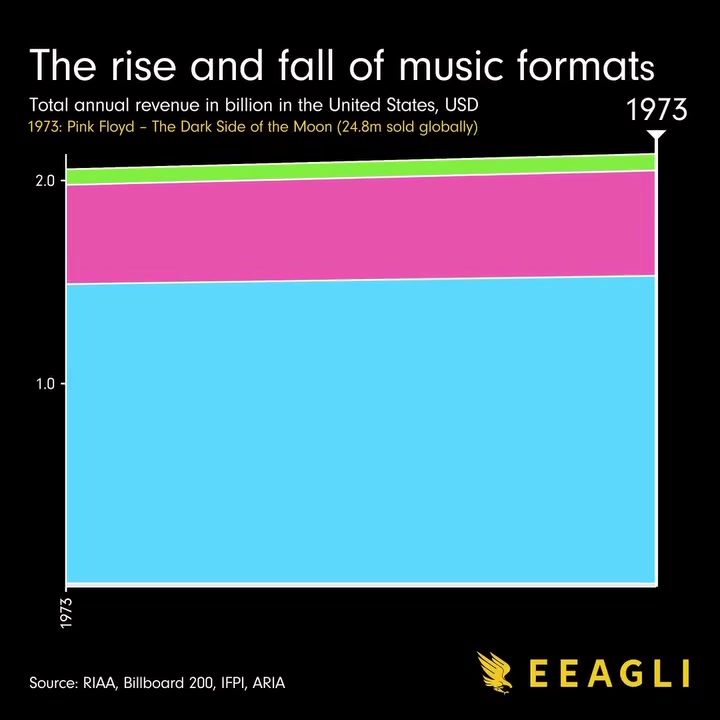
Music Format Revenue Over Time
Music has been a constant in our lives, but the way we consume it has changed dramatically over the past 50 years. The evolution of music formats has mirrored society’s shift from analog to digital, with each format reflecting the technological advancements and cultural shifts of its time. From vinyl records to cassettes, CDs, and eventually digital streaming, the journey of music consumption is a tale of innovation and adaptation.
Context: Why This Matters
Understanding the rise and fall of different music formats provides valuable insights into how technology and consumer behavior have evolved. It highlights the cyclical nature of trends and the enduring appeal of music in various formats. This information is not just for music enthusiasts but also for industry professionals, historians, and anyone interested in the intersection of technology and culture.
The Evolution of Music Formats
Vinyl: The Analog Era
Vinyl records, introduced in the late 1940s, dominated the music industry for decades. They offered a warm, rich sound that many audiophiles still prefer today. The 1970s saw the peak of vinyl’s popularity, with classic albums like Pink Floyd’s The Dark Side of the Moon selling millions of copies. However, by the 1980s, vinyl’s reign began to wane as new technologies emerged.
Cassettes: Portable and Convenient
Cassettes, introduced in the 1960s, revolutionized music consumption with their portability and convenience. They allowed listeners to take their music anywhere, making them a staple in cars, walkmans, and boomboxes. Cassettes reached their peak in the 1980s and early 1990s, but their dominance was short-lived. The advent of CDs and digital recording technology soon made cassettes obsolete for many listeners.
CDs: Digital Revolution
Compact Discs (CDs) took the music world by storm in the 1990s. With their superior sound quality, durability, and the ability to skip tracks, CDs quickly became the preferred format. Digital technology allowed for more efficient distribution, and by the late 1990s, CDs had surpassed vinyl and cassettes in terms of revenue. The rise of CD sales also coincided with the growth of major record labels and the consolidation of the music industry.
Digital Streaming: The New Normal
The early 2000s saw the beginning of the digital revolution, with the rise of MP3 players and digital downloads. This trend continued with the advent of streaming services like Spotify, Apple Music, and YouTube. Streaming has transformed music consumption, offering instant access to vast libraries of music without the need for physical media. Today, streaming platforms generate billions in revenue and dominate the music industry.
Key Milestones in Music Format Revenue
1973: The Era of Vinyl
In 1973, vinyl records were at their peak. Albums like The Dark Side of the Moon by Pink Floyd sold 24.8 million copies globally, highlighting the enduring appeal of vinyl. The annual revenue from music sales in the United States was substantial, driven largely by the popularity of vinyl.
1980s: The Cassette Boom
The 1980s saw the rise of cassettes, which became the go-to format for portable music. The convenience and affordability of cassettes made them a hit with consumers, and the format’s revenue soared. However, the 1990s brought new challenges, as digital technology began to gain traction.
1990s: The CD Era
The 1990s marked the golden age of CDs. The format’s superior sound quality and ease of use led to an explosion in CD sales, driving annual revenue to new heights. Record labels invested heavily in digital technology, paving the way for the future of music.
2000s: The Digital Shift
The 2000s brought the digital revolution, with MP3 players and digital downloads becoming mainstream. Music lovers embraced the convenience of downloading their favorite tunes, and the annual revenue from digital sales began to rise. This period saw the decline of physical media and the rise of digital platforms.
2020s: Streaming Dominance
Streaming services have become the norm in the 2020s. With the ability to access millions of songs instantly, streaming platforms have transformed the way we consume music. The revenue from streaming has surpassed that of physical media, making it the dominant format in the music industry.
Practical Tips for Understanding Music Format Revenue
Analyzing Sales Data
To understand the evolution of music formats, it's essential to analyze sales data over time. Look for trends in revenue generation for each format, noting the peaks and declines. This data can provide insights into consumer preferences and technological advancements.
Comparing Formats
Compare the revenue generated by different formats to understand their impact on the music industry. For example, compare the sales of vinyl records in the 1970s to the sales of CDs in the 1990s. This comparison can highlight the shifting landscape of music consumption and the cyclical nature of trends.
Understanding Consumer Behavior
Analyze consumer behavior to understand why certain formats became popular and why others faded. Consider factors such as portability, sound quality, and convenience. This analysis can provide valuable insights into the preferences and habits of music listeners.
Important Takeaways
The Cyclical Nature of Music Trends
Music formats have a cyclical nature, with each new format eventually giving way to another. This trend reflects the continuous evolution of technology and consumer behavior. Understanding this cyclical nature can help predict future trends in music consumption.
The Enduring Appeal of Vinyl
Despite the rise of digital formats, vinyl records continue to have a dedicated following. Many audiophiles appreciate the warm, rich sound of vinyl, and the format has seen a resurgence in recent years. This enduring appeal highlights the timelessness of music and the importance of format diversity.
The Digital Revolution
The digital revolution has transformed the music industry, shifting the focus from physical media to digital platforms. Streaming services have become the dominant format, offering instant access to vast libraries of music. This transformation highlights the impact of technology on music consumption and the importance of adapting to new trends.
Conclusion
The evolution of music formats over the past 50 years reflects a journey of innovation, adaptation, and consumer preferences. From the analog era of vinyl to the digital revolution of streaming, each format has left its mark on the music industry. Understanding this evolution provides valuable insights into the past, present, and future of music consumption. As technology continues to advance, it will be interesting to see how new formats emerge and shape the way we enjoy music.
Watch the Reel
Questions readers ask
What was the most popular music format in the US in 1973?
In 1973, vinyl records were the dominant music format in the US. This was a time when vinyl record sales were at their peak, reflecting the widespread popularity of the format.
How has the transition from cassettes to digital music affected the music industry revenue in the US?
The transition from cassettes to digital music significantly impacted the music industry revenue in the US. This shift marked a decline in physical sales and a rise in digital streaming, changing how music is consumed and monetized.
Why has there been a resurgence in vinyl record sales in recent years?
The comeback of vinyl records can be attributed to a nostalgic appeal and a desire for a tangible music experience. Many music enthusiasts appreciate the warm, authentic sound of vinyl, which has contributed to its resurgence.
What factors have contributed to the decline in CD sales?
The decline in CD sales can be attributed to the rise of digital music streaming and the convenience it offers. Additionally, the compact size and durability of digital files make them a more practical choice for many consumers.
How does the revenue from digital streaming compare to that of physical music formats?
Revenue from digital streaming has surpassed that of physical music formats in recent years. This shift is due to the convenience and accessibility of streaming services, which have become the primary method of music consumption for many listeners.
What are the key differences between vinyl and digital streaming formats in terms of consumer experience?
Vinyl offers a tactile and immersive experience, with a warm, rich sound that many enthusiasts prefer. In contrast, digital streaming provides instant access to vast libraries of music, allowing users to explore and discover new tracks with ease.
How have technological advancements influenced the evolution of music formats in the US?
Technological advancements have played a crucial role in the evolution of music formats. From the introduction of cassettes to the development of CDs and the rise of digital streaming, each new format has been driven by innovations that enhance convenience and accessibility for consumers.
Related deep dives
Similar reads based on topic and creator.


Recent articles
Fresh deep dives from the latest Reels we unpacked.




Comments
Be the first to comment.