Music Consumption in 2022: The Changing Landscape
Understanding how music is consumed today is essential for aspiring artists and music industry professionals. The digital revolution has transformed the way people access and enjoy music, with technology playing a pivotal role in this shift. Exploring global music consumption habits reveals trends that can guide artists in navigating this dynamic landscape.
Why This Matters
The music industry is constantly evolving, and staying informed about current consumption habits is crucial for success. Whether you're an artist, producer, or industry executive, knowing how audiences engage with music can help you make strategic decisions. This overview focuses on the key trends in music consumption, highlighting the significant role of digital platforms and emerging technologies.
Main Discussion
The Rise of Digital Streaming
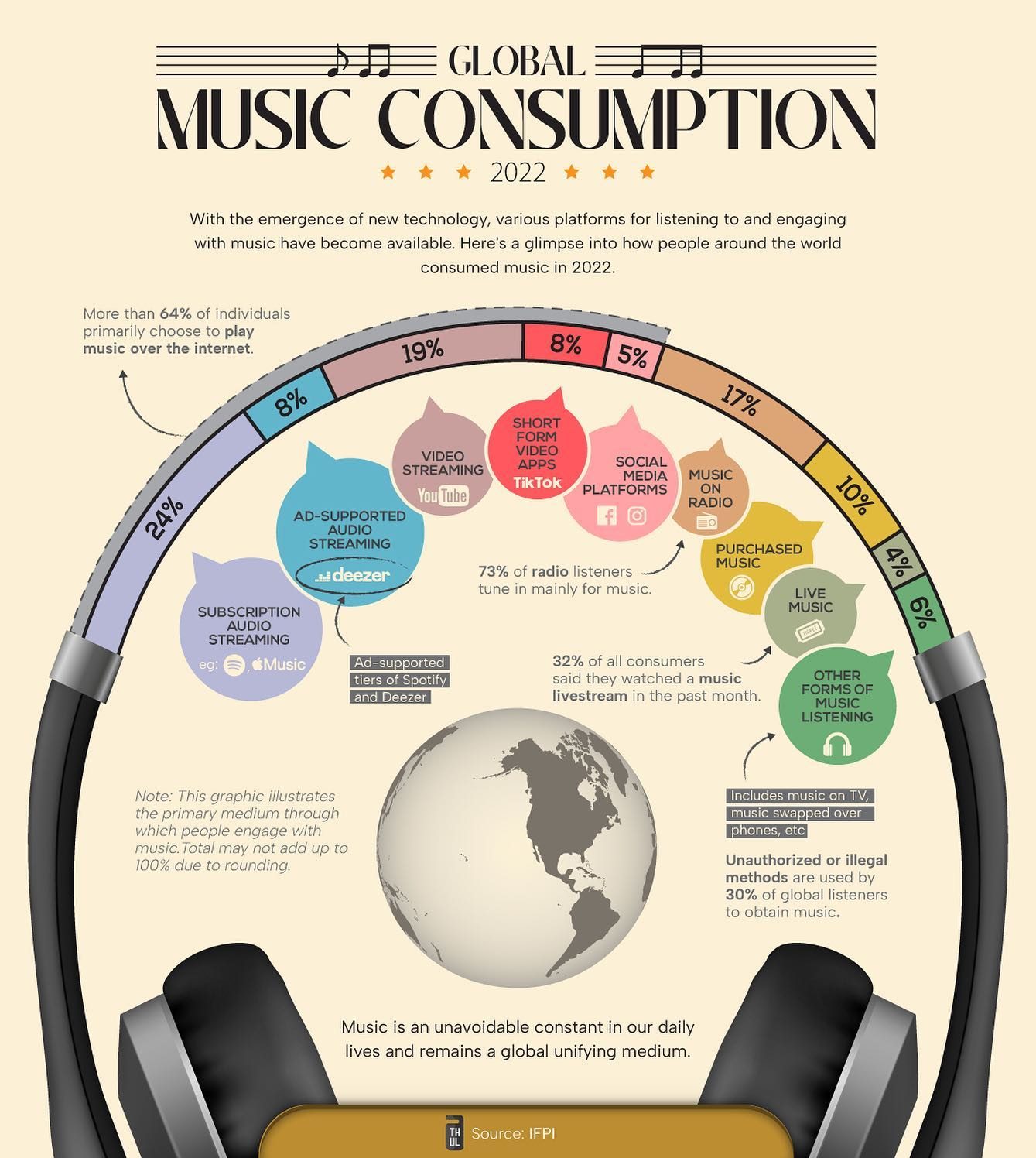
One of the most notable trends in music consumption is the dominance of digital streaming. According to an infographic from the VC Creator Program, 64% of consumers primarily choose to play music over the internet. This shift towards digital platforms has led to a decline in traditional methods of music consumption, such as purchasing CDs or vinyl.
Video Streaming and Short-Form Platforms
The popularity of video streaming and short-form video platforms has surged in recent years. 19% of listeners prefer video streaming, while 8% use short-form video platforms like TikTok. These platforms offer a unique way to discover and share music, making them a powerful tool for artists to reach wider audiences. TikTok, in particular, has become a hub for viral music trends, with users often creating content around popular tracks.
Social Media and Radio
Social media platforms and radio also play a significant role in music consumption. 5% of listeners use social media to discover and listen to music, while 17% still tune in to radio. Despite the rise of digital platforms, radio remains a reliable source for music discovery and engagement, especially for older demographics.
Music Subscription Services
Music subscription services, like Deezer, have become a staple in the modern music landscape. Subscription tiers on platforms like Deezer offer users ad-free listening, high-quality audio, and exclusive content, making them an attractive option for music enthusiasts. These services provide a convenient and cost-effective way to access a vast library of music, further driving the shift away from traditional purchase methods.
Other Forms of Music Listening
While digital streaming dominates, other forms of music listening are still prevalent. 10% of listeners purchase music, and 4% enjoy live music experiences. Additionally, 6% of listeners prefer other forms, which can include music on TV, music swapped over phones, or other unauthorized methods. It's also noteworthy that 30% of global listeners use unauthorized or illegal methods, highlighting the ongoing challenge of piracy in the music industry.
Practical Tips for Artists and Industry Professionals
Leverage Digital Platforms
Given the dominance of digital streaming, artists should focus on optimizing their presence on these platforms. This includes creating engaging content on short-form video platforms, utilizing social media for promotion, and ensuring high-quality audio on subscription services.
Utilize Data Analytics
Data analytics can provide valuable insights into listener behavior. By analyzing streaming data, artists can understand which songs are most popular, where their audience is located, and how to tailor their content to better meet listener preferences.
Engage with Fans
Building a strong connection with fans is essential for long-term success. Engaging with followers on social media, responding to comments, and creating exclusive content for subscribers can help foster a loyal fan base.
Important Takeaways
The music industry is undergoing a significant transformation, driven by technological advancements and changing consumer behaviors. Digital streaming, video platforms, and social media have become integral to how people consume music. Artists and industry professionals must adapt to these trends to stay relevant and successful.
Conclusion
The landscape of music consumption is rapidly evolving, and understanding these changes is crucial for anyone involved in the music business. By leveraging digital platforms, utilizing data analytics, and engaging with fans, artists can maximize their chances of success in this dynamic industry. Staying informed about current trends and adapting to new technologies will be key to thriving in the ever-changing world of music.
Watch the Reel
Questions readers ask
What are the most popular platforms for global music streaming in 2022?
In 2022, the most popular platforms for global music streaming are YouTube, TikTok, and Spotify. These platforms have significantly influenced how listeners discover and interact with music, making them crucial for artists to focus on. Other notable platforms include Deezer and local services depending on the region.
How has social media influenced music consumption trends in 2022?
Social media platforms, particularly TikTok, have greatly impacted music consumption trends in 2022 by popularizing short-form music videos. These platforms enable users to share and discover new music quickly, influencing what songs gain popularity and how artists engage with their audience.
Is digital music consumption replacing traditional radio?
Digital music consumption is increasingly replacing traditional radio, as listeners prefer on-demand and personalized experiences. Streaming platforms allow users to access vast music libraries, create playlists, and discover new artists, which is convenient and tailored to individual preferences.
What are the key trends in global music consumption habits for 2022?
Key trends in global music consumption habits for 2022 include the rise of audio streaming, the influence of short-form music videos, and the growing importance of social media in music discovery. Additionally, listeners are increasingly consuming music through podcasts and live streaming events.
How can artists leverage TikTok for music promotion in 2022?
Artists can leverage TikTok for music promotion by creating engaging short-form videos, participating in viral challenges, and collaborating with influencers. The platform’s algorithm can help songs gain traction quickly, making it an essential tool for artists looking to reach a global audience.
What role do infographics play in understanding music consumption trends?
Infographics provide a visual representation of music consumption trends, making it easier to understand and analyze data. They can highlight key statistics, such as the most streamed songs, popular genres, and listener demographics, aiding artists and industry professionals in making informed decisions.
Are there regional differences in music consumption habits in 2022?
Yes, there are regional differences in music consumption habits. For example, while Spotify dominates in many Western countries, platforms like QQ Music and Kugou are popular in China. Similarly, local streaming services may have a significant user base in specific regions, so it's important for artists to consider these variations when planning their strategies.
Related deep dives
Similar reads based on topic and creator.


Recent articles
Fresh deep dives from the latest Reels we unpacked.




Comments
Be the first to comment.