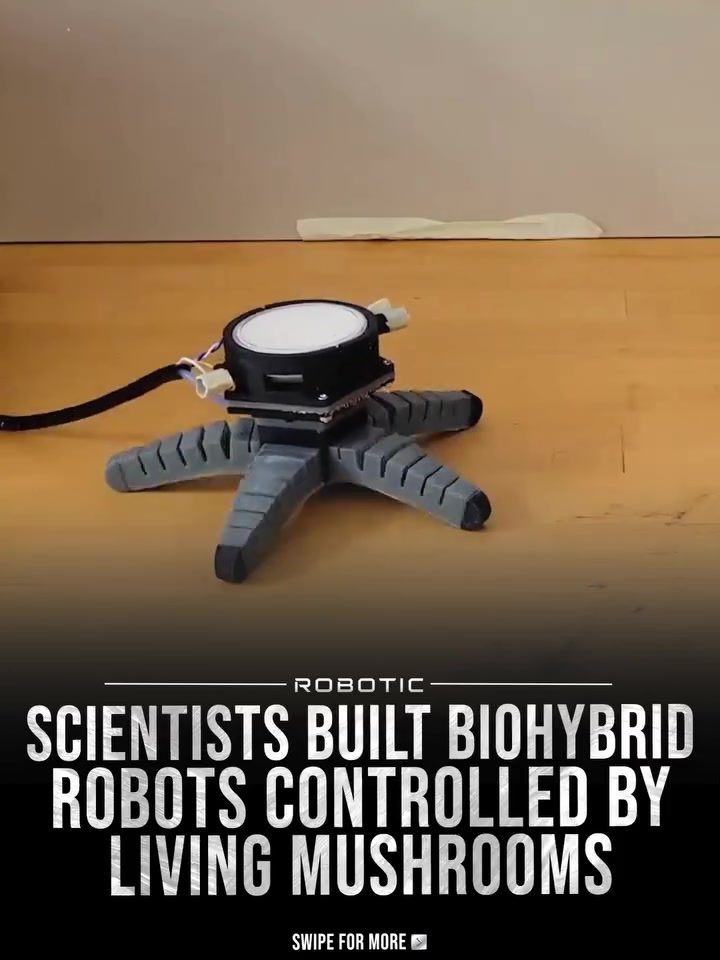
Biohybrid Robots: The Fusion of Biology and Robotics
Biohybrid robots, a revolutionary concept that merges biology with robotics, are pushing the boundaries of technological innovation. These unique robots, developed by scientists at Cornell University, utilize living fungal tissue as a key component of their control systems. The project, an interdisciplinary effort within the Organic Robotics Lab at Cornell, combines mycology, neurobiology, electronics, and robotics. The result is a biohybrid robot that not only showcases the potential of biological control systems but also opens up new avenues for robotic design and functionality.
Context: Why This Matters
Robotics has traditionally relied on mechanical and electronic components to function. However, by integrating living organisms into robotic systems, researchers are exploring new methods for control and interaction. This interdisciplinary approach allows for the development of robots that can sense and respond to their environments in ways that were previously impossible. The implications of this research are vast, ranging from improved environmental sensing and adaptive behavior to more sustainable and efficient robotic systems.
Main Discussion
Biological Control Systems
The biohybrid robots developed at Cornell rely on the electrical signals produced by fungal mycelium—the vegetative part of a fungus. This biological control system records and interprets these signals, converting them into commands that direct the robot's movements. By embedding living fungal tissue into the robot's control system, researchers have created a novel interface between the biological and robotic worlds. This interface allows the robot to respond to its environment in a more organic and adaptable manner.
Custom Hardware Innovations
To make this biological control system effective, the researchers at Cornell developed custom hardware. This hardware is designed to filter out vibration and electromagnetic noise, ensuring that only the natural electrical activity of the fungi is captured and translated into commands. This sophisticated filtering process is crucial for the precise control of the robot, enabling it to execute complex movements and interactions with its surroundings.
The Role of Mycology and Neurobiology
The integration of mycology (the study of fungi) and neurobiology (the study of the nervous system) is essential to the functionality of these biohybrid robots. Mycology provides the biological components—the fungal mycelium—which generate the electrical signals. Neurobiology, on the other hand, helps in understanding and interpreting these signals, allowing for their effective translation into robotic commands. This interdisciplinary approach underscores the importance of collaboration across scientific fields in advancing technological innovation.
Practical Tips
For those interested in exploring the world of biohybrid robots, here are some practical tips to get started:
-
Understand the Basics of Robotics and Biology: Familiarize yourself with the fundamentals of robotics and biology, particularly mycology and neurobiology. This foundational knowledge will help you grasp the complexities of integrating living organisms into robotic systems.
-
Experiment with Biological Control Systems: Start with simple experiments to understand how biological signals can be translated into robotic commands. This hands-on experience will provide valuable insights into the potential and challenges of biohybrid control systems.
-
Develop Custom Hardware: Invest in developing custom hardware that can effectively filter out noise and capture biological signals. This hardware is crucial for the precise control of biohybrid robots and ensures that the robot's movements are accurate and responsive.
-
Collaborate Across Disciplines: Engage with experts in various fields, including mycology, neurobiology, electronics, and robotics. Collaboration is key to overcoming the challenges and leveraging the strengths of interdisciplinary research.
-
Publish and Share Your Findings: Share your research and findings with the scientific community. Publishing your work in journals like Science Robotics can help advance the field and inspire others to explore the possibilities of biohybrid robots.
Important Takeaways
Biohybrid robots represent a groundbreaking advancement in the field of robotics. By integrating living fungal tissue into their control systems, these robots demonstrate the potential for biological components to become functional parts of robotic systems. The research at Cornell University highlights the importance of interdisciplinary collaboration and the development of custom hardware for effective biological control. As this field continues to evolve, biohybrid robots could revolutionize the way we interact with and control machines, opening up new possibilities for environmental sensing, adaptive behavior, and sustainable technology.
Conclusion
Biohybrid robots, controlled by living mushrooms, are a testament to the innovative potential of merging biology and robotics. The research conducted at Cornell University underscores the importance of interdisciplinary collaboration and the development of custom hardware for capturing and interpreting biological signals. As we delve deeper into this exciting frontier, the possibilities for biohybrid robots and their applications in various fields are limitless. Whether you're a scientist, engineer, or enthusiast, the world of biohybrid robots offers a fascinating and promising area of exploration.
Watch the Reel
Questions readers ask
How do mushroom-controlled robots work?
Mushroom-controlled robots operate by using living fungal tissue as part of their control systems. This biological component allows the robots to respond to their environment in an organic and adaptive manner, setting them apart from traditional robotic systems.
What makes biohybrid technology unique?
Biohybrid technology is unique because it combines biological elements, like fungal tissue, with traditional robotic components. This fusion enables robots to exhibit organic behaviors and adapt to their surroundings more efficiently than conventional robots.
Who is pioneering the development of mushroom-controlled robots?
Researchers at Cornell University, particularly within the Organic Robotics Lab, are at the forefront of developing mushroom-controlled robots. Their interdisciplinary approach integrates mycology, neurobiology, electronics, and robotics to create these innovative biohybrid systems.
What are the potential benefits of using fungal tissue in robotics?
Using fungal tissue in robotics offers several potential benefits, including enhanced adaptability, organic responsiveness, and new avenues for robotic design. This approach could lead to more efficient and effective robotic systems in various applications.
Can mushroom-controlled robots be used in practical applications?
While mushroom-controlled robots are still in the early stages of development, their potential for practical applications is significant. These robots could be used in environments where adaptability and organic responsiveness are crucial, such as in exploration, monitoring, or even medical fields.
How does the use of living organisms in robotics differ from traditional robotic systems?
Traditional robotic systems rely solely on mechanical and electronic components. In contrast, biohybrid robots incorporate living organisms, such as fungal tissue, which allows for organic control and adaptation. This difference enables biohybrid robots to interact with their environment in a more natural and adaptive way.
What are the future prospects for biohybrid mushroom robot technology?
The future prospects for biohybrid mushroom robot technology are promising. As researchers continue to refine and develop these systems, we can expect to see more advanced and efficient robotic designs. This could lead to a new generation of robots that are better equipped to handle complex and dynamic environments.
Related deep dives
Similar reads based on topic and creator.




Recent articles
Fresh deep dives from the latest Reels we unpacked.




Comments
Be the first to comment.