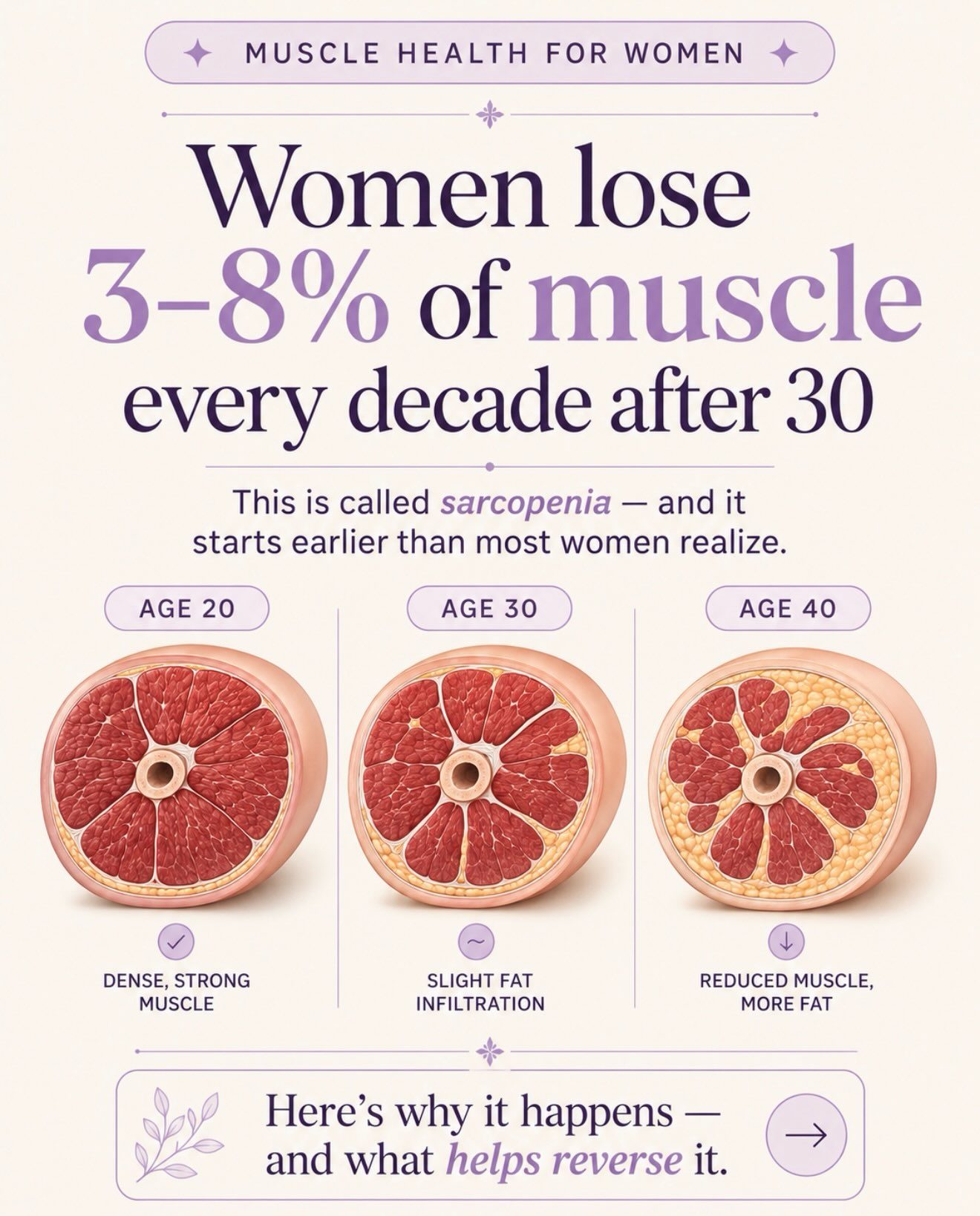
Muscle Loss in Women: Understanding Sarcopenia and Maintaining Muscle Health
Muscle loss is a natural part of aging, but it's not something women should ignore or wait to address. Starting from age 30, women can lose 3-8% of their muscle mass every decade. This condition, known as sarcopenia, can significantly impact daily life, mobility, and overall health. Understanding sarcopenia and taking proactive steps to maintain muscle health can make a substantial difference in long-term well-being.
Why This Matters
Muscle mass and strength are crucial for more than just aesthetics. They play a vital role in everyday energy, mobility, balance, and independence. Muscle health supports bone health and helps manage blood sugar levels. Maintaining muscle strength is also essential for reducing the risk of falls and fractures, which can be particularly important as women age.
The Gradual Decline of Muscle Mass
Muscle mass typically peaks between the ages of 30 and 45. After this point, a gradual decline begins, which can accelerate during perimenopause. By the time women reach their 50s, muscle loss may increase to 0.6-1% per year. This decline in muscle mass is often accompanied by an even faster decline in strength, which can significantly impact daily activities and overall quality of life.
Factors Contributing to Muscle Loss
Several factors can contribute to muscle loss in women:
- Age: Natural aging processes lead to a gradual decline in muscle mass and strength.
- Perimenopause: The hormonal changes during perimenopause can accelerate muscle loss.
- Pregnancy and Postpartum: Muscle and strength can drop significantly if not rebuilt through training after pregnancy and the postpartum period.
The Role of Protein in Muscle Health
Protein is a critical component of muscle repair and growth. Aiming for 0.55-0.73 grams of protein per pound of body weight per day can support muscle health. For a woman weighing 150 pounds, this translates to roughly 80-110 grams of protein daily. Incorporating 25-35 grams of protein per meal can better support muscle repair and growth. Many convenient modern meals are protein-light and carb-heavy, so building meals around protein first is essential.
Helpful Supplements for Muscle Health
In addition to a protein-rich diet, several supplements can support muscle health:
- Creatine: One of the most researched supplements for strength and muscle support, creatine can help enhance muscle performance and recovery.
- Vitamin D3 and Omega-3: These supplements can be beneficial if intake or levels are low, supporting overall muscle health and function.
- Whey Protein: While not a supplement, whey protein can make it easier to meet daily protein goals, especially for those who struggle to consume enough protein through whole foods.
Strength Training: The Key to Muscle Maintenance
Strength training is crucial for maintaining and rebuilding muscle mass. Incorporating exercises like squats, lunges, rows, presses, hinges, carries, and resistance bands can help protect muscles and rebuild strength. Adults are generally advised to train every major muscle group at least twice per week.
Practical Tips for Maintaining Muscle Health
- Consistency is Key: Aim for two manageable strength training sessions each week and focus on gradual progress.
- Prioritize Recovery: Adequate food, sleep, and recovery give your body the opportunity to adapt and rebuild muscle.
- Use Supplements as Tools: Supplements should be chosen based on individual needs, medications, and health history, rather than as replacements for a balanced diet and exercise routine.
The Workit App: A Comprehensive Fitness Solution
For those looking for a structured approach to fitness and healthy eating, the Workit app offers a comprehensive solution. The app provides guided workouts, personalized programs, and a rewards system to motivate users to stay consistent with their fitness goals. Features like calorie tracking, water intake goals, and nutrition planning make it easier to maintain a balanced lifestyle.
Important Takeaways
- Start Early: Muscle loss begins earlier than most women realize, so starting strength training and a protein-rich diet in your 30s can make a significant difference.
- Consistency Matters: Regular strength training and a balanced diet are essential for maintaining muscle health.
- Supplements Can Help: Incorporating supplements like creatine, Vitamin D3, and Omega-3 can support muscle health, but they should not replace a balanced diet and exercise routine.
- Use Technology: Apps like Workit can provide the structure and motivation needed to stay consistent with fitness goals.
Conclusion
Muscle loss is a natural part of aging, but it's not an unavoidable decline. By understanding sarcopenia, prioritizing strength training, maintaining a protein-rich diet, and using supplements as tools, women can protect their muscles and rebuild meaningful strength. Taking proactive steps now can make daily life feel easier for decades to come, ensuring a healthier, more independent future.
Watch the Reel
Questions readers ask
What is sarcopenia and why should women be concerned about it?
Sarcopenia is the gradual loss of muscle mass and strength that occurs with aging, beginning as early as 30. Women should be concerned about it because it can significantly affect daily activities, mobility, and overall health. By understanding and addressing sarcopenia, women can maintain their independence and quality of life for longer.
How does sarcopenia affect women during perimenopause?
During perimenopause, the rate of muscle loss accelerates. This is due to hormonal changes that occur during this phase. Women in perimenopause should be particularly mindful of their nutrition and fitness routines to mitigate muscle loss.
What can women do to prevent muscle loss after 30?
To prevent muscle loss, women should engage in regular strength training exercises, consume a balanced diet with adequate protein, and maintain an active lifestyle. Incorporating resistance training into weekly routines can help build and preserve muscle mass, which is crucial for long-term muscle health.
Can using supplements help prevent muscle loss in women?
Supplements can play a supportive role in maintaining muscle health, especially as women age. Protein powders, creatine, and other supplements like vitamin D and omega-3 fatty acids can help maintain muscle mass and strength. However, it's essential to consult a healthcare provider before starting any supplement regimen.
What are some effective exercises for women to build muscle after 30?
Strength training exercises such as weightlifting, resistance band workouts, and bodyweight exercises like squats, lunges, and push-ups are highly effective for building muscle. Incorporating these exercises into a regular fitness routine can help women maintain and even increase their muscle mass and strength.
Is there an app that can help women gain muscle?
Yes, there are several apps designed to guide women through strength training and muscle-building exercises. These apps often provide workout plans, tracking tools, and nutritional advice tailored to muscle gain. Some popular options include FitOn, Strong, and Nike Training Club, which offer a range of workouts to suit different fitness levels.
How can women ensure they are consuming enough protein to support muscle health?
Women can ensure they consume enough protein by including lean protein sources in their meals, such as chicken, turkey, fish, eggs, dairy, legumes, and plant-based proteins like tofu and tempeh. The recommended daily intake of protein for women is about 0.8 grams per kilogram of body weight, but this may need to be adjusted based on individual activity levels and goals.
Related deep dives
Similar reads based on topic and creator.




Recent articles
Fresh deep dives from the latest Reels we unpacked.




Comments
Be the first to comment.