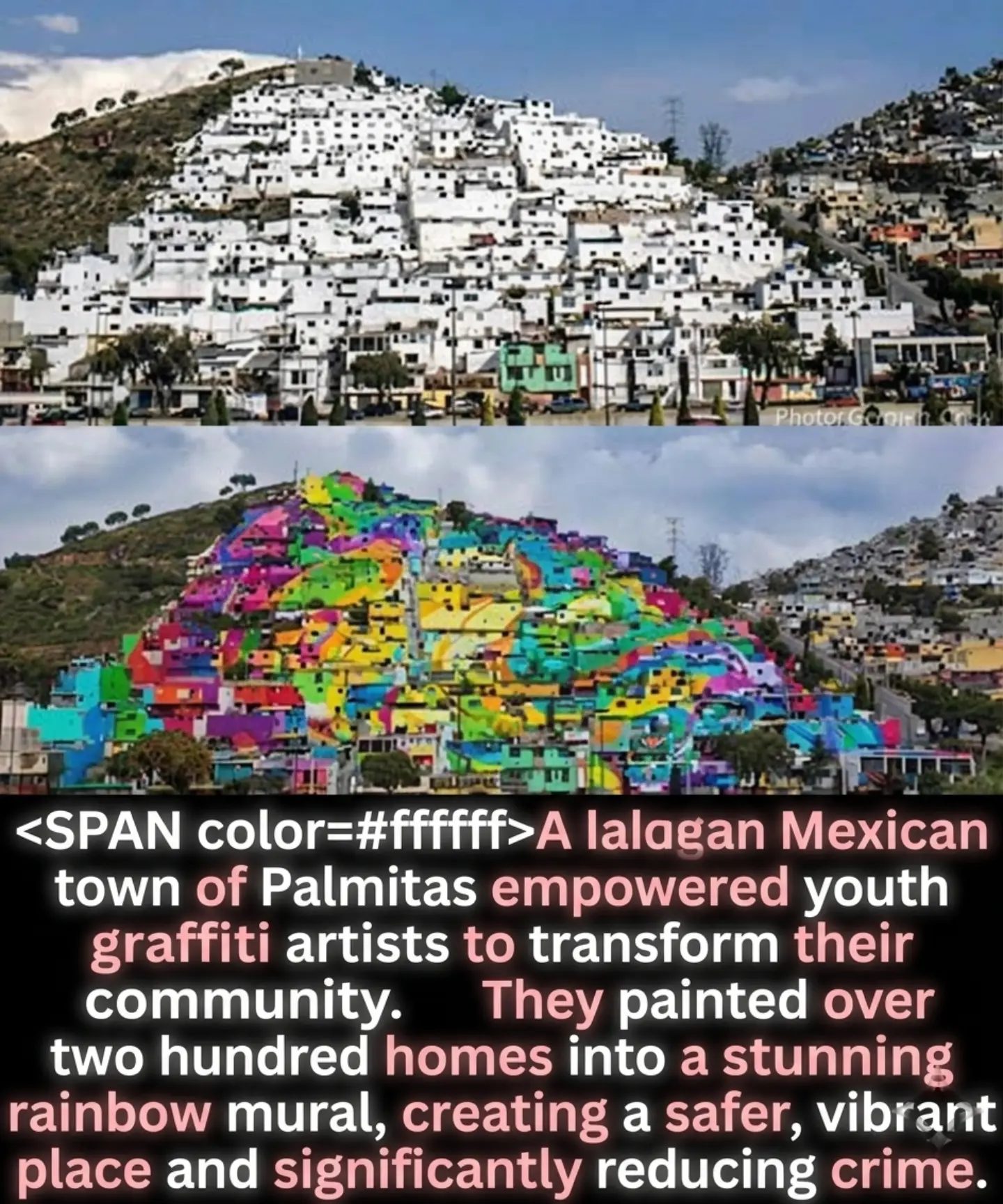
Palmitas, Mexico: How a Massive Mural Transformed a Community
In the hillside town of Palmitas, Mexico, a unique community project has not only revitalized the landscape but also fostered a profound sense of unity and security. The initiative involved youth graffiti artists transforming over two hundred homes into a single, expansive, rainbow mural. This vibrant transformation has had a significant impact on the community, beyond just aesthetic improvement.
Why This Transformation Matters
The initial state of the neighborhood in Palmitas was marked by high crime rates and a reputation for violence. However, the decision to use art as a tool for community revitalization has turned this narrative around. The project serves as a testament to the power of creative initiatives in reshaping communities for the better.
The Impact of the Mural
Revitalized Landscape
The most immediate and visible change is the transformation of the town's landscape. Where there was once a collection of plain, individual homes, there is now a vibrant, interconnected mural that stretches across the hillside. This striking visual change has turned a once unremarkable neighborhood into a colorful, eye-catching landmark.
Crime Reduction
One of the most notable impacts of the mural is the dramatic reduction in crime and gang activity. The vibrant, community-driven art project has instilled a sense of pride and ownership among the residents. This newfound pride has acted as a deterrent to criminal activities, making the neighborhood a safer place to live.
Community Unity
The project brought together the community in an unprecedented manner. Residents worked collaboratively with the youth artists, turning what could have been a divisive project into a cohesive effort. This collaboration has not only strengthened community bonds but also fostered a sense of collective celebration.
Economic and Skill Development
Beyond the visual and social impacts, the project created job opportunities and taught new skills to the residents. The involvement of youth graffiti artists has provided them with a platform to showcase their talents and gain practical experience. Additionally, the initiative has created local jobs, contributing to the economic well-being of the community.
Practical Tips for Similar Initiatives
Inspired by the success of the Palmitas mural project, other communities can consider the following steps to replicate similar initiatives:
Engage Local Artists
Collaborating with local artists can bring a unique, authentic touch to the project. This not only supports local talent but also ensures that the art resonates with the community's cultural heritage.
Community Involvement
Ensuring community involvement is crucial for the project's success. Engaging residents in the planning and execution phases can foster a sense of ownership and pride, leading to better outcomes.
Focus on Safety and Aesthetics
While the aesthetic transformation is a significant goal, safety should be a priority. Communities can benefit from projects that address both visual and safety concerns, making the neighborhood more vibrant and secure.
Important Takeaways
The mural project in Palmitas, Mexico, demonstrates the multifaceted benefits of community-driven art projects. Beyond the visual transformation, the initiative has successfully reduced crime, fostered unity, created jobs, and taught new skills. This transformation underscores the potential of creative initiatives in reshaping communities for the better.
Conclusion
The story of Palmitas serves as a shining example of how creative interventions can transform communities. By turning a once-neglected neighborhood into a vibrant, colorful landmark, the mural project has not only improved the aesthetic appeal of the area but also brought about significant social and economic changes. This initiative stands as a powerful reminder of the potential that lies in community-driven art and the impact it can have on reshaping our world.
Watch the Reel
Questions readers ask
How did the mural project in Palmitas, Mexico, contribute to crime reduction?
The mural project in Palmitas, Mexico, contributed to crime reduction by fostering a sense of unity and community pride. The vibrant, expansive mural transformed the landscape, making it more inviting and visible, which deterred criminal activities. Additionally, the project engaged local youth, providing them with a positive outlet and reducing their involvement in criminal behavior.
Who were the artists behind the massive mural in Palmitas?
The artists behind the massive mural in Palmitas were primarily local youth graffiti artists. These young artists were given the opportunity to transform their neighborhood, providing a productive and engaging outlet for their creativity.
What was the initial state of the neighborhood in Palmitas before the mural project?
Before the mural project, the neighborhood in Palmitas was marked by high crime rates and a reputation for violence. The hillside town was in a state of disrepair, with residents feeling unsafe and disconnected from one another.
How many homes were involved in the mural project in Palmitas?
The mural project in Palmitas involved over two hundred homes, creating a single, expansive, rainbow mural that stretches across the hillside community.
Can community art projects in hillside towns lead to improved safety and security?
Community art projects, such as the mural in Palmitas, can indeed lead to improved safety and security. By revitalizing the landscape and fostering a sense of community, these projects can make neighborhoods more inviting, visible, and united.
How can engaging youth in community art projects help in preventing crime?
Engaging youth in community art projects can help prevent crime by providing a positive and productive outlet for their energy and creativity. Additionally, these projects foster a sense of belonging and responsibility for the community, reducing the likelihood of youth involvement in criminal activities.
Related deep dives
Similar reads based on topic and creator.

Recent articles
Fresh deep dives from the latest Reels we unpacked.




Comments
Be the first to comment.