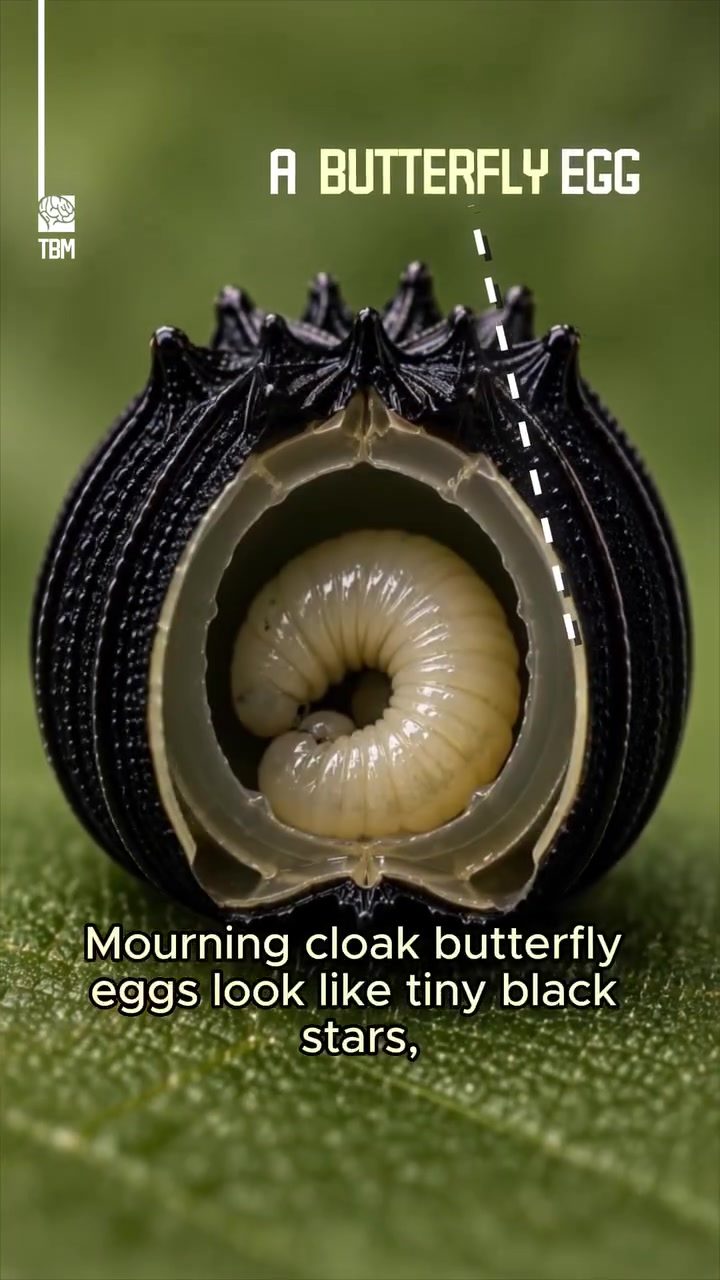
Mourning Cloak Butterfly Eggs: Tiny Architectural Marvels of Nature
Hidden in nature are tiny architectural wonders that often go unnoticed. Mourning cloak butterfly eggs, in particular, are miniature black stars, showcasing intricate ridges designed for strength and survival. These geometric shells are not just aesthetically pleasing; they serve critical functions vital to the survival and development of the caterpillars inside.
Why This Matters
The structure and design of mourning cloak butterfly eggs are a testament to the precision and efficiency of natural evolution. Understanding these tiny marvels not only highlights the beauty of nature but also offers insights into how natural designs can inspire human engineering and innovation.
The Unique Design of Mourning Cloak Butterfly Eggs
Intricate Ridges and Geometric Shapes
Mourning cloak butterfly eggs are covered in fine ridges, contributing to their star-like appearance. These ridges are not merely decorative; they play a crucial role in strengthening the egg shell. The geometric shape of the eggs allows for better structural integrity, ensuring that the developing caterpillar inside is well-protected. Moreover, the ridges facilitate air circulation, which is essential for the proper development of the caterpillar.
Clustering for Survival
Female mourning cloak butterflies lay hundreds of these eggs together on host plants. This clustering serves multiple purposes. Firstly, it provides the young caterpillars with an immediate food source upon hatching, as they can feed on the host plant leaves. Secondly, the clustering ensures that the eggs remain in a favorable microclimate, protected from extreme temperatures and humidity changes.
Transformation to Spiky Caterpillars
Within a few days, the eggs transform into spiky black caterpillars. These caterpillars, with their distinctive spiky appearance, feed together before eventually spreading out. This collective feeding behavior helps in maximizing the use of the limited food resources available, ensuring that the young caterpillars have a better chance of survival.
Practical Tips for Observing Butterfly Eggs
Observing butterfly eggs and caterpillars can be a fascinating hobby or educational activity. Here are some practical tips for getting a closer look at these natural wonders:
- Choose the Right Plants: Mourning cloak butterflies prefer certain host plants for laying their eggs. Common plants include willow, elm, and poplar trees. Planting these trees in your garden can attract butterflies and provide a place to observe their eggs and caterpillars.
- Use Magnifying Glasses: A good magnifying glass or a hand-held microscope can help you see the intricate details of the eggs, including the fine ridges and star-like shapes.
- Be Patient: Observing the transformation of eggs into caterpillars requires patience. Keep a log of your observations to document the changes over time.
- Respect Nature: Always remember to respect the natural environment. Avoid disturbing the eggs or caterpillars, and ensure that your observations do not harm the host plants.
Important Takeaways
- Evolutionary Precision: The design of mourning cloak butterfly eggs showcases the incredible precision and efficiency of natural evolution. Every detail, from the ridges to the geometric shape, serves a specific purpose.
- Survival Strategies: The clustering of eggs on host plants and the collective feeding behavior of caterpillars are vital survival strategies that ensure the species' continuity.
- Inspiration for Innovation: The natural designs found in butterfly eggs can inspire human engineering and innovation, offering insights into how to create structures that are both strong and efficient.
Conclusion
Mourning cloak butterfly eggs are more than just tiny, beautiful objects. They are a testament to the intricate and precise designs that nature has perfected over millennia. From their geometric shells to the transformation into spiky caterpillars, every stage of their development reveals the beauty and efficiency of natural evolution. By understanding and observing these tiny marvels, we can gain a deeper appreciation for the natural world and draw inspiration for our own innovations.
Watch the Reel
Questions readers ask
How can I identify mourning cloak butterfly eggs in nature?
Mourning cloak butterfly eggs are distinctive due to their star-shaped form and black color. Look for clusters of these tiny eggs on the underside of host plant leaves, particularly on trees like willows, elms, and cottonwoods. The intricate ridges and geometric patterns on the shell are also key identifiers.
How do the ridges on mourning cloak eggs benefit the developing caterpillars?
The ridges on mourning cloak butterfly eggs serve multiple purposes. They strengthen the shell, providing protection for the developing caterpillars. Additionally, these ridges facilitate air circulation, ensuring that the eggs receive adequate oxygen for proper development.
What is the significance of mourning cloak eggs being laid in clusters?
Mourning cloak butterflies lay their eggs in clusters to increase the survival chances of their offspring. This strategy helps to overwhelm potential predators and ensures that even if some eggs are lost, others are likely to survive and develop into caterpillars.
How does the unique shell structure of mourning cloak eggs contribute to their functionality?
The geometric shapes and ridges on the shell of mourning cloak eggs not only provide structural support but also aid in gas exchange. This design allows for efficient oxygen intake and carbon dioxide release, which are crucial for the healthy development of the caterpillars inside.
What are the benefits of studying the design of mourning cloak butterfly eggs?
Studying the design of mourning cloak butterfly eggs offers valuable insights into natural engineering and innovation. The precise structure and functionality of these eggs can inspire advancements in fields such as materials science and aerodynamics, where efficient design and strength are paramount.
Related deep dives
Similar reads based on topic and creator.




Recent articles
Fresh deep dives from the latest Reels we unpacked.




Comments
Be the first to comment.