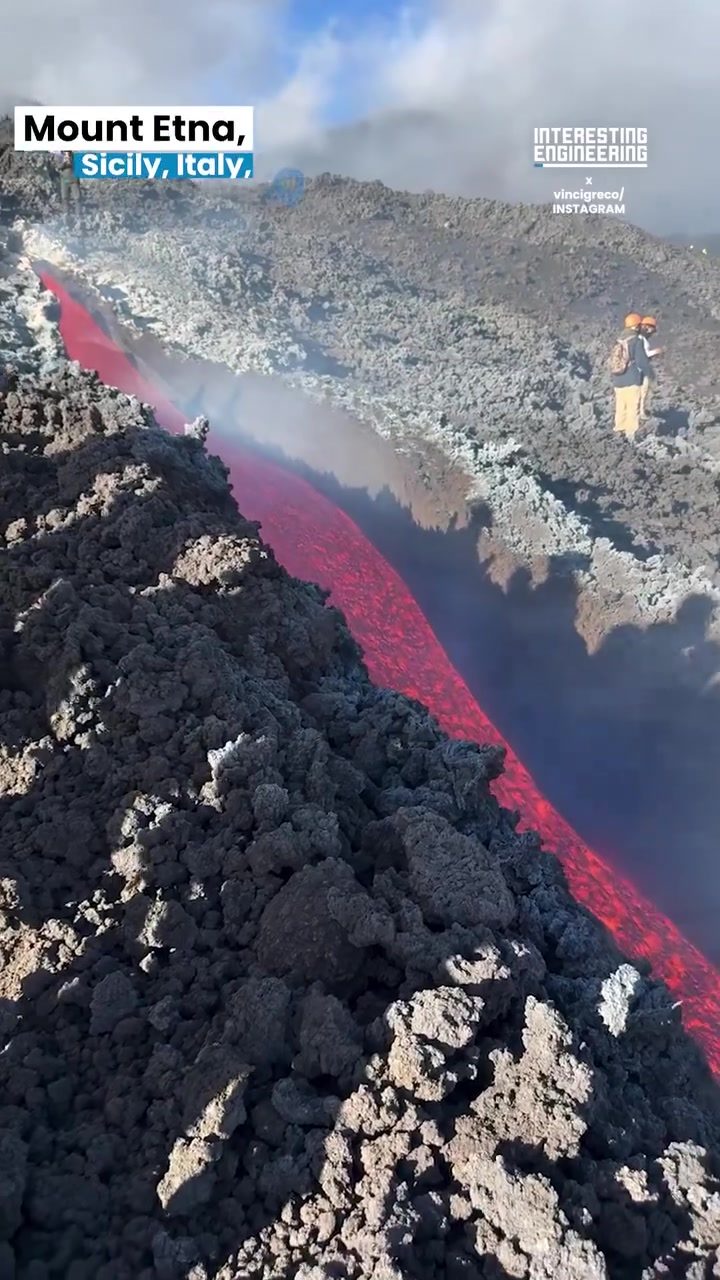
Mount Etna, one of the world's most active volcanoes, provides a dramatic reminder of the Earth's raw power. Located in Sicily, Italy, Mount Etna's ongoing eruptions create a spectacular display of molten rock, showcasing the intricate processes that shape volcanic landscapes. This particular display reveals a fascinating phenomenon: lava caving.
Context / Why this matters
Mount Etna's eruptions are not just visually stunning; they offer a unique opportunity to understand the dynamics of volcanic activity. The lava channel visible in this event is a prime example of how lava behavior can significantly influence the surrounding environment. By studying these processes, we gain insights into the geological forces that have shaped our planet for millennia.
Main discussion
The Mechanics of Lava Caving
Lava caving is a geological process where molten rock flows through an open pathway before disappearing beneath a solidified crust. This process helps retain the lava's heat and fluidity, allowing it to travel farther downslope than it would if it remained on the surface. The crust acts as an insulator, preventing the lava from cooling too quickly and solidifying.
The Role of Heat and Fluxidity
As lava flows, it loses heat to the surrounding air. When this happens, the outer layer of the lava begins to cool and solidify, forming a crust. Lava caving occurs when this crust remains intact and the molten rock underneath continues to flow. The crust acts as an insulator, slowing the rate at which the lava cools and allowing it to remain fluid for a longer period. This enables the lava to travel much farther before it finally solidifies.
The Significance of Lava Caving
Lava caving is significant for several reasons. Firstly, it helps shape the volcanic landscape by creating unique features such as lava tubes and caves. These formations can be found in various volcanic regions around the world and provide valuable insights into the geological history of the area. Secondly, the process of lava caving also plays a crucial role in the distribution of volcanic material. As the lava flows underground, it can create new paths and channels, altering the landscape in ways that are not immediately visible from the surface.
Visualizing the Process
The lava flows displays in Sicily provide a rare and dramatic glimpse of lava caving in action. The molten rock appears to vanish beneath the hardened crust, giving the impression that it has disappeared. However, it continues to flow underground, maintaining its heat and fluidity. This subterranean travel allows the lava to extend much farther than it would if it remained on the surface, where it would cool and solidify more quickly.
Practical Tips
While witnessing a volcanic eruption is a thrilling experience, it is also crucial to prioritize safety. Here are some practical tips for anyone interested in observing volcanic activity:
- Stay at a Safe Distance: Volcanic eruptions can be unpredictable, and the area around an active volcano can be dangerous. Always follow the guidelines provided by local authorities and maintain a safe distance from the eruption site.
- Use the Right Gear: Proper equipment is essential when observing a volcanic eruption. This includes sturdy footwear, protective clothing, and safety goggles. Carrying a first-aid kit and knowing basic first-aid procedures can also be beneficial.
- Stay Informed: Keep up-to-date with the latest information from volcanologists and local authorities. Understanding the current state of the volcano and any potential hazards can help you make informed decisions about where and when to observe the eruption.
Important Takeaways
Mount Etna's ongoing eruptions provide a unique opportunity to observe the intricate processes that shape volcanic landscapes. Lava caving, in particular, offers a fascinating glimpse into how molten rock can travel long distances beneath a hardened crust, maintaining its heat and fluidity.
Conclusion
Witnessing a volcanic eruption is a powerful and awe-inspiring experience. The spectacle of molten rock flowing through lava channels and disappearing beneath a solidified crust reveals the raw power and complexity of volcanic activity. Understanding processes like lava caving allows us to appreciate the dynamic forces that continue to shape our planet. Whether you're a geology enthusiast or simply someone who appreciates the beauty of nature, Mount Etna's eruptions offer a captivating display of the Earth's geological marvels.
Watch the Reel
Questions readers ask
What exactly is lava caving and how does it occur at Mount Etna?
Lava caving at Mount Etna involves molten rock flowing beneath a hardened surface, creating tunnels and cavities. This process occurs when lava flows from the volcano and cools on top, forming a solid crust. While the surface hardens, the molten lava beneath continues to flow, carving out channels and tunnels over time.
What makes Mount Etna a unique location for studying lava caving?
Mount Etna is one of the world's most active volcanoes, with frequent eruptions that provide ample opportunities to observe lava caving in action. Its ongoing volcanic activity allows scientists to study the dynamic processes shaping the landscape, making it an ideal natural laboratory for such research.
How does lava caving influence the formation of volcanic landscapes at Mount Etna?
Lava caving plays a crucial role in shaping the volcanic landscapes around Mount Etna. As lava flows beneath the hardened crust, it carves out intricate channels and tunnels, which can create unique rock formations and influence the terrain's overall structure and stability. This process contributes to the diverse and ever-changing landscape of the volcanic region.
What are the main features of a lava channel formed by lava caving?
A lava channel formed by lava caving typically consists of a hardened crust on the surface with molten lava flowing underneath. These channels can be narrow and winding, reflecting the path of least resistance for the molten rock. Over time, the channels can collapse or form natural bridges, contributing to the unique geological features of the landscape.
What is the significance of studying lava channels under the crust of Mount Etna?
By studying lava channels under the crust, researchers can gain valuable insights into the behavior of molten rock and the internal dynamics of volcanic eruptions. This provides a deeper understanding of the geological forces at work and can help predict future volcanic activity, potentially contributing to safer practices and better land management in the region.
How do lava channels contribute to volcanic rock formations at Mount Etna?
Lava channels contribute to volcanic rock formations by creating pathways for molten rock to flow and cool, leading to the formation of unique structures. As lava flows through these channels, it can harden into various shapes and sizes, creating distinct rock formations that are characteristic of volcanic landscapes. This process adds to the overall geological diversity of Mount Etna's region.
What are the potential hazards associated with lava caving at Mount Etna?
Lava caving at Mount Etna can pose several hazards, including the risk of lava channel collapses, which can occur without warning. Additionally, the terrain around active lava flows can be treacherous, with unstable surfaces and hidden voids created by the lava caving process. It's important for visitors and researchers to be cautious and follow safety guidelines when exploring areas affected by lava caving.
Related deep dives
Similar reads based on topic and creator.



Recent articles
Fresh deep dives from the latest Reels we unpacked.




Comments
Be the first to comment.