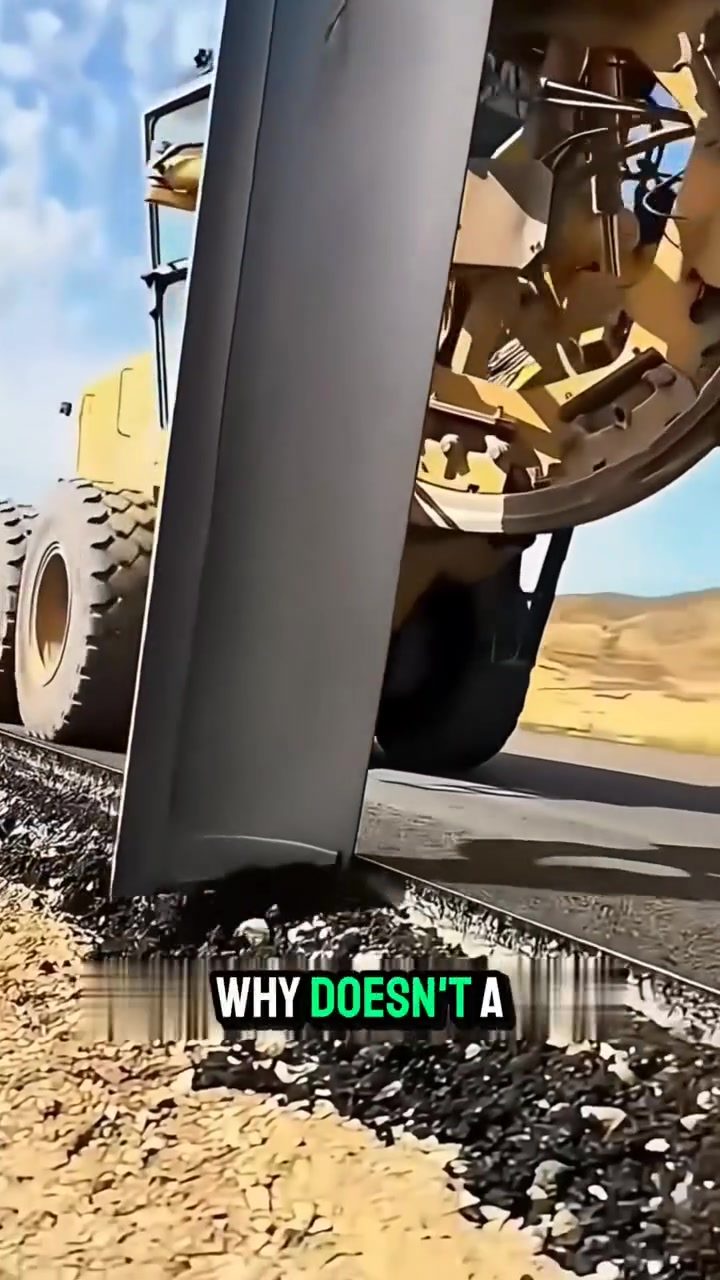
The Secret to Smooth Highways: The Motor Grader's Role in Construction
The 360° blade of a motor grader is a critical component in the construction of highways, responsible for the final, precise leveling that ensures a smooth driving surface. The process of building a highway involves several heavy-duty machines, but the motor grader often goes unnoticed despite its crucial role.
Context: Why This Matters
The construction of highways is a complex process that requires a variety of heavy-duty machines. Each machine plays a specific role, and understanding the unique functions of these machines helps in appreciating the intricacy of road construction.
The Role of the Bulldozer and Motor Grader
The Bulldozer's Rough Work
Most people assume that the bulldozer does the most important job in highway construction because it is the strongest machine. However, its primary function is to push large amounts of soil into place, handling the rough work. Bulldozers are essential for moving massive quantities of soil, but they lack the precision needed for the final leveling required for a smooth highway surface.
The Motor Grader's Precision
The machine that truly ensures the road's smoothness is the motor grader. Equipped with a long steel blade mounted beneath the center, the motor grader can make incredibly accurate corrections. This central blade design allows the operator to have a clear view, enabling them to adjust the road’s height with centimeter-level precision.
The motor grader’s blade can be adjusted in several ways to ensure the road’s surface is perfectly level. Many modern graders even use advanced technologies like GPS and laser leveling systems to achieve near-perfect precision. These technologies help in maintaining the correct grade and ensuring the surface is smoothly graded, which is crucial for the safety and longevity of the road.
The Grading Process
Rough Grading
The initial stages of road construction involve rough grading, where large amounts of soil are moved and levelled. This is typically done by bulldozers, which are powerful and capable of handling extensive soil displacement. The rough grading phase prepares the site for more precise work.
Fine Grading
Fine grading is the final stage of the road construction process. This is where the motor grader comes into play. The motor grader’s ability to make fine adjustments with its blade ensures that the road’s surface is perfectly level. Even the smallest adjustments can change the road's height significantly, making the motor grader an indispensable tool for achieving a smooth and even surface.
Practical Tips for Effective Grading
Operator Skills
The skill of the operator is critical in achieving a perfectly leveled surface. Modern graders often come with advanced features like GPS and laser leveling systems, but the operator’s expertise is still essential. Operators need to be trained in using these technologies effectively to ensure precision.
Maintenance of Equipment
Regular maintenance of the grading equipment is crucial. The blade of the motor grader, in particular, needs to be kept in good condition to ensure accurate grading. Regular inspections and timely repairs can help prevent any issues that might affect the grading process.
Advanced Technologies
Many modern graders come with advanced technologies that enhance their precision and efficiency. GPS and laser leveling systems are particularly useful in ensuring that the road’s surface is perfectly graded. These technologies help in maintaining the correct grade and ensuring the surface is smoothly graded, which is crucial for the safety and longevity of the road.
Important Takeaways
The Importance of the Motor Grader
The motor grader plays a crucial role in the construction of highways. Without a motor grader, today's highways would never be as smooth as they are. The central blade design and advanced technologies make the motor grader an indispensable tool for achieving a perfectly leveled surface.
The Role of the Bulldozer
While the bulldozer handles the rough work, the motor grader performs the final finishing. The bulldozer’s strength is essential for moving large amounts of soil, but the motor grader’s precision is what ensures a smooth and even road surface.
Advanced Technologies
Modern graders equipped with GPS and laser leveling systems can achieve near-perfect precision. These technologies help in maintaining the correct grade and ensuring the surface is smoothly graded, which is crucial for the safety and longevity of the road.
Conclusion
The construction of highways is a complex process that involves several heavy-duty machines, each with its unique role. The motor grader, with its 360° blade, is particularly important for the final leveling of the road. Its precision and advanced technologies ensure that the road’s surface is perfectly level, making it an indispensable tool in highway construction. Understanding the role of the motor grader and the other machines involved in road construction helps in appreciating the intricacy and importance of this process.
Watch the Reel
Questions readers ask
What makes the motor grader essential for highway construction?
Motor graders are vital for final leveling in highway construction, providing the precise, smooth surface necessary for driving safety and road durability. Their 360° blade allows for meticulous grading that other equipment, such as bulldozers, cannot match.
How does the 360° blade of a motor grader contribute to highway construction?
The 360° blade allows motor graders to maneuver and level the ground with exceptional precision. This feature is crucial for achieving smooth road surfaces, which enhances driving safety and the overall longevity of the highway.
What is the difference between a motor grader and a bulldozer in highway construction?
Motor graders are specialized for precision grading, particularly in the final stages of highway construction. In contrast, bulldozers are typically used for rougher, initial grading tasks. The motor grader's blade is designed for fine-tuning the road surface, while a bulldozer's blade is broader and heavier, making it less suitable for detailed work.
Why is precision grading important in highway construction?
Precision grading is crucial because it ensures a smooth, even road surface. This reduces the risk of driving hazards, improves vehicle fuel efficiency, and extends the lifespan of the road by minimizing wear and tear. Motor graders excel in this area, making them indispensable for highway construction grading.
What are some construction grading techniques used with a motor grader?
Motor graders can employ various grading techniques, such as cross-slope grading, crown grading, and ditch grading. The operator adjusts the blade's angle, depth, and tilt to achieve the desired road profile. These techniques ensure that water drains properly, maintaining the road's integrity.
Why is a motor grader considered a key piece of road leveling equipment?
Motor graders are key for their ability to create a smooth, level surface. Their precise grading and versatility in handling various soil types and conditions make them indispensable for achieving the desired road profile, especially in the final stages of construction.
How does the use of a motor grader contribute to the longevity of highways?
By providing a smooth, well-graded surface, motor graders reduce the impact of traffic and environmental factors on the road. This minimizes the formation of potholes and cracks, which in turn extends the highway's lifespan. Additionally, a well-maintained surface improves drainage, further protecting the road infrastructure.
Recent articles
Fresh deep dives from the latest Reels we unpacked.




Comments
Be the first to comment.