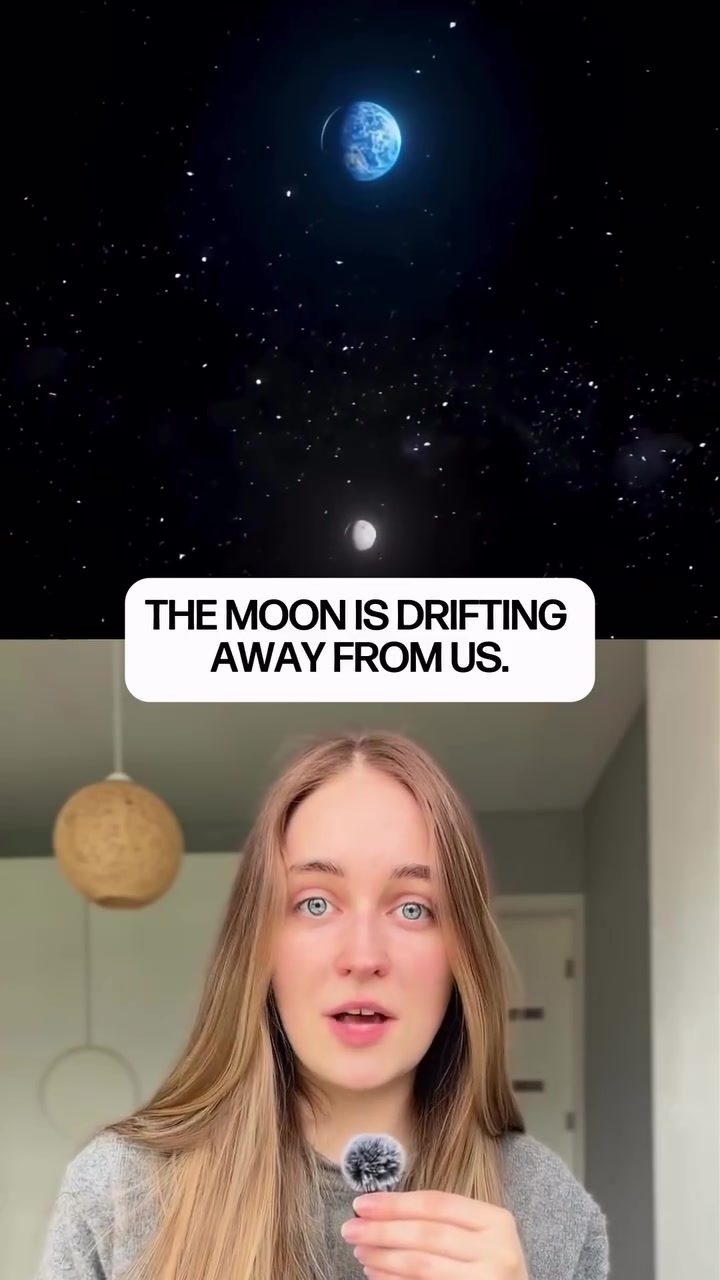
The Moon's Drift and Its Impact on Solar Events
The moon is gradually moving away from Earth, a phenomenon that has significant implications for our understanding of solar events and the future of our planet. This drift, occurring at a rate of about 4 centimeters per year, is a result of tidal interactions between the Earth and the moon. Let's delve into the mechanisms behind this drift, its current effects, and what the future holds for our lunar companion and solar events.
Why This Matters
Understanding the moon's drift is crucial for several reasons. It affects the dynamics of the Earth-moon system, influences the frequency and nature of solar eclipses, and provides insights into the long-term evolution of our planet and the solar system.
The Moon's Drift: Causes and Consequences
Tidal Forces and the Moon's Receding Orbit
The primary driver behind the moon's drift is tidal forces. The moon's gravity pulls Earth's oceans into a bulge, but because Earth spins faster than the moon orbits, this bulge is dragged ahead of the moon. This bulge exerts a gravitational pull on the moon, causing it to slowly move into a wider orbit.
This process, known as tidal acceleration, results in the moon receding from Earth at a rate of approximately 4 centimeters per year. This rate is roughly equivalent to the speed at which human fingernails grow, a stark reminder of the slow but steady nature of this celestial dance.
Measuring the Moon's Distance
Scientists have a precise method for measuring the moon's distance from Earth. During the Apollo missions, astronauts left retroreflectors—mirrors designed to reflect laser beams—on the lunar surface. By shooting lasers at these mirrors and timing how long it takes for the reflections to return, scientists can accurately measure the distance between the Earth and the moon. This technique, known as lunar laser ranging, has been instrumental in tracking the moon's gradual drift.
Historical and Future Views of the Moon
Billions of years ago, the moon was much closer to Earth, appearing significantly larger in the sky. This proximity allowed for perfect solar eclipses, where the moon's apparent size matched that of the sun. However, as the moon continues to drift away, this perfect alignment will change.
In about 600 million years, the moon will be far enough away that Earth will experience its last total solar eclipse. The moon will appear smaller in the sky, and the alignment required for a total solar eclipse will no longer be possible. Instead, we will see annular eclipses, where the moon appears as a dark disk surrounded by the sun's bright ring.
The Sun's Ultimate Fate
While the moon's drift will eventually end total solar eclipses, there is a more dramatic fate awaiting our celestial neighbors. In about 5 billion years, the sun will swell into a red giant, engulfing both the Earth and the moon. This stellar evolution will mark the end of our planet and the moon's existence in their current forms.
Practical Tips for Observing the Moon's Drift
For those interested in observing the moon's drift and understanding its impact on solar events, there are several practical tips to keep in mind:
Using Telescopes and Binoculars
While the moon's drift is too slow to be noticed with the naked eye, using a telescope or a pair of binoculars can enhance your observations. By regularly tracking the moon's position and size, you can gain a deeper appreciation for its gradual recession.
Attending Astronomical Events
Attending public astronomy events and star parties can provide valuable opportunities to learn from experts and observe celestial phenomena. These events often feature knowledgeable astronomers who can explain the moon's drift and its implications for solar events.
Participating in Citizen Science Projects
There are several citizen science projects focused on lunar observations. Projects like the Lunar Recollections project by the Lunar Planetary Institute allow participants to contribute to scientific research by observing and measuring the moon's position and features.
Important Takeaways
The moon's drift is a fascinating and ongoing process that has profound implications for our understanding of the Earth-moon system and solar events. Key takeaways include:
- The moon is receding from Earth at a rate of about 4 centimeters per year due to tidal forces.
- Tidal forces cause the moon to move into a wider orbit, slowly changing its apparent size in the sky.
- Scientists use lunar laser ranging to measure the moon's distance from Earth.
- The moon's drift will eventually end total solar eclipses on Earth, replacing them with annular eclipses.
- In about 5 billion years, the sun will engulf both the Earth and the moon as it swells into a red giant.
Conclusion
The moon's drift is a captivating aspect of our solar system, offering insights into the dynamics of celestial bodies and the future of solar events. By understanding the mechanisms behind this phenomenon, we can appreciate the intricate dance between the Earth and the moon and look forward to the fascinating changes that lie ahead. Whether through personal observation or participation in citizen science projects, there are numerous ways to engage with this natural wonder and deepen our understanding of the cosmos.
Watch the Reel
Questions readers ask
How fast is the moon moving away from Earth, and why does this happen?
The moon is moving away from Earth at a rate of approximately 4 centimeters per year. This drift is primarily caused by tidal forces, which result from the gravitational interaction between the Earth and the moon. As the moon's gravity pulls on Earth's oceans, it creates tidal bulges that exert a force back on the moon, gradually pushing it farther away.
How will the moon's drift affect the frequency of solar eclipses?
As the moon moves away, the frequency of solar eclipses will decrease. This is because the apparent size of the moon in the sky will diminish, making it less likely to completely cover the sun during a solar eclipse. Currently, the moon is perfectly sized to cover the sun, but in the distant future, it will appear smaller, leading to fewer total solar eclipses.
What changes can we expect in the appearance of future solar eclipses due to the moon's drift?
Future solar eclipses will increasingly be annular eclipses. In that type, the moon is too far from Earth to completely cover the sun, leaving a ring of sunlight visible around the moon. This change will progressively take place because the moon's apparent size will be smaller, altering the way it aligns with the sun during an eclipse.
How does the moon's drift impact the Earth-moon system and the wider solar system?
The moon's drift affects the Earth-moon system by gradually lengthening the moon's orbit, leading to changes in tidal patterns and the length of the day. This process is also influencing the Earth's rotation, which slows down over time due to the tidal forces. Understanding these changes provides valuable insights into the long-term dynamics and evolution of our solar system.
Can we predict future solar eclipses even with the moon's drift?
Yes, future solar eclipses can still be predicted with a high degree of accuracy, even considering the moon's drift. Scientists use complex models that account for the moon's changing distance and orbital parameters. These models help us forecast the precise times and locations of future solar eclipses, ensuring that astronomers and enthusiasts can prepare in advance.
Will the moon's distance from Earth affect the moon and sun alignment during eclipses?
As the moon drifts away, the alignment between the moon and the sun during eclipses will change. The moon's apparent size will decrease, making it less likely to fully align with the sun and produce a total solar eclipse. Instead, we will see more partial or annular eclipses, where the moon does not completely cover the sun's disk. This shift in alignment will be a gradual process over millions of years.
What are the implications of the moon's drift on the dynamics of total solar eclipses?
The implications of the moon's drift on total solar eclipses are profound. Over time, the moon's apparent size will decrease, causing the moon to no longer cover the sun entirely during a solar eclipse. This will result in fewer total solar eclipses, which are currently a rare and spectacular phenomenon. The changes in the moon's orbit and distance will transform the dynamics of these celestial events, making them less frequent and visually different.
Related deep dives
Similar reads based on topic and creator.

Recent articles
Fresh deep dives from the latest Reels we unpacked.




Comments
Be the first to comment.