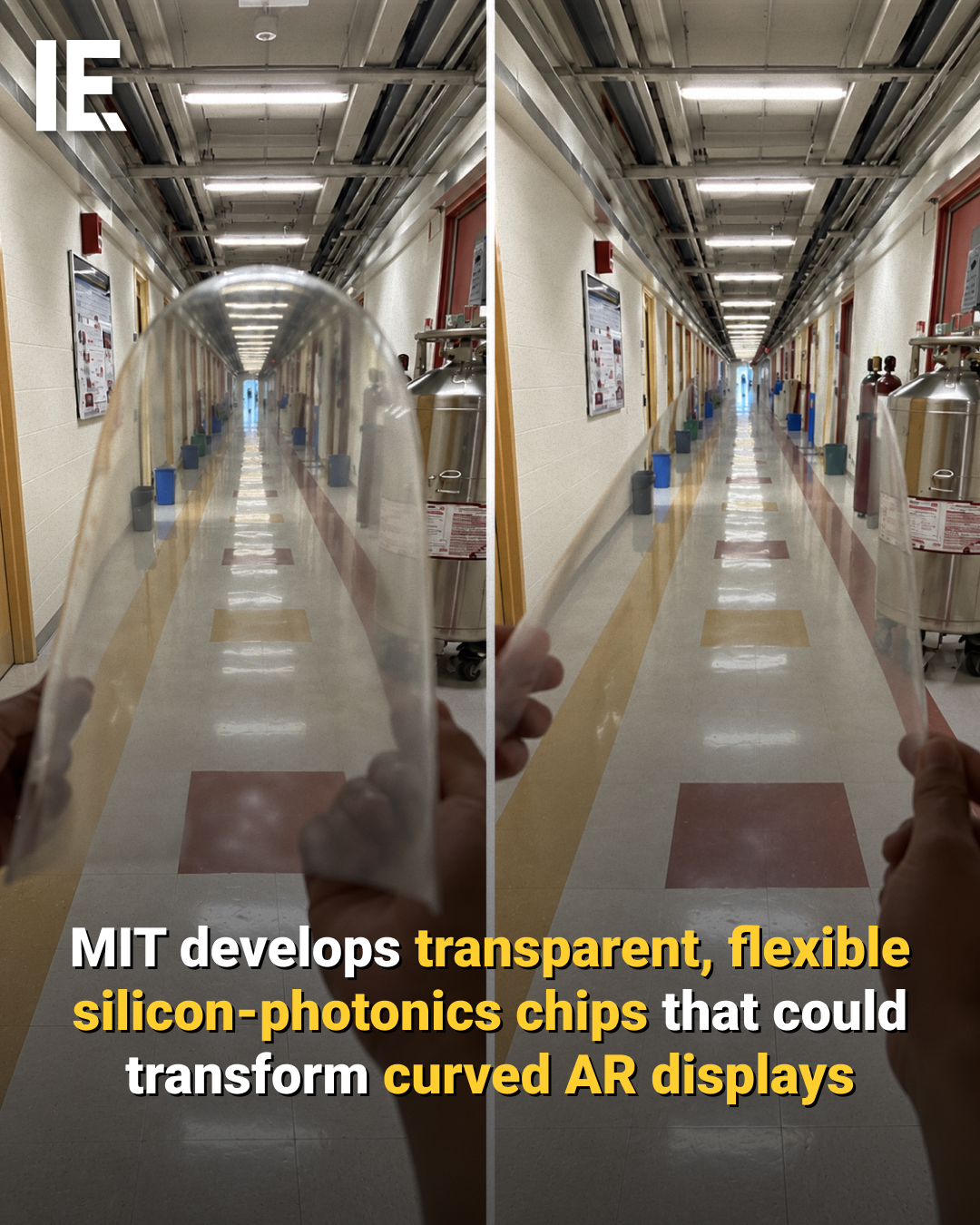
Flexibility and Transparency:
Silicon Chip Discoveries at MIT
MIT has engineered a silicon-photonics chip with an unusual twist: it is both transparent and flexible. This innovative technology could revolutionize augmented reality (AR) displays, making them curvier and more integrated into wearable devices. MIT has developed this novel chip, potentially transforming the future of AR displays.
The New Frontier of Display Technology
While AR glasses have been around for a while, they have yet to take over the marketplace. The technology has long been constrained by rigid, opaque screens. These new silicon-photonics chips are transparent and bendable, allowing for AR devices to be more lightweight and comfortable to wear. It’s a step that could bring AR displays closer to consumers’ everyday lives. The development is exciting for AR device manufacturers and consumers
Light is Digital Information here
Photonics Explained
Photonics is the science and technology of generating, controlling, and detecting photons. Silicon is a commonly used material in photonics because it is abundant, cost-effective, and can be manipulated at the nanoscale. Silicon-photonics integrates photonics with conventional electronics using silicon as a common material. This approach allows for the integration of optical and electrical components on a single chip. Instead of transmitting information through electricity, it transmits information through light.
The tech behind the Flexibility
The key to the chip’s flexibility is its innovative material composition. The chip is made of ultrathin silicon layers that are flexible and transparent. The semiconductor material silicon is traditionally rigid, but the ultrathin layers, when combined with other materials, enable flexibility and transparency. The transparency is achieved by the design of the chip. The chip is designed to allow light to pass through, making it see-through. Unlike traditional silicon chips, which appear opaque, these chips are designed to minimize light absorption and scattering.
The Potential of Silicon-Photonics
Silicon-photonics chips could be used in curved AR displays. The flexible and transparent nature of these chips makes them ideal for creating curved displays that can conform to the shape of the user’s face or body. This could lead to more immersive and comfortable AR experiences. Imagine AR glasses that are lightweight and have a seamless, curved display that extends around the user's field of vision. This could revolutionize the AR industry, making AR displays more comfortable and natural. However, there are challenges to overcome. The technology is still in its early stages, and there are technical hurdles to be addressed.
Practical Applications
Applications for Consumers
- Wearable Devices: The flexibility and transparency of these chips make them perfect for wearable devices. They could be integrated into AR glasses, smartwatches, or even clothing, providing users with a seamless and immersive experience.
- Medical Devices: The chips could be used in medical devices, such as flexible endoscopes or wearable health monitors. The transparency of the chips could allow for better visualization and monitoring of medical conditions.
- Automotive Industry: The chips could be used in the automotive industry for heads-up displays (HUDs) or other vehicle interfaces. The flexibility and transparency of the chips could enable the creation of more immersive and intuitive driving experiences.
Integrating Silicon-Photonics Chips
Silicon-photonics chips can be integrated into existing devices relatively easily. The chips are compatible with existing manufacturing processes, making them a viable option for manufacturers looking to upgrade their products. They can be integrated into various devices, from smartphones to wearable technology. However, to maximize their potential, manufacturers need to invest in R&D and test the technology.
The Future of Augmented Reality
Silicon-photonics chips could be the key to unlocking the potential of AR. Their transparency and flexibility make them ideal for creating curved displays. This innovation could transform how we interact with the digital world. The future of AR looks bright, and silicon-photonics chips are at the forefront of this exciting new frontier.
Watch the Reel
Questions readers ask
What makes MIT's silicon-photonics chip different from traditional silicon chips?
MIT's silicon-photonics chip stands out because it's both transparent and flexible, unlike traditional silicon chips which are typically rigid and opaque. This unique design allows for better integration into wearable devices and curved displays, making it a game-changer for AR technology.
How does the silicon-photonics chip transmit information?
Instead of using electricity like conventional chips, silicon-photonics chips transmit information through light. This is possible because the chip integrates photonics with electronics, using silicon as a common material.
Can I expect to see these chips in consumer AR devices soon?
While the technology is promising, it's still in its early stages. There are technical challenges to overcome before we see these chips widely available in consumer AR devices. However, the potential is there for a more comfortable and immersive AR experience in the future.
What are the potential uses of this technology beyond AR displays?
The flexible and transparent nature of these chips opens up a range of possibilities. They could be used in wearable health monitors, flexible endoscopes, or even integrated into clothing for a seamless tech experience. The applications extend to any field that could benefit from lightweight, unobtrusive, and curved displays.
How does the chip achieve its transparency?
The transparency is achieved through the chip's design, which allows light to pass through with minimal absorption and scattering. This is a significant departure from traditional silicon chips, which are typically opaque.
Are there any other institutions or companies working on similar technology?
While the article doesn't mention specific competitors, it's likely that other institutions and companies are exploring similar technologies. The field of photonics and silicon integration is an active area of research, driven by the potential benefits for various industries, including AR and wearable tech.
Related deep dives
Similar reads based on topic and creator.



Recent articles
Fresh deep dives from the latest Reels we unpacked.



Comments
Be the first to comment.