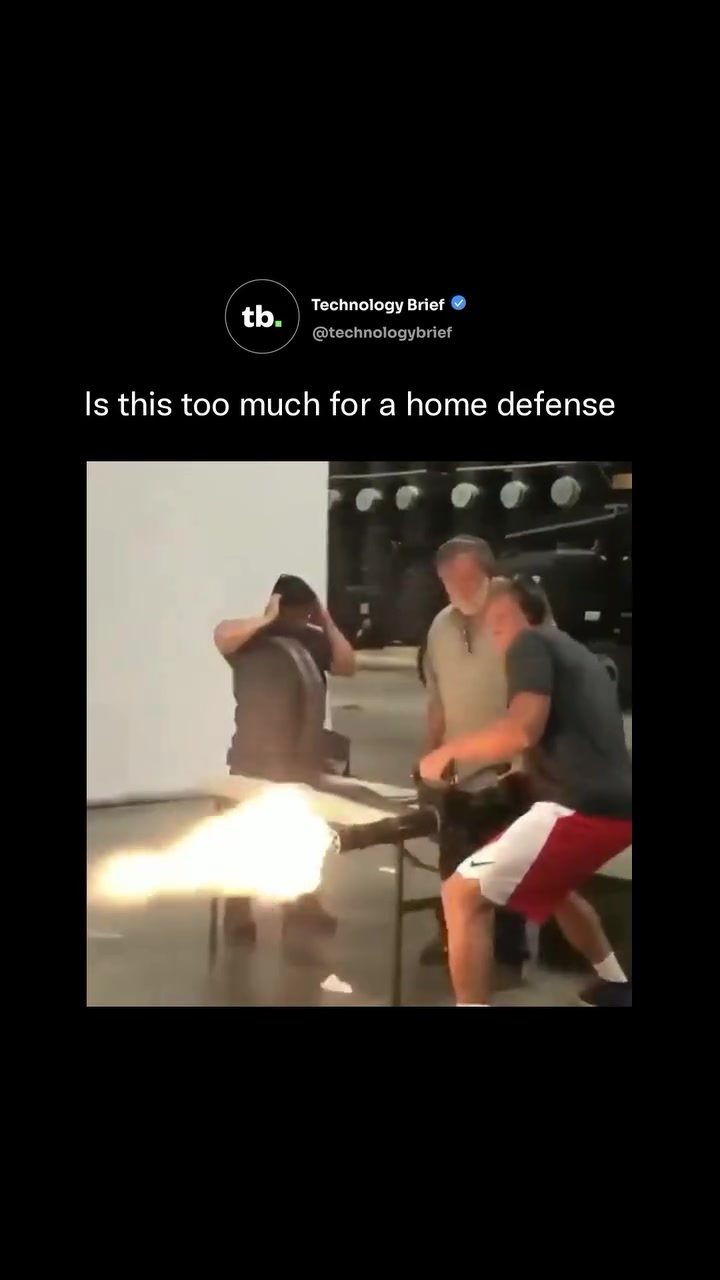
The M134 Minigun: A Powerful but Challenging Firearm for Home Defense
The M134 Minigun is a formidable weapon known for its high rate of fire and impressive capabilities. Originally developed by General Electric for the U.S. military during the Vietnam War, this six-barrel, electrically driven rotary machine gun has left a lasting impact on military tactics and has even found its way into civilian discussions, particularly in the context of home defense.
Why this matters
While the M134 Minigun is a powerful weapon, its use in home defense raises important questions. This discussion is particularly relevant for those interested in home defense and the legal and practical considerations of owning such an extraordinary firearm. Understanding the capabilities, legal requirements, and real-world implications of the M134 Minigun is crucial for anyone considering its use in a home defense scenario.
Main discussion
The Power and Design of the M134 Minigun
The M134 Minigun fires 7.62mm NATO rounds at an astonishing rate of up to 6,000 rounds per minute. This high rate of fire is made possible by its six rotating barrels, which distribute heat across the firing cycle. This design allows the weapon to sustain rates that would quickly destroy a single-barrel gun. The minigun's ability to handle continuous fire makes it a formidable weapon, but it also comes with significant challenges, particularly when it comes to ammunition and heat management.
Ownership: Legal and Practical Considerations
Civilians in the United States can technically own an M134 Minigun, but the legal path to ownership is complex and stringent. Under the National Firearms Act, only miniguns manufactured and registered before May 19, 1986, are eligible for civilian transfer. Potential buyers must navigate a series of hurdles, including passing an FBI background check, filing extensive ATF paperwork, and paying a $200 tax stamp. These requirements are in place to ensure that only responsible and law-abiding individuals can own such a powerful weapon.
However, the legal barriers are just the beginning. The financial cost of owning an M134 Minigun is substantial. Pre-1986 registered miniguns routinely sell for well over $200,000, and operating the weapon at full rate for just a single minute can burn through thousands of rounds of ammunition. The cost of ammunition alone can be prohibitive, making it a significant investment.
Real-World Implications for Home Defense
The M134 Minigun was originally designed to be mounted on helicopters, fixed-wing aircraft, and ground vehicles, not to be used in a home defense scenario. Its size, weight, and power make it impractical for most residential settings. The minigun's high rate of fire and the amount of ammunition it consumes quickly make it an impractical choice for home defense. The noise and potential collateral damage from such a weapon could be catastrophic in a residential area.
Additionally, the six rotating barrels require a substantial amount of space and specific mounting points. This means that integrating an M134 Minigun into a home defense setup would be challenging and likely not feasible.
Is the M134 Minigun Too Much for Home Defense?
The question of whether the M134 Minigun is too much for home defense is a complex one. While its power and rate of fire are impressive, the practical and legal challenges of ownership, along with the weapon's design, make it a poor choice for most home defense scenarios. The minigun's high rate of fire, combined with its cost and the potential for collateral damage, make it more suitable for military or specialized law enforcement use.
Practical tips
For those considering home defense, it's essential to think practically and responsibly. While the M134 Minigun is an impressive weapon, it is not a practical choice for most home defense scenarios. Instead, consider the following tips:
-
Evaluate Your Needs: Assess the specific threats and risks in your area. Most home defense scenarios do not require the firepower of an M134 Minigun.
-
Consider Legal Requirements: Understand the legal requirements for owning and using firearms in your area. Home defense setups should always comply with local laws and regulations.
-
Choose Appropriate Firearms: For home defense, choose firearms that are practical, manageable, and appropriate for the situation. Common choices include shotguns, pistols, and semi-automatic rifles.
-
Training and Practice: Regular training and practice are crucial for effective home defense. Ensure that you and any family members who may need to use a firearm are well-trained and comfortable with the weapon.
-
Safety Measures: Implement safety measures such as secure storage and proper handling protocols to prevent accidental injuries or misuse.
Important takeaways
The M134 Minigun is a powerful and impressive weapon, but it is not a practical choice for most home defense scenarios. Ownership requires navigating complex legal hurdles and a significant financial investment. The weapon's design, size, and rate of fire make it more suitable for military or specialized law enforcement use. Instead, consider firearms that are practical, manageable, and appropriate for home defense. Always prioritize safety, training, and compliance with local laws and regulations.
Conclusion
The M134 Minigun is a remarkable weapon, but its use in home defense raises important questions about practicality, legality, and safety. While it is an impressive firearm, its high rate of fire, substantial cost, and design make it a poor choice for most home defense scenarios. For those considering home defense, it's essential to think practically and responsibly, choosing firearms and strategies that are appropriate for the situation.
Watch the Reel
Questions readers ask
Can a civilian legally own a M134 Minigun for home defense?
For a civilian to legally own an M134 Minigun, they must comply with the National Firearms Act (NFA) of 1934. This involves a lengthy application process, paying a $200 tax, and adhering to local and state laws. The 1986 law implements strict regulations on automatic weapons, particularly 6 barrel guns, meaning most M134s are not eligible for civilian ownership.
What are the practical considerations of using a Minigun for home defense?
The M134 Minigun, with its high rate of fire, poses significant practical challenges for home defense. It consumes ammunition rapidly, requiring bulkier ammunition types and frequent reloading. Additionally, its powerful recoil and large size can be difficult to manage in a home setting, potentially causing property damage or injury.
What type of ammunition does a minigun use for home defense?
The M134 Minigun typically uses 7.62x51mm NATO ammunition, which is more powerful than standard handgun or rifle rounds. This type of ammunition is not ideal for home defense due to its over-penetration capabilities, which can pose a risk to neighbors or innocent bystanders.
Is the M134 Minigun suitable for home defense if registered?
Even if an M134 Minigun is registered under the NFA, it may not be suitable for home defense due to its rapid-fire capabilities. The high rate of fire can lead to collateral damage, excessive noise, and potential legal consequences, as it may be considered excessive force in most situations.
What are the logistical challenges of owning a M134 Minigun for home defense?
Owning a M134 Minigun for home defense presents several logistical challenges, including storage, transportation, and maintenance. The weapon's size, weight, and power requirements necessitate a dedicated space and careful handling. Additionally, the cost of ammunition and the need for specialized training add to the overall burden.
Are there alternative firearms better suited for home defense than a Minigun?
Yes, there are numerous firearms better suited for home defense. Semi-automatic rifles, shotguns, and handguns offer more controlled and manageable alternatives. These firearms provide effective protection without the excessive power and logistical challenges associated with a Minigun, particularly when considering ammunition types, noise, and potential collateral damage.
Recent articles
Fresh deep dives from the latest Reels we unpacked.




Comments
Be the first to comment.