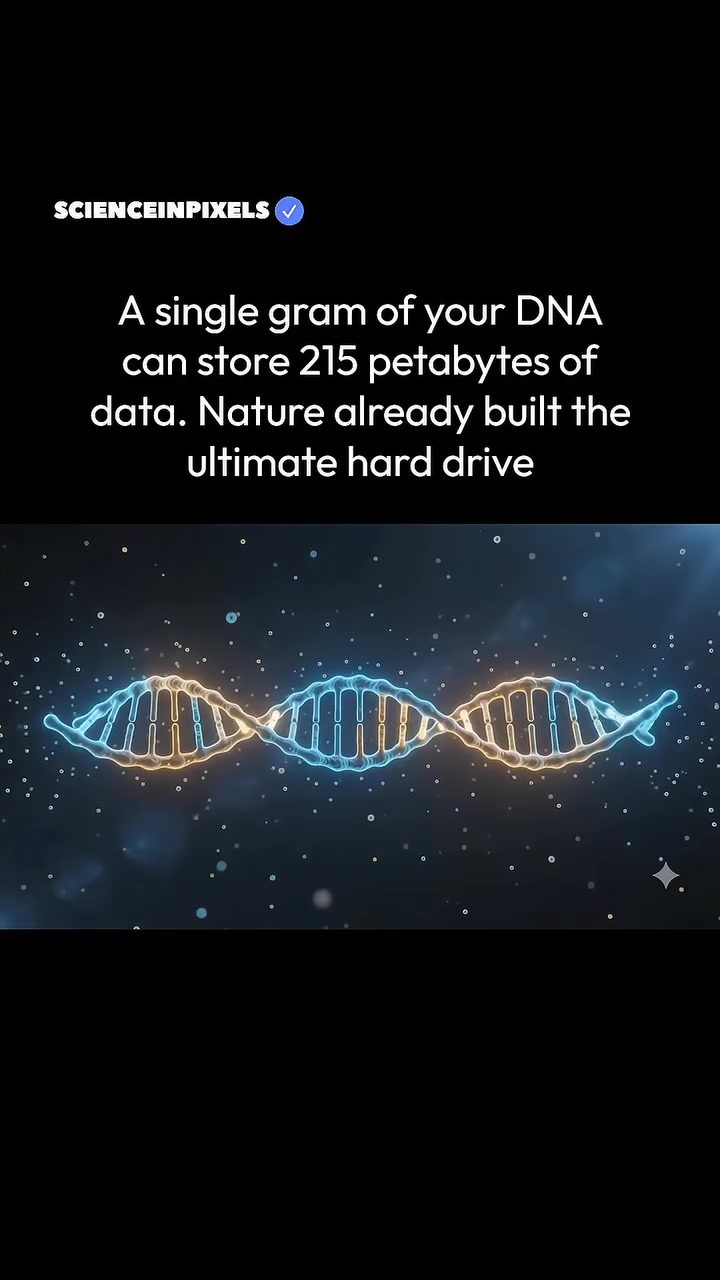
DNA Data Storage
In the digital age, tech companies are constructing vast data centers covering millions of square feet to store the world's digital content. These facilities consume enormous amounts of energy, making data storage a significant challenge. Meanwhile, biology has already solved this problem billions of years ago with a microscopic, four-letter code: Adenine (A), Thymine (T), Cytosine (C), and Guanine (G). These are the building blocks of DNA, which is astonishingly dense and efficient.
Why This Matters
The digital data explosion is a well-known issue. Every photo, video, and file generated daily consumes significant storage space. Conventional storage solutions, such as hard drives and cloud servers, require vast infrastructure and energy. In contrast, DNA storage offers a revolutionary alternative that could reshape how we manage and preserve digital information.
Delving into DNA Data Storage
The Science Behind DNA Storage
DNA, or deoxyribonucleic acid, is a molecule that carries genetic information in all living organisms. It is composed of four nucleotide bases: A, T, C, and G. These bases pair up in specific combinations to form a code that can be read and replicated. Scientists have harnessed this natural coding system to encode digital information.
How DNA Stores Data
The process involves converting digital data into a sequence of the four DNA bases. This sequence is then synthesized into strands of DNA. To retrieve the data, the DNA is sequenced, and the base pairs are read and converted back into digital information. This process has been successfully demonstrated with various types of digital files, including text, images, and even full-length movies, with 100% accuracy.
The Storage Capacity of DNA
The storage capacity of DNA is mind-blowing. A single gram of DNA can hold approximately 215 million gigabytes of data. To put this into perspective, all the data ever created by humanity—every movie, book, tweet, and financial record—could be stored in a container no bigger than a couple of teaspoons of DNA.
Practical Applications
Preserving Digital Heritage
DNA data storage has immense potential for preserving digital heritage. Traditional storage methods are prone to degradation and data loss over time. DNA, however, is incredibly stable and can last for thousands of years under the right conditions. This makes it an ideal medium for archiving important historical and cultural data.
Efficient Data Centers
Data centers are significant contributors to global energy consumption and carbon emissions. DNA storage could dramatically reduce the environmental impact of data storage. By encoding vast amounts of data into tiny amounts of DNA, we could potentially eliminate the need for massive data centers, leading to substantial energy savings and a smaller carbon footprint.
Medical and Scientific Research
DNA storage can also revolutionize medical and scientific research by providing a compact and durable way to store genetic information, experimental data, and research findings. This could accelerate scientific discovery and medical advancements by making data more accessible and easier to manage.
Tips for Understanding DNA Data Storage
- Learn the Basics of DNA: Understanding the structure and function of DNA is crucial for grasping how it can be used for data storage. Familiarize yourself with the four nucleotide bases and how they pair up.
- Explore Current Research: Many scientific journals and institutions publish research on DNA data storage. Staying updated on the latest developments can provide valuable insights into this emerging field.
- Consider the Practical Applications: Think about how DNA storage could be applied in various industries, from data centers to medical research. This can help you understand the broader implications of this technology.
- Join Online Communities: Engage with online communities and forums dedicated to DNA storage. These platforms can be a great source of information and a place to discuss ideas and ask questions.
- Attend Workshops and Conferences: Participating in workshops and conferences focused on DNA storage can provide hands-on experience and the opportunity to learn from experts in the field.
Important Takeaways
DNA data storage represents a significant breakthrough in how we manage and preserve digital information. Its incredible storage capacity, durability, and energy efficiency make it a promising alternative to traditional storage methods. Understanding the science behind DNA storage and its potential applications can help you appreciate the transformative power of this technology.
Conclusion
DNA data storage is more than just a theoretical concept; it is a practical solution to the challenges posed by the ever-growing amount of digital data. By leveraging the natural coding system of DNA, we can create a more efficient, durable, and environmentally friendly way to store information. As research continues to advance, the potential applications of DNA storage will only expand, paving the way for a new era of data management.
Watch the Reel
Questions readers ask
How does DNA store data differently from traditional storage methods?
DNA stores data using a code of four chemical bases: Adenine, Thymine, Cytosine, and Guanine. These bases pair up in specific ways to encode information, making DNA storage incredibly compact and efficient. In contrast, traditional storage methods like hard drives rely on magnetic or electrical signals to store data, requiring much more space and energy.
What is the data storage capacity of DNA compared to traditional methods?
DNA has an immense data storage capacity. A single gram of DNA can hold up to 215 million gigabytes of data, while traditional storage methods like hard drives offer significantly less capacity, and require vast infrastructure. It is estimated that a normal-sized hard drive of 500GB holds only 0.0000023% of the data that a gram of DNA can hold.
How does DNA data storage contribute to digital information management?
DNA data storage offers a revolutionary approach to digital information management by providing a highly compact and durable solution. With the ability to store vast amounts of data in a tiny space, DNA can help reduce the physical footprint and energy consumption of data centers, making it an attractive option for future data storage solutions.
What are the advantages of DNA storage solutions over hard drives?
DNA storage solutions have several advantages over hard drives, including significantly higher data storage density, lower energy consumption, and increased longevity. DNA can last for thousands of years under the right conditions, whereas hard drives have a limited lifespan and are prone to mechanical failure. Additionally, DNA storage can be more stable in extreme conditions.
Can DNA data storage ever become a practical solution for everyday use?
While DNA data storage is still in the early stages of development, it holds great promise for the future. As the technology advances, and the cost of DNA synthesis and sequencing decreases, it could become a practical solution for everyday data storage needs. Researchers are actively working on overcoming the current challenges, such as the speed of data read and write operations, making DNA storage a viable option for large-scale data storage.
How does DNA data storage technology work?
DNA data storage technology involves converting digital data into a sequence of the four DNA bases: A, T, C, and G. This process is called encoding. The synthetic DNA strands are then synthesized and stored. To retrieve the data, the DNA is sequenced to read the base pairs, which are then decoded back into digital information. This process allows for the storage and retrieval of vast amounts of data in a highly efficient manner.
What are the potential challenges in using DNA for data storage?
Despite its advantages, DNA data storage faces several challenges, including the speed of data read and write operations, which are currently slower than traditional methods. Additionally, the accuracy of DNA synthesis and sequencing, as well as the cost, need to be improved. Ongoing research and development aim to address these issues, bringing the technology closer to widespread adoption.
Related deep dives
Similar reads based on topic and creator.



Recent articles
Fresh deep dives from the latest Reels we unpacked.




Comments
Be the first to comment.