Quantum Computing Breakthrough: Unlocking New Possibilities
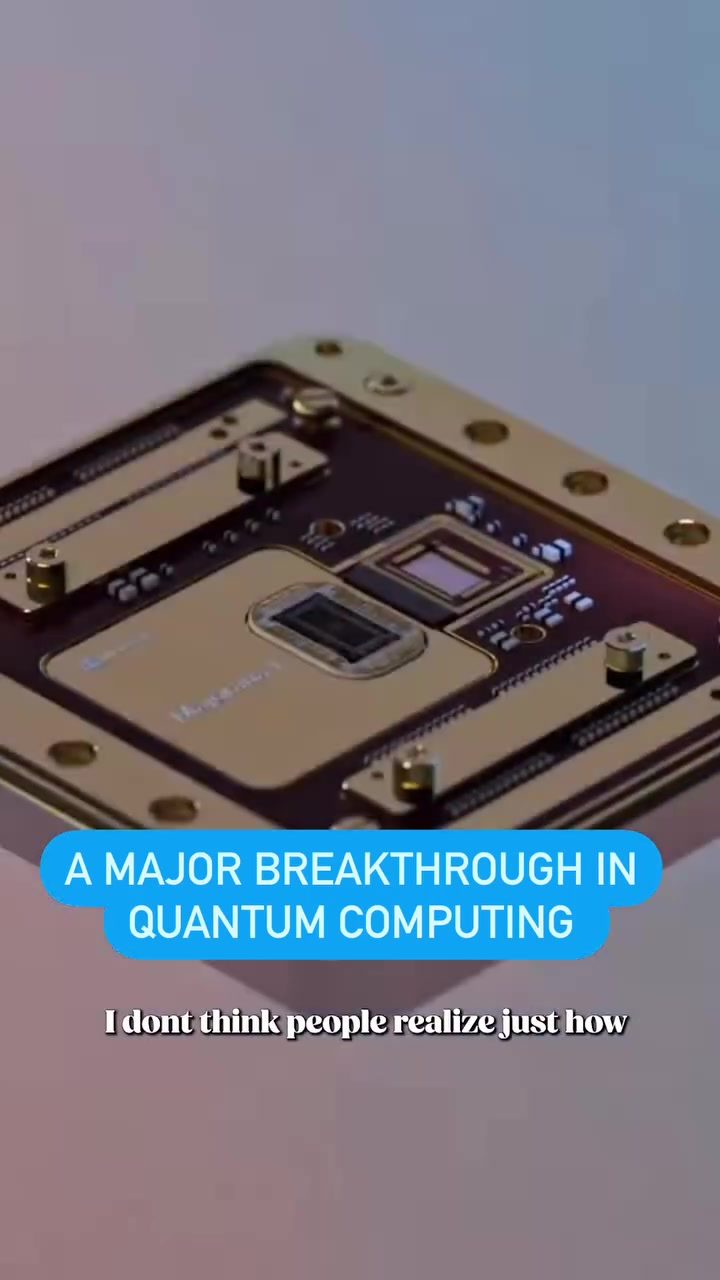
Quantum computing has long been a subject of great interest and speculation, but recent advancements are bringing it closer to practical reality than ever before. Microsoft's introduction of Majorana 1, the world’s first quantum chip powered by a new Topological Core architecture, marks a significant milestone in this field. This breakthrough promises to solve meaningful, industrial-scale problems in years, not decades, by leveraging a groundbreaking type of material known as a topoconductor.
The Power of Topological Conductors
At the heart of this innovation lies a unique type of material called a topoconductor. These materials possess unusual quantum properties that set them apart from regular states of matter like solids, liquids, or gases. One of their most remarkable features is their ability to naturally protect the quantum information they carry. This makes them ideal for creating stable qubits, which are the building blocks of quantum computers. Unlike traditional bits that represent either a 0 or a 1, qubits can exist in multiple states simultaneously, greatly enhancing computational power.
Majorana Particles and Error Resistance
But what makes topoconductors truly special is their ability to create exotic particles known as Majoranas. These particles form qubits with built-in error resistance. Traditionally, qubits have been extremely delicate and error-prone, which has significantly hindered progress in quantum computing. By spreading quantum information across the surface or topology of a material, rather than holding it in a localized particle, the risk of errors is greatly reduced. This innovation paves the way for more reliable and scalable qubits, which are essential for building powerful quantum computers.
Why Qubits Matter
The significance of qubits cannot be overstated. Quantum computers that can scale to a million qubits have the potential to solve problems that would take our most powerful classical computers billions of years to crack. This leap in computational power opens up a world of possibilities that were previously thought to be impossible. Imagine self-healing materials for architecture that can fix cracks in bridges, or even self-healing materials for human use. The potential applications are vast and transformative.
Practical Tips for Understanding Quantum Computing
While the concepts behind quantum computing can be complex, there are a few key points to keep in mind that can help demystify the topic.
Understanding Qubits
Qubits are the fundamental units of quantum computing. Unlike classical bits, which can be either 0 or 1, qubits can exist in multiple states simultaneously. This property, known as superposition, allows quantum computers to process a vast amount of information at once. Imagine a light switch that can be both on and off at the same time—this is a simple analogy for how a qubit works.
The Role of Topological Conductors
Topological conductors are special materials that have unique quantum properties. They naturally protect the quantum information they carry, making them ideal for creating stable qubits. By spreading quantum information across the surface of these materials, scientists can create Majorana particles, which form qubits with built-in error resistance. This breakthrough is crucial for advancing quantum computing technology.
The Impact of Majorana Particles
Majorana particles are exotic particles that form qubits with built-in error resistance. This innovation is a significant step forward in quantum computing, as traditional qubits have been extremely delicate and error-prone. By creating qubits with built-in error resistance, scientists can build more reliable and scalable quantum computers.
Important Takeaways
The introduction of Majorana 1 and the use of topoconductors represent a major leap forward in quantum computing. Here are some key takeaways to remember:
- Quantum Advantage: Quantum computers can solve problems that classical computers would take billions of years to solve.
- Stable Qubits: Topoconductors create stable qubits with built-in error resistance.
- Real-World Applications: The potential applications of quantum computing are vast and transformative, ranging from self-healing materials to advancements in medicine and beyond.
Conclusion
The advent of Microsoft's Majorana 1 and the utilization of topoconductors mark a significant turning point in the field of quantum computing. This breakthrough not only addresses the long-standing issue of error-prone qubits but also opens up a new realm of possibilities. As we continue to explore and develop this technology, the future of computing looks brighter and more exciting than ever before. The potential applications are endless, and the impact on various industries could be profound. We are on the cusp of a new era in technology, and the possibilities are truly exhilarating.
Watch the Reel
Questions readers ask
What is a topoconductor and why is it significant for quantum computing?
A topoconductor is a material with unique quantum properties that differ from regular states of matter. In the context of quantum computing, topoconductors are significant because they enable the creation of more stable and error-resistant qubits, which are crucial for practical quantum computing applications.
What makes Microsoft's Majorana 1 chip different from other quantum computing chips?
Microsoft's Majorana 1 chip is different from other quantum computing chips because it uses a topoconductor architecture. This architecture leverages the unique properties of topoconductors to create Majorana qubits, which are more stable and less prone to errors, making the chip more reliable for solving complex problems.
How do Majorana qubits differ from traditional qubits in quantum computing?
Majorana qubits, utilized in Microsoft's Majorana 1 chip, differ from traditional qubits because they are less susceptible to errors and can maintain their state for longer periods. This is due to the topoconductor architecture which inherently provides greater stability and robustness, helping to create a more reliable quantum computing system.
What are the potential applications of Microsoft's new quantum computing advancements?
Microsoft's advancements in quantum computing, particularly with the Majorana 1 chip, are expected to solve significant industrial-scale problems more quickly. This breakthrough could revolutionize various sectors, including medicine, materials science, and cryptography, by providing faster and more efficient solutions to complex issues.
What are the benefits of using a topoconductor architecture in quantum computing?
A topoconductor architecture offers several benefits, including the creation of more stable and error-resistant qubits. This makes quantum computations more reliable and efficient, thereby accelerating the development and implementation of quantum computing solutions in practical applications.
How does the Majorana 1 chip contribute to the advancement of the quantum computing industry?
The Majorana 1 chip contributes to the advancement of the quantum computing industry by introducing a new level of stability and error resistance in qubits. This breakthrough brings practical quantum computing closer to reality, allowing for the solution of meaningful, industrial-scale problems in a shorter timeframe.
What are Majorana particles and how do they relate to quantum computing?
Majorana particles are a type of quasiparticle that can be used to create Majorana qubits in quantum computing. They are significant because they possess unique properties that make them more stable and less error-prone compared to traditional qubits, enhancing the overall reliability of quantum computing systems.
Related deep dives
Similar reads based on topic and creator.



Recent articles
Fresh deep dives from the latest Reels we unpacked.




Comments
Be the first to comment.