Online Scam Statistics
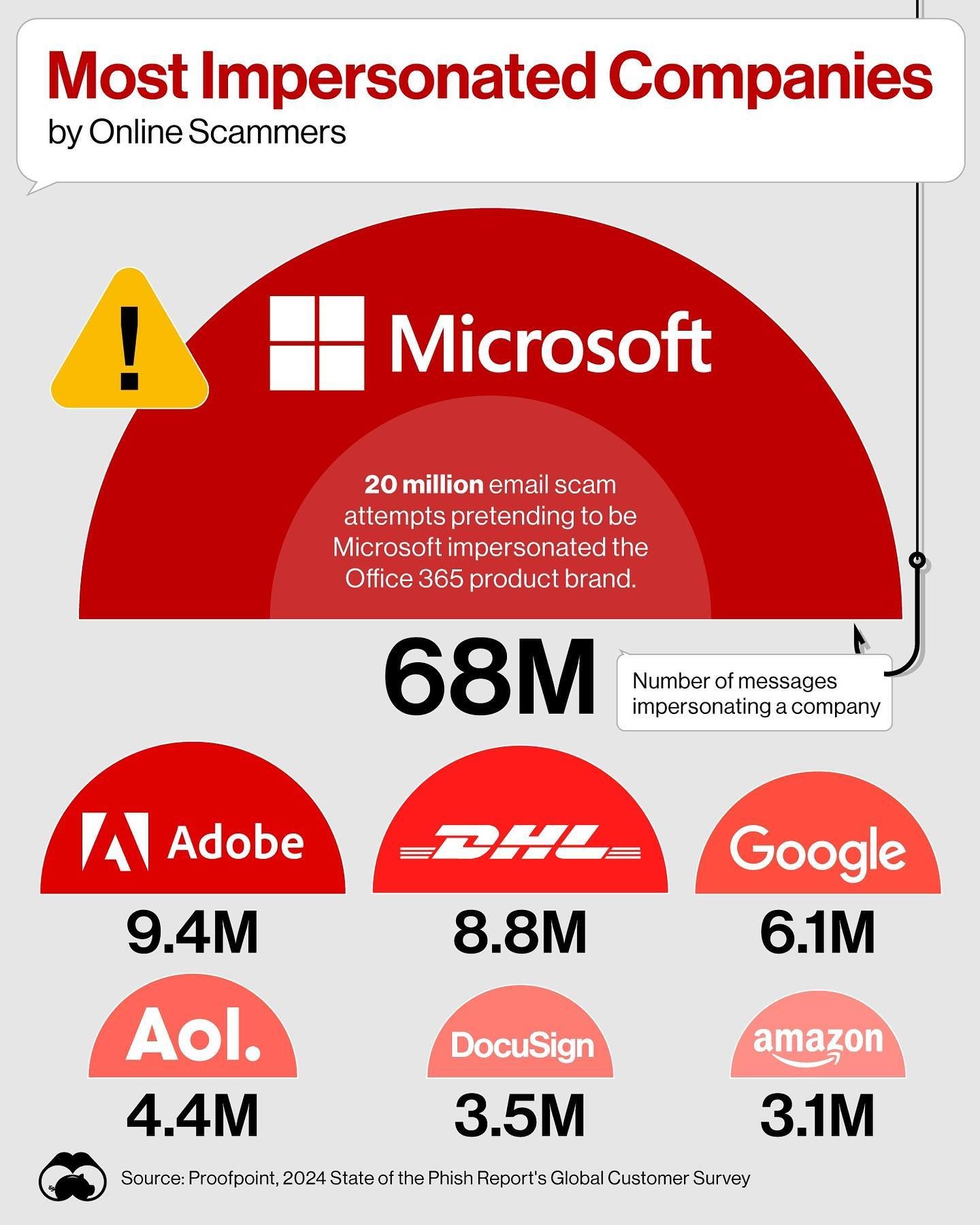
Phishing scams have become increasingly sophisticated, with tech companies bearing the brunt of impersonation attempts. In 2023, Microsoft topped the list as the most impersonated brand, according to data from Proofpoint. This trend highlights the growing threat of cybercrime and the need for heightened vigilance among users and businesses alike.
Context / Why this matters
Phishing scams are a significant cybersecurity threat, exploiting the trust users have in well-known brands. With Microsoft leading the list, it's clear that no company is immune to these tactics. Understanding the scope and methods of these scams is crucial for both individuals and organizations to implement effective protective measures.
Main discussion
The Prevalence of Tech Companies in Phishing Scams
Tech companies dominate the list of the most impersonated brands. Microsoft is the most impersonated, with 68 million scam messages in 2023. Among the other most impersonated companies are Adobe, DHL, Google, AOL, DocuSign, and Amazon. This dominance highlights that tech giants are prime targets for cybercriminals seeking to exploit user trust.
Breakdown of the Top Impersonated Brands
- Microsoft: Leads with 68 million messages, including a significant 20 million email scam attempts impersonating Microsoft Office 365. This indicates a substantial focus on leveraging Microsoft's widespread use in both personal and professional settings.
- Adobe: With 9.4 million messages, Adobe's software, which is widely used in creative industries, is a lucrative target for scammers.
- DHL and Google: Both companies see significant impersonation with 8.8 million and 6.1 million messages, respectively. DHL's logistics services and Google's broad range of products make them high-risk targets.
- AOL, DocuSign, and Amazon: Ranging from 4.4 million to 3.1 million messages, these brands are also heavily impersonated. The variety of services these companies offer makes them attractive to scammers looking to exploit diverse user bases.
Common Scam Methods
The methods used by cybercriminals vary but often involve sophisticated tactics to deceive users. Email scams are particularly prevalent, as seen in Microsoft's 20 million email scam attempts. These emails often mimic the appearance of legitimate communications, tricking users into clicking malicious links or downloading harmful attachments.
Practical Tips
Recognizing and Avoiding Phishing Scams
- Verify the Sender: Always check the email address and domain to ensure it matches the legitimate company domain.
- Hoover Over Links: Before clicking, hover over links to see the actual URL. If it looks suspicious, avoid clicking.
- Check for Spelling Mistakes and Poor Grammar: Legitimate companies usually have professional communications without spelling or grammar errors.
- Be Wary of Urgent Requests: Scammers often create a sense of urgency to pressure users into acting quickly without thinking.
- Use Two-Factor Authentication: Enable two-factor authentication on all your accounts to add an extra layer of security.
Protecting Your Business
- Employee Training: Regularly train employees to recognize and report phishing attempts.
- Update Software: Ensure all software, including email filters, is up to date to protect against known vulnerabilities.
- Monitor for Suspicious Activity: Use monitoring tools to detect unusual login attempts or data exfiltration.
- Implement Strong Password Policies: Enforce strong, unique passwords for all accounts and use a password manager to keep track of them.
What to Do If You Fall Victim to a Scam
- Change Passwords Immediately: If you suspect your credentials have been compromised, change your passwords as soon as possible.
- Report the Incident: Inform the company being impersonated and report the incident to relevant authorities.
- Monitor Accounts: Keep an eye on your financial and other accounts for any unusual activity.
Important takeaways
Microsoft's position as the most impersonated brand underscores the importance of staying informed and vigilant. Cybercriminals are becoming more sophisticated, and tech companies are prime targets. By understanding the methods used and taking proactive steps, individuals and businesses can significantly reduce their risk of falling victim to these scams.
Conclusion
The prevalence of phishing scams targeting tech companies like Microsoft, Adobe, DHL, Google, AOL, DocuSign, and Amazon underscores the need for heightened awareness and proactive measures. By understanding the tactics used by cybercriminals and implementing strong security practices, you can better protect yourself and your business from these ever-evolving threats. Stay informed, stay vigilant, and stay safe.
Watch the Reel
Questions readers ask
What makes Microsoft a prime target for scammers in 2023?
Microsoft's widespread use and brand recognition make it an attractive target. Scammers exploit the trust users have in the brand to deceive them into sharing sensitive information or downloading malicious software.
How many scam messages were sent impersonating Microsoft in 2023?
According to Proofpoint's data, 68 million scam messages were sent impersonating Microsoft in 2023, making it the most impersonated company for the year.
What other companies are commonly impersonated by scammers?
In addition to Microsoft, other frequently impersonated companies include DHL, Google, and Amazon. These companies are often targeted due to their extensive customer base and brand recognition.
What are some common tactics used in phishing scams?
Phishing scams often involve deceptive emails, messages, or websites designed to mimic legitimate communications from trusted brands. These tactics aim to trick users into providing personal information or clicking on malicious links.
How can users protect themselves from Microsoft-related scams?
Users should be cautious of unsolicited messages and verify the authenticity of any communication claiming to be from Microsoft. Avoid clicking on suspicious links or downloading attachments from unknown sources, and consider using multi-factor authentication for added security.
What is the importance of reports like the one from Proofpoint?
Reports like Proofpoint's help raise awareness about the prevalence and methods of cybercrime. By understanding which brands are most frequently targeted, individuals and organizations can better prepare and implement protective measures.
Why are tech companies frequently targeted by cybercrime?
Tech companies are often targeted because of their large user bases and the sensitive information they handle. Scammers aim to exploit the trust users have in these brands to carry out their malicious activities, making tech companies a prime target.
Related deep dives
Similar reads based on topic and creator.


Recent articles
Fresh deep dives from the latest Reels we unpacked.




Comments
Be the first to comment.