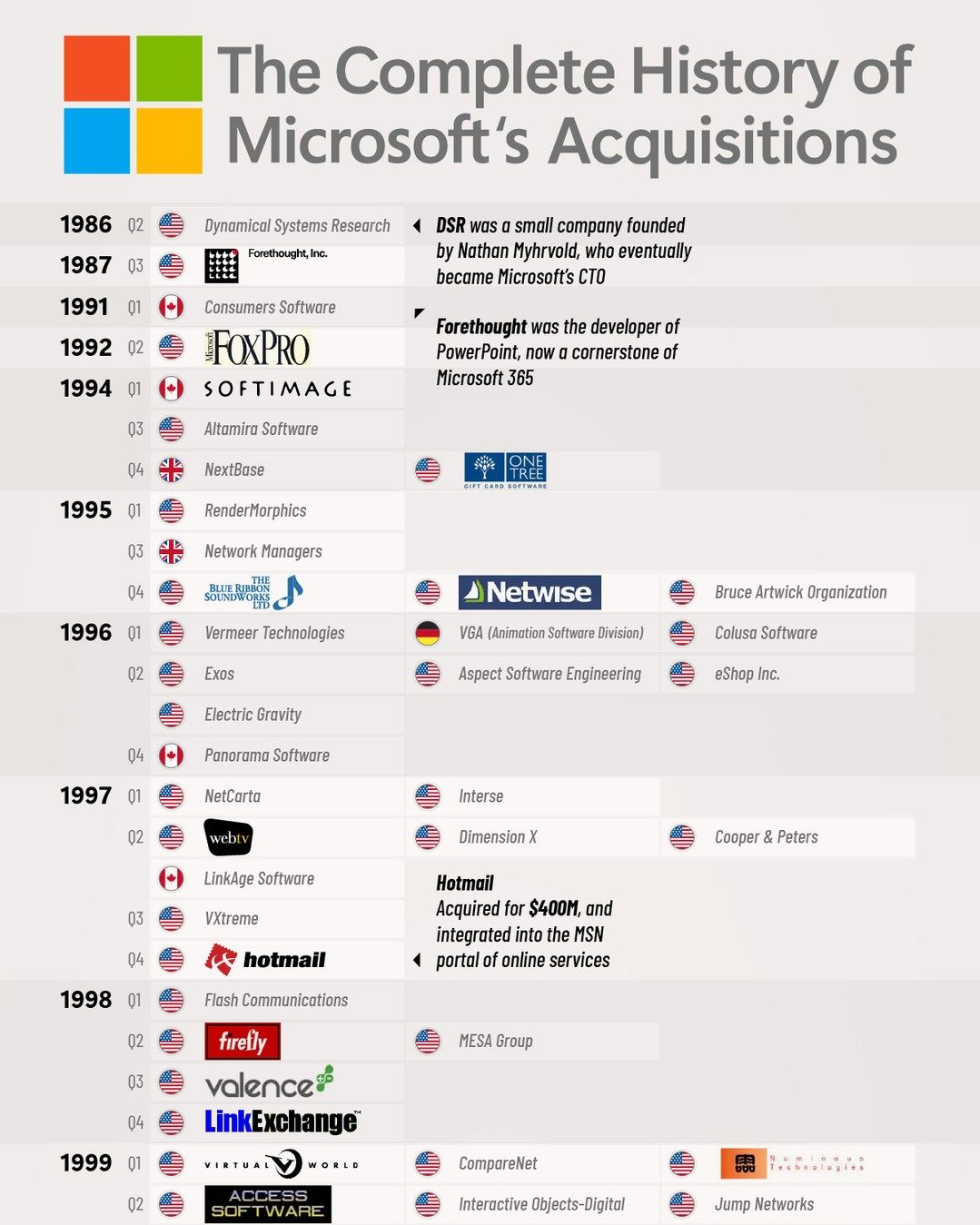
Microsoft Acquisitions
Microsoft's acquisition history is a long tale of strategic expansion. Since 1986, Microsoft has acquired at least 277 companies. This diverse portfolio spans hardware, software, communications, and gaming. Microsoft has steadily increased its focus on gaming acquisitions, especially since the 2000s.
Microsoft's largest video game deal in history was the acquisition of Activision Blizzard for approximately $75 billion. This acquisition underscores Microsoft's commitment to expanding its gaming portfolio.
This article will explore Microsoft's acquisition history, highlighting significant deals and their strategic importance. We will examine how these acquisitions have shaped Microsoft's portfolio and its market position.
Context / Why this matters
Microsoft's acquisition strategy is crucial for understanding its growth and market dominance. Acquisitions allow companies to rapidly expand their product offerings, enter new markets, and acquire cutting-edge technologies. By studying Microsoft's acquisitions, we can gain insights into the tech industry's evolution and the strategies that drive its growth.
The acquisitions include a wide range of companies, from consumer software and hardware to communications and gaming. Each acquisition has played a unique role in shaping Microsoft's trajectory. By analyzing these deals, we can understand how Microsoft has leveraged acquisitions to maintain its competitive edge.
Main discussion
Early Acquisitions
Microsoft's early acquisitions focused on expanding its software offerings. Notable acquisitions from this era include:
- FOXPRO (1987): A database management software
- SOFTIMAGE (1995): A 3D animation software
- VisiCorp (1984): Fundamental to Microsoft's early graphical user interface
These early acquisitions helped Microsoft build a robust software portfolio, which became the foundation for its future growth.
Internet Era Acquisitions
In the late 1990s and early 2000s, Microsoft shifted its focus to the internet era. Some significant acquisitions from this period include:
- Netscape (1999)
- Hotmail (1997): A leading email service
- eShop Inc. (2000): An e-commerce platform
These acquisitions allowed Microsoft to expand into the burgeoning internet market, positioning itself as a major player in online services.
Communications and Productivity
Microsoft's acquisitions in the communications and productivity sectors have been instrumental in shaping its current offerings. Notable acquisitions include:
- Nokia (2014): A major player in mobile devices
- LinkedIn (2016): The professional networking platform
- GitHub (2018): A software development platform
These acquisitions have helped Microsoft diversify its product offerings and expand its user base.
Gaming and Entertainment
Microsoft has significantly increased its gaming acquisitions in recent years. Some of the most notable gaming acquisitions include:
- Activision Blizzard (2023): The largest video game deal in history
- Inflection AI (2023): Expanding its AI capabilities
Microsoft's gaming acquisitions have positioned it as a major player in the gaming industry, offering a wide range of iconic gaming franchises.
Practical tips
Analyzing Acquisitions
When analyzing a company's acquisitions, consider the following:
Market Positioning
Understand how each acquisition aligns with the company's overall market strategy. Does the acquisition help the company enter a new market or strengthen its position in an existing one?
Technology and Talent
Evaluate the technology and talent acquired. Does the acquisition bring in cutting-edge technology or a talented workforce that can drive innovation?
Strategic Fit
Consider how well the acquisition fits with the company's existing portfolio. Does it complement current products or services, or does it introduce new areas of focus?
Case Study: Activision Blizzard Acquisition
Microsoft's acquisition of Activision Blizzard for $75 billion was a game-changer. Here's how to analyze this acquisition:
Market Positioning
Activision Blizzard is one of the world's largest gaming companies, known for iconic franchises like Call of Duty, World of Warcraft, and Candy Crush. This acquisition significantly boosted Microsoft's position in the gaming industry.
Technology and Talent
Activision Blizzard brings a wealth of talent and technology to Microsoft, including advanced gaming technologies, intellectual property, and a talented team of developers and designers.
Strategic Fit
The acquisition integrates seamlessly with Microsoft's existing gaming portfolio, including Xbox and Game Pass. It has helped Microsoft expand its reach in the mobile, PC, and console gaming sectors.
How to Use This Analysis
By following this approach, you can analyze any company's acquisitions and gain insights into their strategic goals and market positioning.
Important Takeaways
Key Takeaways
Microsoft's acquisition strategy has been a critical driver of its growth and market dominance. Key takeaways include:
- Diversification: Microsoft has diversified its portfolio through strategic acquisitions, entering new markets and expanding its product offerings.
- Innovation: Acquisitions have brought in cutting-edge technologies and talented teams, driving innovation and growth.
- Market Positioning: Microsoft's acquisitions have helped it maintain a competitive edge and strengthen its market position.
Conclusion
Microsoft's acquisition history is a testament to its strategic vision and growth mindset. By acquiring key players in various industries, Microsoft has expanded its portfolio, entered new markets, and maintained its competitive edge. Whether it's software, communications, or gaming, Microsoft's acquisitions have played a crucial role in shaping its trajectory.
Watch the Reel
Questions readers ask
What was Microsoft's first major acquisition and in which sector did it operate?
Microsoft's first major acquisition was Forefront, a company specializing in software development tools. This acquisition in 1986 marked Microsoft's initial foray into expanding its software capabilities and development resources.
Which acquisition significantly boosted Microsoft's gaming portfolio?
The acquisition of Activision Blizzard for approximately $75 billion in 2023 significantly boosted Microsoft's gaming portfolio. This deal highlighted Microsoft's commitment to expanding its gaming presence and maintaining its market dominance in the industry.
What was the strategic importance of Microsoft's acquisition of LinkedIn in 2016?
The acquisition of LinkedIn in 2016 for $26.2 billion was a key move by Microsoft to bolster its professional networking and communications capabilities. This acquisition allowed Microsoft to integrate LinkedIn's vast professional network into its suite of productivity tools, enhancing collaboration and networking features.
How did the acquisition of GitHub in 2018 impact Microsoft's software development strategy?
The acquisition of GitHub for $7.5 billion in 2018 was pivotal for Microsoft's software development strategy. It allowed Microsoft to integrate GitHub's extensive developer community and version control systems into its own software ecosystem, fostering innovation and collaboration among developers.
What was the significance of Microsoft's acquisition of Nokia's devices and services business in 2014?
The acquisition of Nokia's devices and services business in 2014 for $7.2 billion was a significant move by Microsoft to expand its hardware portfolio. This acquisition aimed to enhance Microsoft's presence in the mobile market and integrate Nokia's hardware expertise with Microsoft's software solutions.
Which acquisition played a crucial role in Microsoft's entry into the web browser market?
Microsoft's acquisition of Netscape in 1995 played a crucial role in its entry into the web browser market. This acquisition provided Microsoft with the necessary technology and expertise to develop its own web browser, Internet Explorer, which became a significant player in the browser wars of the late 1990s and early 2000s.
How did Microsoft's acquisition of Hotmail in 1997 shape its communications strategy?
The acquisition of Hotmail in 1997 for approximately $400 million was a strategic move by Microsoft to enter the email communications market. This acquisition allowed Microsoft to integrate Hotmail's popular web-based email service into its suite of communications tools, eventually leading to the development of Microsoft Outlook and other related services.
Related deep dives
Similar reads based on topic and creator.


Recent articles
Fresh deep dives from the latest Reels we unpacked.




Comments
Be the first to comment.