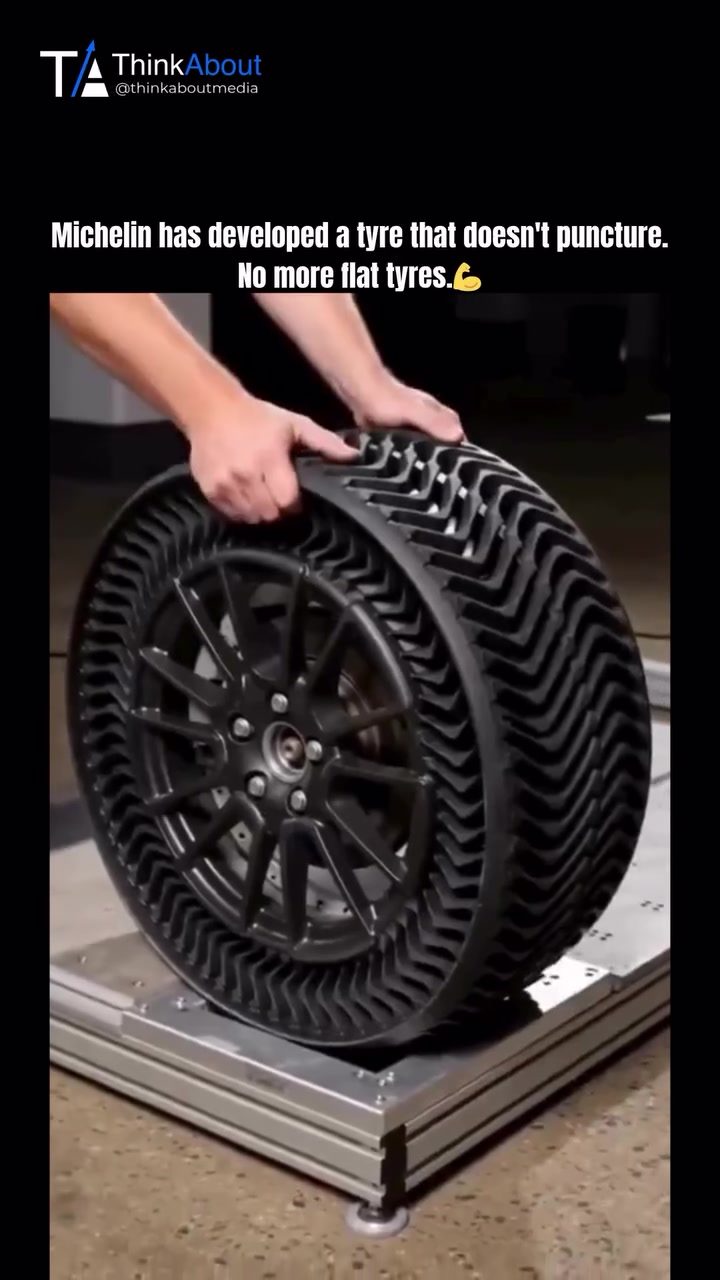
Innovative Tire Technology: Michelin's Puncture-Resistant Tires
Michelin, a pioneer in automotive technology, has unveiled an innovative tire design that promises to revolutionize the industry by addressing one of the most common and frustrating issues: punctures. This new tire uses a flexible spiral structure instead of traditional air-filled construction to absorb shocks, potentially reducing accidents caused by flat tires and minimizing the environmental impact of discarded tires.
Context
Puncture-proof tires are a goal that many tire manufacturers have been pursuing for years. Traditional pneumatic tires, while effective, are susceptible to punctures from sharp objects on the road. This not only inconveniences drivers but also poses significant safety risks and contributes to environmental waste. Michelin's latest innovation aims to tackle these challenges head-on, offering a more reliable and eco-friendly solution.
Main Discussion
The Flexible Spiral Structure
Michelin's new tire design is built around a flexible spiral structure that replaces the conventional air-filled chamber. This innovative design absorbs shocks and impacts more effectively, reducing the risk of punctures.
Potential Benefits
The primary benefit of this new tire design is its puncture resistance. By eliminating the risk of punctures, drivers can enjoy a smoother, safer driving experience. Additionally, the reduction in punctured tires can lead to fewer roadside emergencies and less fuel wastage.
Future Challenges
Despite the promising features, there are still several challenges to overcome before this tire design becomes widely available. One of the key areas of concern is fuel efficiency. The flexible spiral structure needs to be optimized to ensure that vehicles do not experience a significant drop in fuel efficiency. Additionally, the performance of these tires on snow roads is another critical factor that requires further testing and development. These challenges are expected to be addressed as the tire design progresses through its testing phase.
Environmental Impact
One of the most significant benefits of Michelin's new tire design is its potential to reduce the environmental impact of discarded tires. Traditional tires, once punctured or worn out, contribute to a significant amount of waste. By extending the lifespan of tires and reducing the need for frequent replacements, this innovative design can help minimize tire-related waste.
Testing and Development
As of 2026, Michelin's puncture-resistant tire is still in the testing phase. This means that while the initial results are promising, further testing is necessary to fine-tune the design and ensure that it meets all safety and performance standards. This phase is crucial for addressing issues related to fuel efficiency, snow road performance, and overall durability.
Practical Tips
While waiting for Michelin's puncture-resistant tires to hit the market, there are several practical tips you can follow to minimize tire-related issues:
- Regular Tire Maintenance: Regularly check your tire pressure and tread depth to ensure they are in good condition.
- Avoid Potholes and Sharp Objects: Be mindful of the road surface and avoid driving over potholes or sharp objects that can cause punctures.
- Emergency Kit: Always keep an emergency kit in your car, including a spare tire, jack, and tire iron.
- Fuel Efficiency: Check your tire pressure regularly, as underinflated tires can significantly reduce fuel efficiency.
- Seasonal Tires: Use seasonal tires appropriate for the weather conditions to ensure better performance and durability.
Important Takeaways
Michelin's new puncture-resistant tire technology represents a significant step forward in automotive technology. By addressing the common issue of punctures, this innovation has the potential to enhance safety, reduce environmental waste, and improve the overall driving experience. While there are still challenges to overcome, the progress made so far is promising, and further developments are eagerly anticipated.
Conclusion
Michelin's commitment to innovation is evident in its development of a puncture-resistant tire using a flexible spiral structure. This groundbreaking design has the potential to transform the automotive industry by reducing punctures, improving safety, and minimizing environmental impact. As the tire progresses through its testing phase, it's clear that Michelin is dedicated to overcoming any remaining challenges, paving the way for a future where flat tires are a thing of the past. Keep an eye on this exciting development as it progresses toward market readiness.
Watch the Reel
Questions readers ask
How do Michelin's puncture-resistant tires work?
Michelin's puncture-resistant tires feature a flexible spiral structure that replaces traditional air-filled construction. This design absorbs shocks and impacts, effectively preventing punctures from sharp road debris.
What are the benefits of Michelin's new tire design?
The primary benefits include enhanced safety by reducing the risk of accidents due to flat tires, a smoother driving experience, and a decrease in roadside emergencies. Additionally, these tires contribute to a lower environmental impact by reducing the number of discarded tires.
Are Michelin's puncture-resistant tires suitable for all vehicles?
While Michelin's puncture-resistant tires offer numerous advantages, their suitability for all vehicles is still being determined. It is advisable to consult with a tire specialist or the vehicle manufacturer to ensure compatibility and performance.
How does the spiral structure in Michelin's tires absorb shocks?
The spiral structure in Michelin's tires is designed to flex and bend under pressure, effectively dispersing and absorbing the energy from impacts. This mechanism helps to prevent punctures and maintains the tire's integrity even when encountering sharp objects.
What impact do these tires have on roadside emergencies?
Michelin's puncture-resistant tires significantly reduce the likelihood of roadside emergencies by minimizing flat tires. This not only enhances driver safety but also decreases the need for roadside assistance and the associated inconveniences.
How does this tire design contribute to environmental sustainability?
By reducing the number of punctures and extending tire lifespan, Michelin's design decreases the environmental waste generated from discarded tires. This contributes to a more sustainable automotive industry by lowering the need for frequent tire replacements.
What makes Michelin a leader in tire innovation?
Michelin has consistently pushed the boundaries of tire technology with innovative designs like the puncture-resistant tires. The company's commitment to enhancing safety, reliability, and sustainability makes it a leader in the tire industry.
Related deep dives
Similar reads based on topic and creator.


Recent articles
Fresh deep dives from the latest Reels we unpacked.




Comments
Be the first to comment.