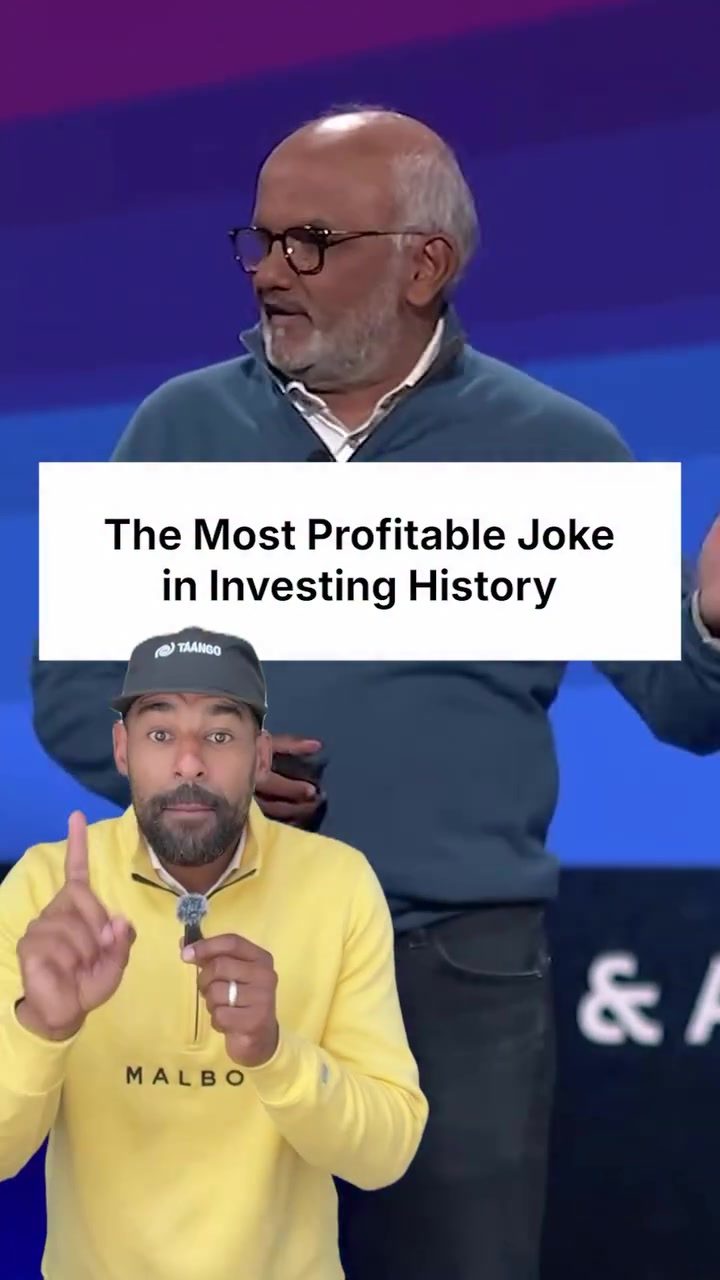
Investing in Leadership: The TAANGO Thesis
The impact of leadership on a company's success is often discussed, but a unique thesis emerged from the sharp mind of Michael Milken. This thesis, which has gained significant traction in the investing world, focuses on a particular pattern: buying stocks of U.S. companies when an Indian-born CEO takes the helm. The interesting part? This observation started as a joke.
Context / Why This Matters
Michael Milken, a controversial yet influential figure in American finance, made this observation offhandedly at a conference. He noted that when a U.S. company replaces its American-born CEO with someone born in India, the stock tends to perform exceptionally well. This simple rule has generated remarkable returns—50 times the initial investment over 15 years, to be precise. That's a 30% annual Internal Rate of Return (IRR), outperforming the S&P 500 by 7.5 times over the same period.
These numbers are astonishing, and they don't just ask for your opinion—they demand your attention. But what's behind this pattern? The key lies not in the country of origin but in the environment these leaders grew up in.
The TAANGO Thesis
The Gauntlet of Elite Access
The leaders tracked by this thesis grew up in environments where elite access required outperforming thousands of equally hungry people. There were no legacy admissions, no inherited Rolodexes, and no safety nets. Pure performance was the only currency. This environment produces a specific kind of operator: disciplined, long-term oriented, comfortable with complexity, and motivated by results, not position.
Long-term Thinking and Complexity
Long-term thinking is a hallmark of these leaders. They understand that success is a marathon, not a sprint, and they are comfortable dealing with complexity. This ability to navigate intricate challenges without getting overwhelmed is a crucial trait in today's fast-paced business world.
Zero Ego About Position
Another defining characteristic is their approach to position. These leaders have zero ego about their position but are results-driven. They understand that their role is to drive the company forward, not to accumulate titles or power. This mindset fosters a culture of performance and innovation.
Practical Tips
Evaluating Leadership Transitions
When evaluating a leadership transition, skip the resume. Instead, ask about the challenges they've had to overcome. What and who did they have to beat to get to the top? What did they have no choice but to become? These questions can give you deeper insights into a leader's character and potential.
Identifying Potential
Look for leaders who have survived a competitive gauntlet. They are likely to bring long-term thinking, tolerance for complexity, and a results-driven mindset to their new roles. These traits are invaluable in any industry or business model.
Beyond the Birthplace
Remember, this thesis is not about where someone was born; it's about the path they took to get to the top. The challenges they faced and the skills they developed along the way are what truly matter.
Important Takeaways
- Pattern Recognition: The pattern of exceptional stock performance when an Indian-born CEO takes over a U.S. company is not just a coincidence. It's a reflection of the unique environment and challenges these leaders have faced.
- Leadership Traits: Long-term thinking, tolerance for complexity, and a results-driven mindset are key traits to look for in leaders.
- Evaluation Criteria: When evaluating a leadership transition, focus on the path the leader has taken and the challenges they've overcome.
Conclusion
The TAANGO thesis, born from Michael Milken's offhand observation, has proven to be a powerful investing strategy. It highlights the importance of leadership traits forged in competitive environments. By understanding and applying these insights, you can make more informed investment decisions and identify potential in leaders beyond their resumes.
Watch the Reel
Questions readers ask
What is the TAANGO Thesis and who proposed it?
The TAANGO Thesis is an investing strategy based on the observation that U.S. companies' stocks often perform exceptionally well when an Indian-born CEO is appointed. This thesis was proposed by Michael Milken, a prominent figure in American finance, who made the observation at a conference.
What makes Indian-born CEOs successful according to the TAANGO Thesis?
The TAANGO Thesis suggests that Indian-born CEOs develop unique leadership qualities from growing up in highly competitive environments. These environments often demand individual performance, fostering skills that contribute to their success in leadership roles.
How significant is the stock performance improvement when an Indian-born CEO is appointed?
According to Michael Milken's observations, the stock performance of U.S. companies can improve remarkably when an Indian-born CEO is appointed. In fact, this strategy has generated returns up to 50 times the initial investment, making it a notable pattern in the investing world.
Why did Michael Milken initially make this observation?
Michael Milken initially made this observation offhandedly at a conference. What started as a joke has since gained significant traction in the investing community due to the consistent pattern of stock performance improvements.
What are some key factors that contribute to the success of Indian-born CEOs in U.S. companies?
Indian-born CEOs often bring a strong work ethic, resilience, and adaptability to their roles. These qualities, combined with a deep understanding of diverse markets, can drive innovation and profitability in U.S. companies, contributing to exceptional stock performance.
Are there specific industries where the TAANGO Thesis is more applicable?
The TAANGO Thesis is applicable across various industries, as the success of Indian-born CEOs is not limited to a specific sector. The key factor is the individual's leadership qualities and adaptability, which can positively impact any industry.
Related deep dives
Similar reads based on topic and creator.


Recent articles
Fresh deep dives from the latest Reels we unpacked.




Comments
Be the first to comment.