Earthquake Activity in the Americas
The Americas have been experiencing a surge in seismic activity, with a recent 6.0 magnitude earthquake striking Mexico. This event is part of a broader pattern of increased earthquake frequency across both North and South America in recent weeks. While this particular earthquake was not catastrophic, it has raised attention due to its inclusion in a growing list of seismic events.
Context: Why This Matters
Earthquakes are a natural phenomenon caused by the sudden release of energy built up in the Earth's crust. This energy release results in seismic waves that cause the ground to shake. The Americas, situated along the Ring of Fire, a major area in the basin of the Pacific Ocean where a large number of earthquakes and volcanic eruptions occur, are particularly susceptible to seismic activity.
Recent events have raised concerns among scientists and the public alike. The increased frequency and clustering of earthquakes have prompted closer scrutiny, even though scientists assure that this behavior is within the realm of normal tectonic activity. Understanding the seismic landscape of the Americas and the factors contributing to recent activity is crucial for preparedness and response.
Recent Earthquake Activity in the Americas
Mexico and Surrounding Regions
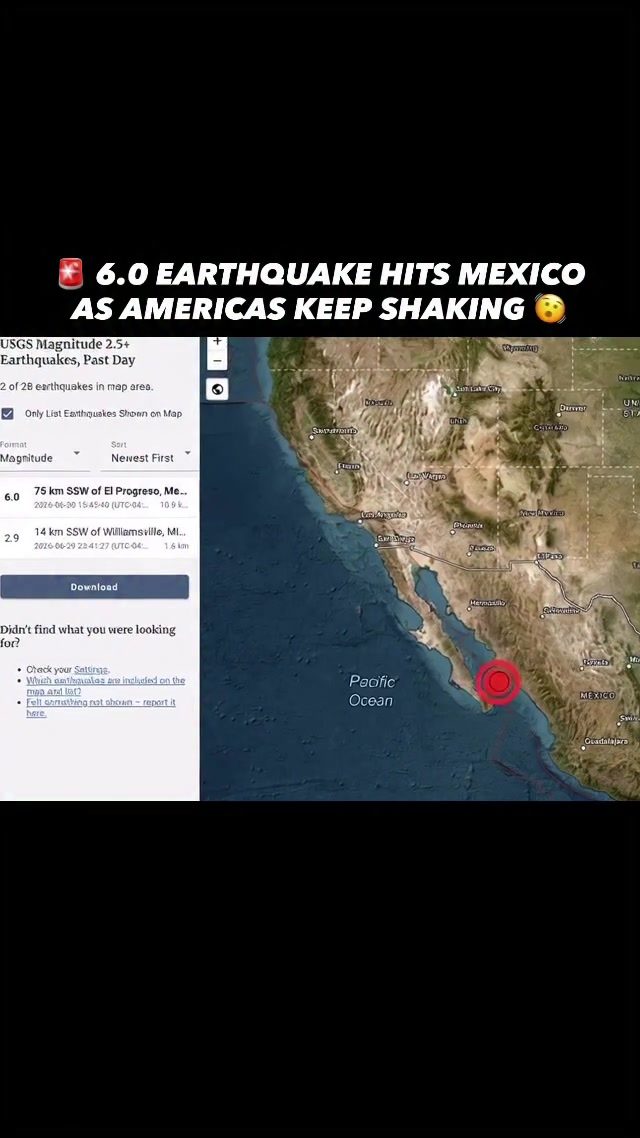
The recent 6.0 magnitude earthquake in Mexico, with its epicenter located 75 km southwest of El Progreso, is a stark example of the ongoing seismic activity. This event, occurring on June 29, 2026, at 15:43:40 UTC-6, is part of a broader trend of earthquakes impacting regions from Mexico down through Central and South America.
Other Notable Areas
While the recent Mexico earthquake is a significant event, it is not an isolated occurrence. Across the Americas, from the Pacific Northwest to the Andes, there has been a noticeable uptick in seismic activity. These events range from minor tremors to more substantial earthquakes, all contributing to a pattern that has people paying closer attention. For instance, the USGS Magnitude 2.5+ events map highlights 28 recent earthquakes, with Mexico's 6.0 magnitude being one of the more prominent ones.
Understanding Earthquake Patterns
Earthquakes are often clustered in specific regions due to the presence of tectonic plate boundaries. The Americas are home to several such boundaries, including the boundary between the Pacific and North American plates, which runs through the western part of the continent. The interaction of these plates results in frequent seismic activity.
Factors Contributing to Recent Activity
Several factors could contribute to the recent increase in seismic activity across the Americas:
- Tectonic Stress Accumulation: Over time, stress builds up along fault lines as tectonic plates move. When this stress is released, it results in earthquakes.
- Geological Hotspots: Certain regions, such as the Ring of Fire, are naturally more prone to seismic activity due to their geological makeup.
- Human Activities: While less common, human activities such as mining, reservoir-induced seismicity, and hydraulic fracturing can sometimes induce earthquakes.
Practical Tips for Staying Safe
Given the increased seismic activity, it's essential to be prepared. Here are some practical tips to ensure safety:
- Know Your Location: Understand the seismic risk in your area. If you are in a high-risk zone, familiarize yourself with local emergency protocols.
- Create an Emergency Plan: Develop a family emergency plan that includes evacuation routes, meeting points, and communication strategies.
- Prepare an Emergency Kit: Stock an emergency kit with essentials such as water, non-perishable food, first-aid supplies, a flashlight, and important documents.
- Secure Your Home: Reinforce your home by securing heavy furniture, installing earthquake-resistant hardware, and securing water heaters and gas lines.
- Stay Informed: Follow reliable sources for earthquake updates and safety guidelines. The USGS and local emergency management agencies are good resources.
Important Takeaways
- Increased Seismic Activity: The Americas are experiencing a noticeable uptick in seismic activity, with recent events in Mexico and other regions.
- Tectonic Behavior: Scientists attribute the recent activity to normal tectonic behavior, but the frequency and clustering are drawing attention.
- Preparedness: Being prepared is key. Know your location's risk, create an emergency plan, and stay informed.
Conclusion
The recent 6.0 magnitude earthquake in Mexico is a reminder of the ongoing seismic activity in the Americas. Understanding the patterns and factors contributing to these events is crucial for preparedness and response. By staying informed and taking practical steps, individuals and communities can better navigate the risks associated with earthquakes. As the ground continues to move, preparedness and awareness will be essential in mitigating the impact of future seismic events.
Watch the Reel
Questions readers ask
What caused the recent 6.0 magnitude earthquake in Mexico?
The recent 6.0 magnitude earthquake in Mexico was caused by the sudden release of energy built up in the Earth's crust, resulting in seismic waves that shook the ground. This event is part of a broader pattern of increased seismic activity across the Americas, which are situated along the Ring of Fire, a region prone to such events.
Why is the Americas region particularly prone to earthquakes?
The Americas region is particularly prone to earthquakes because it is located along the Ring of Fire, a major area in the Pacific Ocean basin where a large number of earthquakes and volcanic eruptions occur. This geographic position makes the region susceptible to increased seismic activity.
What is the earthquake magnitude scale and how does it apply to the recent Mexico earthquake?
The earthquake magnitude scale measures the size of an earthquake based on the amplitude of seismic waves. The recent 6.0 magnitude earthquake in Mexico indicates a moderate level of shaking. While it was not catastrophic, it is notable as part of the recent surge in seismic activity in the Americas.
How can individuals prepare for earthquakes in the Americas?
To prepare for earthquakes, individuals in the Americas should stay informed about local seismic activity and follow guidelines for earthquake safety. This includes securing heavy furniture, having an emergency kit ready, and knowing safe spots in your home or workplace. Participating in drills can also enhance preparedness.
What areas in the Americas have been most affected by recent seismic activity?
Recent seismic activity has been notable across both North and South America. While the latest 6.0 magnitude earthquake struck Mexico, other regions have also experienced increased earthquake frequency. A seismic map of the Americas can provide a visual representation of these events and highlight areas of heightened activity.
What should I do if an earthquake occurs while I am indoors?
If an earthquake occurs while you are indoors, take immediate protective measures. Drop to the ground, take cover under a sturdy piece of furniture, and hold on until the shaking stops. Avoid windows, exterior walls, and anything that could fall on you. If you are in bed, stay there and protect your head with a pillow.
Why is it important to monitor seismic activity in the Americas?
Monitoring seismic activity in the Americas is crucial for timely alerts and response. Understanding the pattern of earthquakes helps officials and residents prepare for potential events. Improved awareness and preparedness can reduce the risk and impact of earthquakes in the region.
Recent articles
Fresh deep dives from the latest Reels we unpacked.




Comments
Be the first to comment.