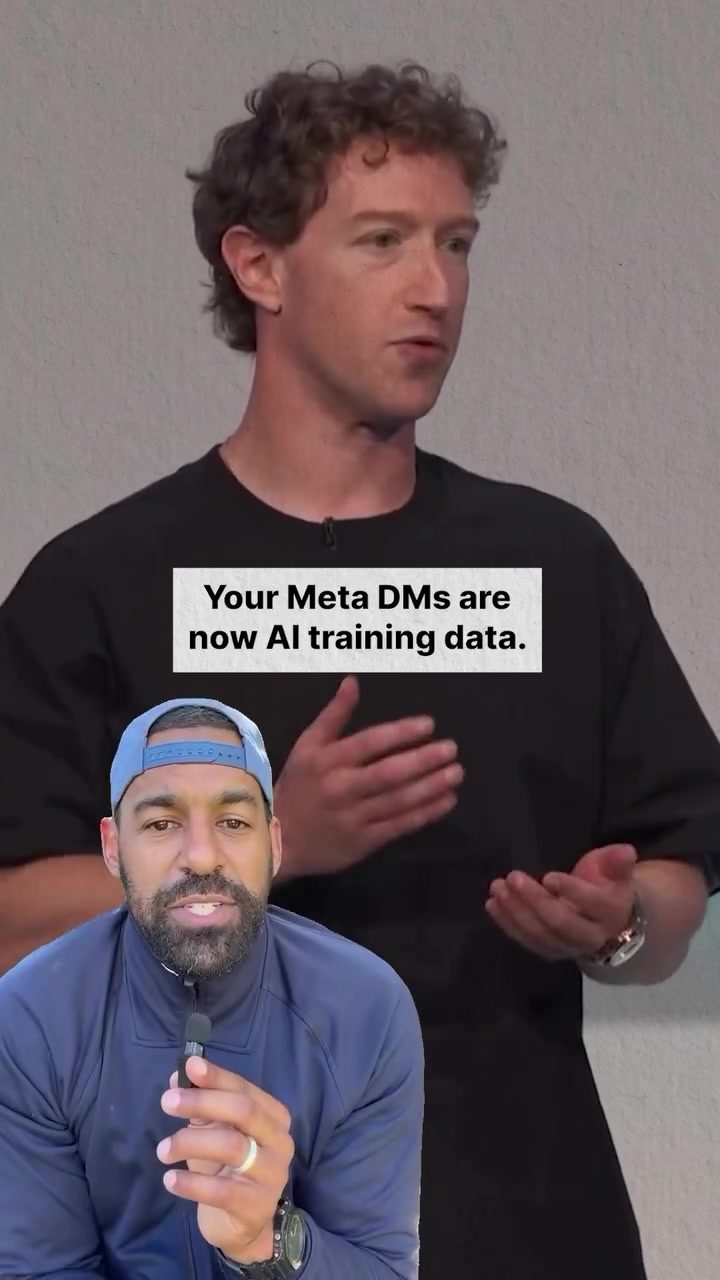
Meta's Shift in Data Privacy and AI Ambitions
Meta, the tech giant behind Facebook, Instagram, and WhatsApp, has made a significant shift in its approach to data privacy. Yesterday, the company officially removed end-to-end encryption from Instagram direct messages, making every conversation of its 2 billion users available to Meta. This move marks a pivotal change in the tech landscape, where just a few years ago, companies like WhatsApp, Apple, and even Meta itself were racing towards enhanced privacy features.
Why This Matters
The removal of end-to-end encryption is part of a broader strategy by Meta to invest heavily in artificial intelligence (AI). The company is planning to spend between $115 to $135 billion on AI infrastructure by 2026, almost double its spending from the previous year. This substantial investment is driven by the need for personal data to train AI models effectively. Meta has now unlocked what it considers the most valuable behavioral dataset it already owns: your conversations.
The AI Infrastructure and Data Training
Meta's AI ambitions are backed by significant investments and innovative projects. The company has built an AI model called UseSpark and is testing an agent codename Hatch, designed to serve 3 billion users. The goal is clear: to win in the personal AI race, you need personal data. Meta's recent move to access user conversations is a strategic play to enhance the effectiveness of their AI models.
The Broader Pattern of Privacy Trade-offs
Every major platform shift in technology history has come with a privacy trade-off that often goes unnoticed until it's too late. From the advent of search engines to the rise of mobile technology and social media, users have consistently exchanged personal data for better products and services. The same pattern is now playing out with AI. The deal is always the same: you give up something invisible, your data, for something visible, a better product. By the time you understand what you've traded, the trade is already irreversible.
Implications for User Privacy
Meta's move to train AI on user conversations raises serious concerns about privacy. Within the next 12 months, there will likely be an AI agent that knows your communication style, relationships, insecurities, opinions about your boss, and even private conversations you'd never want anyone to see. This isn't just about personalized advertising; it's about creating a behavioral profile that exists outside of your control. The question of who has access to this data is critical. It includes Meta employees, law enforcement with subpoenas, government agencies with court orders, and potentially hackers if the data leaks.
The Future of AI and Data Privacy
Meta's AI infrastructure is designed to make recommendations better, agents sharper, and the overall user experience more personal. However, the cost of this enhanced personalization is the loss of privacy. Your direct messages (DMs) are no longer just between you and the person you sent them to; they are now part of an entire AI infrastructure. This shift makes privacy negotiable in the race for personalized AI.
Practical Tips
Given these developments, it's crucial to be mindful of what you share online. Here are some practical tips to protect your privacy:
- Be Cautious with Conversations: Remember that your conversations are not just between you and the recipient. They are part of a larger dataset being used to train AI models.
- Review Privacy Settings: Regularly review and update your privacy settings on all platforms to limit data access.
- Avoid Sensitive Topics: Be cautious about discussing sensitive or personal topics in digital conversations.
- Use Secure Communication Channels: For highly sensitive information, consider using secure communication channels that offer end-to-end encryption.
Important Takeaways
- Data Collection: Meta is collecting user conversations to train its AI models, which raises significant privacy concerns.
- Behavioral Profiling: The data collected can be used to create detailed behavioral profiles that exist outside of your control.
- Privacy Trade-offs: The trade-off between data and enhanced user experience is becoming more evident with AI advancements.
- Access Control: The access to this data by various entities, including Meta employees, law enforcement, and potentially hackers, is a critical concern.
Conclusion
Meta's move to remove end-to-end encryption from Instagram direct messages and invest heavily in AI infrastructure signals a significant shift in the tech landscape. While this move aims to enhance user experience and AI capabilities, it comes at the cost of user privacy. As technology continues to evolve, it's essential to stay informed and cautious about the data you share and the privacy trade-offs you make.
Watch the Reel
Questions readers ask
Why did Meta remove end-to-end encryption from Instagram direct messages?
Meta removed end-to-end encryption to gain access to user conversations, aiming to utilize this data for enhancing its AI capabilities. This shift aligns with its broader strategy to invest heavily in AI, requiring vast amounts of personal data to train and improve AI models.
How will Meta use the data from Instagram direct messages?
Meta plans to use the data from Instagram direct messages to feed its AI models, enabling the creation of more personalized user experiences. This data will be instrumental in training AI to better understand user preferences and behaviors.
What are the implications of this decision for user privacy on Instagram?
The removal of end-to-end encryption means that all conversations on Instagram direct messages are now accessible to Meta. This raises significant user privacy concerns, as personal and sensitive information shared in these conversations can now be used by the company for its AI initiatives.
How much is Meta investing in AI infrastructure?
Meta is planning to invest between $115 to $135 billion in AI infrastructure by 2026. This substantial investment is aimed at enhancing its AI capabilities and staying competitive in the tech industry. Nearly all of this investment will be spent on servers and data centers.
What are the potential benefits of Meta's AI ambitions for users?
Meta's AI ambitions could lead to more personalized and tailored experiences for users across its platforms. By leveraging vast amounts of personal data, AI models can be trained to better understand user needs, possibly enhancing the relevance and quality of content and services offered.
What can Instagram users do to protect their privacy following this change?
Instagram users may consider being more cautious about the information they share in direct messages, as it is now accessible to Meta. Until the company introduces more privacy control options, users can minimize sharing sensitive data through Instagram direct messages.
Related deep dives
Similar reads based on topic and creator.



Recent articles
Fresh deep dives from the latest Reels we unpacked.




Comments
Be the first to comment.