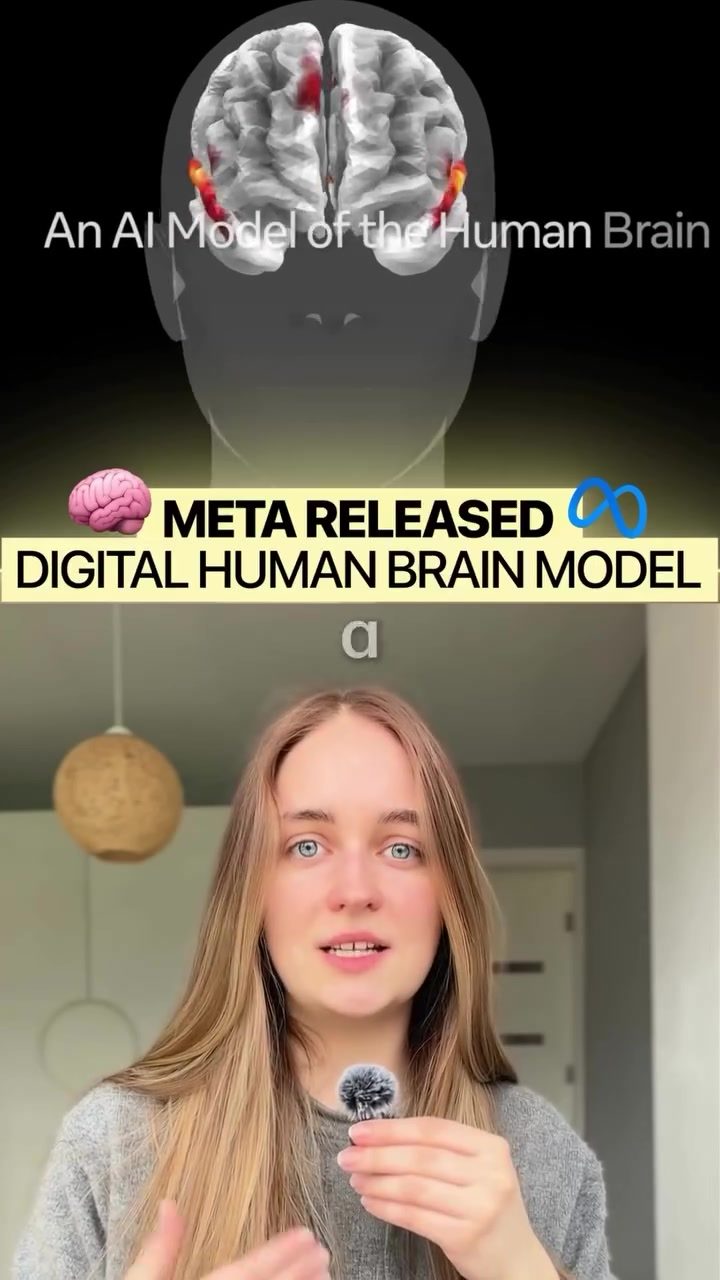
AI Brain Model: Predicting Human Responses to Visual and Auditory Stimuli
AI models are increasingly accurate in mimicking human cognitive processes. Scientists have made a significant breakthrough by creating a digital representation of a fruit fly's brain, demonstrating that it can autonomously simulate the insect's behavior with 95% accuracy. This advancement opens doors for creating complete digital human emulations and advancing digital intelligence.
Meta recently released a digital human brain model that can predict how our brains respond to visual and auditory stimuli. The model acts as a digital twin of the human brain, providing a visual representation of our thoughts and feelings.
Why This Matters
Understanding how our brains process information is a critical area of research in neuroscience and AI. The ability to predict brain responses to stimuli has profound implications for various fields, including:
-
Personalized Content Creation: Imagine an algorithm that knows exactly how our brains respond to every piece of content we consume. This could revolutionize how media platforms curate content, making it more engaging and tailored to individual users.
-
Neurological Disorders: Understanding how the brain processes information could lead to better treatments and interventions for neurological disorders. By simulating brain responses, researchers can develop more effective therapies.
-
Digital Intelligence: This breakthrough paves the way for creating complete digital human emulations, advancing digital intelligence and potentially leading to more sophisticated AI systems.
Main Discussion
The Digital Human Brain Model
The digital human brain model created by Meta can accurately predict how our brains respond to everything we see or hear. This model acts as a visual representation of how we think and feel. When shown a video, different parts of the digital brain light up, indicating the areas activated by the stimuli.
-
Visual Representation: By providing a visual representation, the model allows researchers and developers to see exactly how different stimuli affect the brain in real time. This can help in understanding the cognitive processes involved in perception and decision-making.
-
Real-Time Feedback: The model can provide real-time feedback on brain activity, making it a powerful tool for research and development. This could be particularly useful in fields like psychology, where understanding cognitive processes is crucial.
Potential Applications
The potential applications of this technology are vast. Here are a few areas where this model could make a significant impact:
-
Content Creation and Curation: By understanding how the brain responds to different types of content, platforms can create more engaging and personalized experiences for users. This could lead to higher engagement rates and more effective content delivery.
-
Healthcare: In the healthcare sector, this model could be used to diagnose and treat neurological disorders. By simulating brain responses, healthcare professionals can gain insights into the underlying mechanisms of these disorders and develop more effective treatments.
-
AI and Digital Intelligence: This breakthrough paves the way for creating complete digital human emulations, advancing digital intelligence. It could lead to more sophisticated AI systems that can understand and respond to human behavior more accurately.
Practical Tips
If you're interested in exploring this technology further, here are some practical tips to get you started:
-
Stay Informed: Keep up with the latest research and developments in AI and neuroscience. This field is rapidly evolving, and staying informed can help you stay ahead of the curve.
-
Experiment with Digital Twin Technology: If you have access to digital twin technology, experiment with it to understand how it can be applied in your field. This can provide valuable insights and help you develop more effective solutions.
-
Collaborate with Experts: Work with researchers and experts in the field to gain deeper insights and develop more effective applications of this technology. Collaboration can lead to innovative solutions and breakthroughs.
Important Takeaways
The digital human brain model created by Meta represents a significant advancement in AI and neuroscience. By providing a visual representation of how our brains respond to stimuli, it offers valuable insights into cognitive processes and has the potential to revolutionize fields like content creation, healthcare, and AI.
The ability to predict brain responses to stimuli has profound implications for various sectors. It could lead to more personalized and engaging content, better treatments for neurological disorders, and more sophisticated AI systems.
Conclusion
The digital human brain model is a groundbreaking development that holds immense potential for various fields. Whether it's creating more engaging content, developing effective treatments for neurological disorders, or advancing digital intelligence, this technology has the power to transform how we understand and interact with the world around us. By staying informed, experimenting with the technology, and collaborating with experts, you can be part of this exciting journey and contribute to its development.
Watch the Reel
Questions readers ask
How does Meta's digital brain model work?
Meta's digital brain model operates by simulating human cognitive processes in response to visual and auditory inputs. The model serves as a digital twin of the human brain, allowing researchers to predict and visualize how humans react to various stimuli.
What are the potential benefits of Meta's brain model for content creation?
For content creators, Meta's brain model is a powerful tool for understanding viewer responses to visual and auditory content. This understanding can lead to more effective and personalized content, as creators can tailor their material to evoke specific emotional and cognitive responses.
How can Meta's brain model aid in the treatment of neurological disorders?
By providing a detailed simulation of human cognitive processes, Meta's brain model can help researchers better understand the underlying mechanisms of neurological disorders. This insight could lead to the development of new treatments and therapies tailored to specific conditions.
What is the significance of the fruit fly brain model in relation to human brain simulation?
The fruit fly brain model showcases the potential for accurately simulating complex biological systems. Achieving a 95% accuracy rate in simulating the fruit fly's behavior demonstrates the feasibility of creating digital human brain models, paving the way for advanced digital intelligence and human response prediction.
How does Meta's brain model contribute to advancing AI's understanding of human responses?
Meta's brain model enhances AI's ability to interpret and respond to human reactions by providing a detailed simulation of our cognitive processes. This improved understanding can lead to more intuitive and empathetic AI systems, capable of better predicting and adjusting to human needs and preferences.
Can Meta's brain model analyze responses to video content?
Yes, Meta's brain model can analyze responses to video content. By simulating how the human brain processes visual and auditory stimuli, the model can provide insights into viewer engagement, emotional reactions, and overall content effectiveness, making it a valuable tool for video content analysis and creation.
What are the implications of Meta's brain model for future AI developments?
Meta's brain model represents a significant step forward in AI's ability to mimic and understand human cognition. Future AI developments building on this model can lead to more sophisticated applications, including advanced personalized experiences, improved human-computer interaction, and innovative solutions for mental health and neurological conditions.
Related deep dives
Similar reads based on topic and creator.




Recent articles
Fresh deep dives from the latest Reels we unpacked.




Comments
Be the first to comment.