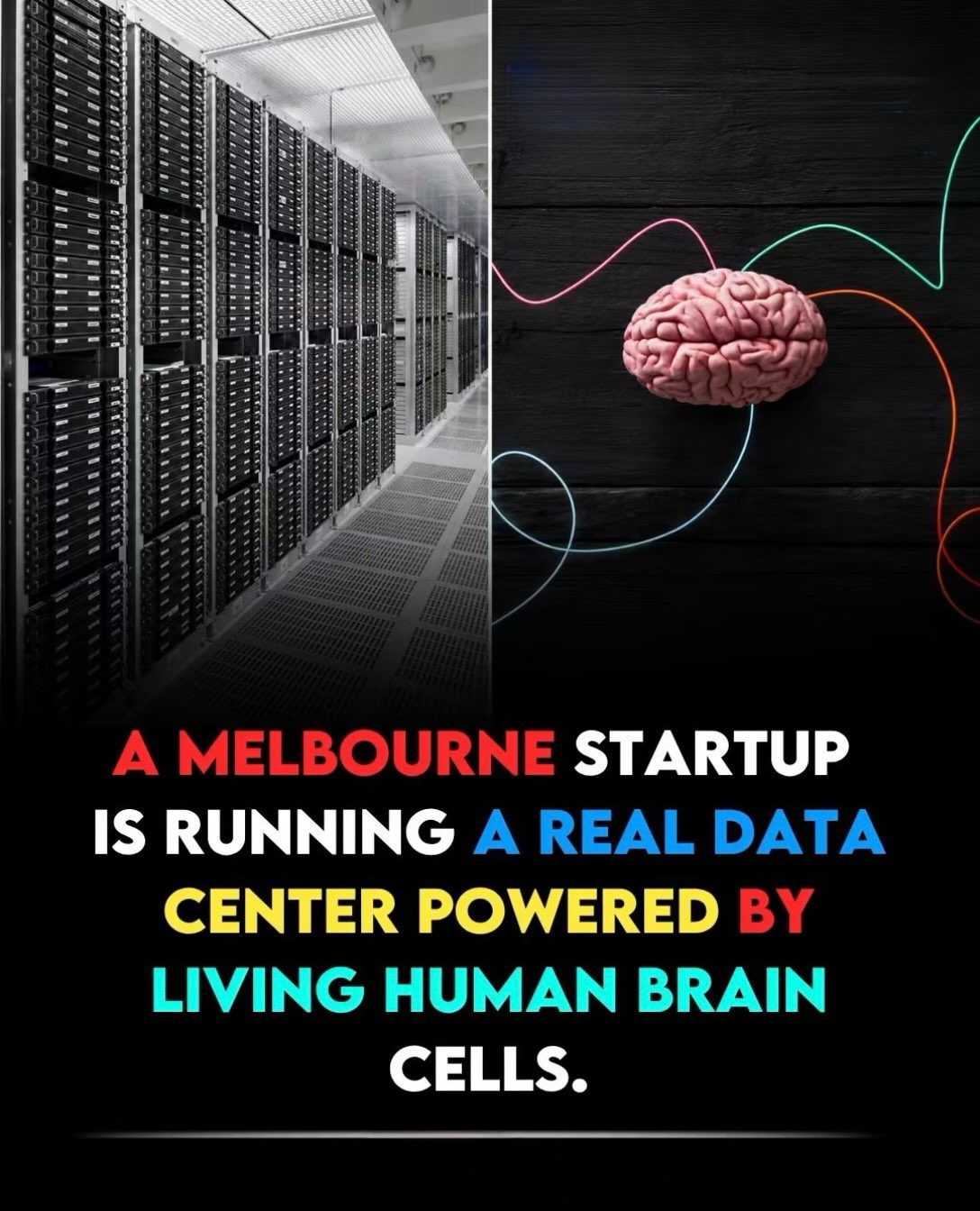
Data Centers Powered by Living Human Brain Cells
The advent of data centers powered by living human brain cells marks a significant leap in technological innovation. Melbourne-based startup Cortical Labs has pioneered this groundbreaking technology with its CL1 system, which utilizes lab-grown neurons derived from human stem cells. These neurons are placed directly onto a silicon chip, creating a biological data center that responds to electrical signals in real-time, transforming neural activity into computable data.
Context / Why This Matters
Traditional data centers rely heavily on silicon-based GPUs, which consume vast amounts of energy and require extensive cooling systems. The CL1 system, however, operates on a mere 30 watts, compared to the 600 watts consumed by traditional GPUs. This dramatic reduction in energy consumption has far-reaching implications for sustainability and efficiency in data processing.
This innovation isn't just about energy efficiency; it's also about redefining what we understand as computing. By leveraging the natural processing power of human neurons, data centers can potentially achieve levels of efficiency and capability that were previously unimaginable. This technology, dubbed "wetware" by Cortical Labs, represents a more advanced form of AI, known as Synthetic Biological Intelligence. It blurs the line between biological and machine intelligence, opening up new possibilities for how we think about and utilize computing systems.
Main discussion
The CL1 System
The CL1 system is at the heart of this revolutionary approach to data processing. Each unit within the CL1 system houses around 200,000 lab-grown neurons. These neurons are not merely passive components; they actively respond to electrical signals, converting neural patterns into data that can be processed by a computer. This dynamic interaction between biological and silicon-based elements is what sets the CL1 system apart from traditional data centers.
Synthetic Biological Intelligence
Cortical Labs describes the technology behind the CL1 system as Synthetic Biological Intelligence. This term encapsulates the fusion of biological neurons with silicon chips, creating a new form of AI. The adaptability and efficiency of biological neurons offer a unique advantage over traditional silicon-based processors. This technology doesn't just process data; it learns and adapts in ways that traditional AI systems cannot.
Energy Efficiency
One of the most remarkable aspects of the CL1 system is its energy consumption. Traditional silicon GPUs can consume up to 600 watts each, while the CL1 biological computer runs on just 30 watts. This substantial reduction in energy consumption not only makes the system more sustainable but also significantly lowers operating costs. The decreased need for cooling systems further amplifies these benefits, making biological data centers a more environmentally friendly option.
Applications and Capabilities
The potential applications of this technology are vast and varied. Developers have already utilized the CL1 system to teach neurons to play the video game Doom in just a matter of days. This demonstrates the system's capability to learn and adapt quickly, showcasing its potential for more complex tasks. The real-time processing of neural activity opens up possibilities for advanced AI applications, including natural language processing, pattern recognition, and even more sophisticated gaming experiences.
Challenges and Future Directions
While the work is impressive, it's important to note that the two-dimensional neuron layers in the CL1 system are still relatively simplistic compared to the complex networks in the human brain. A stem cell specialist at the University of Queensland highlighted this limitation, suggesting that there is still much to learn and develop in this field. However, the progress made so far is a testament to the potential of Synthetic Biological Intelligence.
Practical tips
Understanding the Technology
For those interested in the technology, it's essential to understand the basic principles behind it. The CL1 system uses lab-grown neurons placed on silicon chips, which interact with electrical signals to process data. This biological computing approach leverages the natural efficiency of human neurons, making it a more sustainable and effective solution for data processing.
Potential Use Cases
For businesses and developers, the potential use cases for this technology are vast. From advanced AI applications to more efficient data centers, the possibilities are endless. It's important to explore how this technology can be integrated into existing systems to maximize its benefits. Consider the specific needs of your organization and how biological computing could address them.
Energy Savings
One of the most compelling reasons to adopt this technology is its energy efficiency. Traditional data centers consume vast amounts of energy, leading to high operating costs and significant environmental impact. By transitioning to a biological data center, organizations can achieve substantial energy savings, reduce their carbon footprint, and lower operational expenses.
Important takeaways
The advent of data centers powered by living human brain cells represents a significant leap forward in technology. The CL1 system, developed by Cortical Labs, demonstrates the potential of Synthetic Biological Intelligence to revolutionize data processing. With its remarkable energy efficiency, adaptability, and sustainable design, this technology has the power to transform how we think about and utilize computing systems.
As we continue to explore the possibilities of biological computing, it's clear that the future of data processing lies in the fusion of biology and technology. By harnessing the natural efficiency of human neurons, we can create more sustainable, efficient, and powerful computing systems that will drive innovation in countless fields.
Conclusion
The future of data centers is here, and it's powered by living human brain cells. The CL1 system, with its groundbreaking approach to biological computing, offers a sustainable and efficient alternative to traditional data centers. As we continue to push the boundaries of what's possible, it's clear that the fusion of biology and technology will play a crucial role in shaping the future of data processing. Whether you're a business looking to reduce energy consumption or a developer interested in exploring new AI applications, the CL1 system represents a significant step forward in the world of technology.
Watch the Reel
Questions readers ask
How exactly does the CL1 system use living brain cells for data processing?
The CL1 system utilizes living brain cells by placing lab-grown neurons, derived from human stem cells, onto a silicon chip. These neurons respond to electrical signals in real-time, converting their neural activity into computable data, allowing for efficient biological data processing.
What are the primary benefits of using living brain cells in data centers compared to traditional methods?
Using living brain cells in data centers, as demonstrated by Cortical Labs' CL1 system, offers significant benefits, including a 95% reduction in energy consumption. This is achieved through the system's low power operation of just 30 watts, compared to the 600 watts used by traditional silicon-based GPUs. Additionally, this approach opens new possibilities for integrating biological and machine intelligence.
How does the CL1 system manage to process data so efficiently?
The CL1 system's efficiency in data processing is due to its biological components. The living human brain cells, or neurons, are highly efficient at processing information and require less energy, making the CL1 system significantly more efficient than traditional silicon-based systems. These neurons transform electrical signals into computable data in real-time, enhancing the system's overall performance.
What are the implications of blending biological and machine intelligence in computing?
By blending biological and machine intelligence, the CL1 system can potentially lead to new advancements in computing, such as improved pattern recognition, problem-solving, and adaptability. This fusion of natural and artificial intelligence could revolutionize various fields, including data analysis and artificial intelligence, by leveraging the unique processing capabilities of living brain cells.
How was Cortical Labs able to integrate living neurons with silicon chips?
Cortical Labs achieved the integration of living neurons with silicon chips through advanced biological engineering. The process involves growing neurons from human stem cells in a lab and then carefully placing them onto a silicon chip. This integration allows the neurons to interact directly with the chip, converting neural activity into computable data.
What challenges might arise from using living brain cells in data centers?
While the CL1 system offers numerous benefits, there are potential challenges to consider, such as ensuring the health and longevity of the living neurons, maintaining optimal conditions for their survival, and addressing ethical concerns related to the use of human-derived cells. Additionally, integrating biological components into existing data center infrastructures may require significant adjustments and innovations.
Related deep dives
Similar reads based on topic and creator.




Recent articles
Fresh deep dives from the latest Reels we unpacked.




Comments
Be the first to comment.