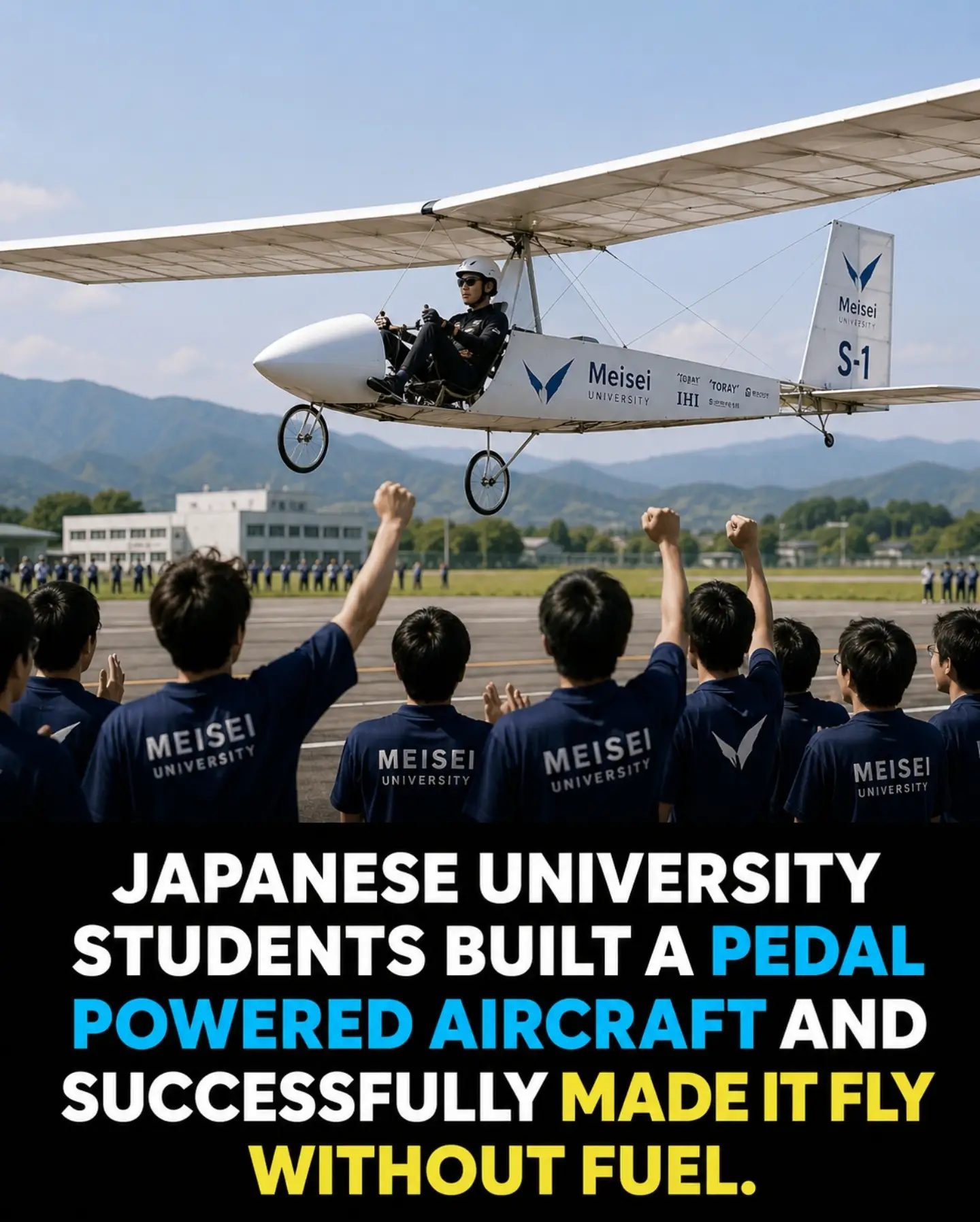
Pedal-Powered Aircraft: A Groundbreaking Engineering Feat
Pedal-powered aircraft represent a fascinating intersection of human ingenuity and sustainable aviation. Meisei University has showcased an impressive example of this innovation by successfully building and flying a pedal-powered aircraft.
The Impressive Engineering Behind Pedal-Powered Flight
Pedal-powered aircraft, or human-powered aircraft, rely solely on the power generated by the human body. This type of aviation demonstrates the capabilities of innovative engineering and the potential for sustainable flight. The project at Meisei University exemplifies these principles, proving that flight without conventional fuel is indeed possible.
The Mechanics of Pedal-Powered Flight
Pedal-powered aircraft typically use a lightweight, aerodynamic design to maximize efficiency. The pilot, who also serves as the power source, is usually positioned in a prone or seated posture to minimize drag and maximize the transfer of power from the pedals to the propeller. The aircraft's design must be meticulously balanced to ensure stability and control during flight. The use of lightweight materials, such as composite materials, is crucial for reducing the overall weight and increasing the efficiency of the aircraft.
Sustainable Aviation: The Future of Flight
The concept of pedal-powered flight opens up new possibilities for sustainable aviation. By eliminating the need for fossil fuels, these aircraft contribute to reducing emissions and environmental impact. The ability to fly without fuel also opens up opportunities for exploring alternative energy sources and propulsion methods in aviation.
Historical Context and Innovations
Pedal-powered flight has a rich history dating back to the early 20th century. The first successful human-powered flight took place in 1979 when the Gossamer Albatross flew across the English Channel. Since then, various projects and competitions, such as the Kremer Prize, have spurred further innovation in this field. The achievements at Meisei University add to this legacy, showcasing the continuous evolution of human-powered aircraft.
Why This Matters
The success of Meisei University's pedal-powered aircraft project is significant for several reasons. It highlights the potential for sustainable and eco-friendly aviation, demonstrating that flight without conventional fuel is achievable. Additionally, it underscores the importance of innovation in engineering and the role of educational institutions in fostering such advancements.
Promoting Innovation and Sustainability
Meisei University's project serves as a beacon of innovation and sustainability in the field of aviation. It encourages further research and development in alternative energy sources and propulsion methods, offering a glimpse into the future of flight. By focusing on sustainable aviation, this project contributes to the broader goals of reducing carbon emissions and promoting eco-friendly transportation.
Inspiring Future Engineers
The success of this project also inspires future generations of engineers and innovators. It demonstrates the power of human ingenuity and the potential for groundbreaking achievements in engineering. By showcasing what can be accomplished with dedication and innovation, this project encourages students and researchers to push the boundaries of what is possible.
The Role of Educational Institutions
Meisei University's involvement in this project highlights the crucial role of educational institutions in fostering innovation. Universities provide the necessary resources, expertise, and support for such projects, making them hubs for groundbreaking research and development. The success of this project underscores the importance of investing in educational institutions and supporting their efforts in promoting innovation and sustainability.
Practical Tips for Building a Pedal-Powered Aircraft
Building a pedal-powered aircraft is a complex task that requires a deep understanding of aerodynamics, engineering principles, and materials science. Here are some practical tips to help aspiring engineers embark on this challenging but rewarding project.
Design Considerations
- Aerodynamics: Focus on minimizing drag and maximizing lift. Use advanced aerodynamic simulations to optimize the design of the wings, fuselage, and other components.
- Weight Reduction: Utilize lightweight materials such as composite materials, balsa wood, and carbon fiber to reduce the overall weight of the aircraft.
- Efficiency: Design the propulsion system to efficiently transfer power from the pedals to the propeller. Consider gearing and chain systems that minimize energy loss.
- Stability and Control: Ensure the aircraft is stable and controllable. Implement control surfaces such as elevators, rudders, and ailerons to maintain stability and maneuverability.
Building Components
- Wings: Design and manufacture lightweight, high-strength wings using composite materials. Ensure the wings are aerodynamically optimized for maximum lift and minimal drag.
- Fuselage: Construct a lightweight, streamlined fuselage that minimizes drag and provides a comfortable and efficient seating position for the pilot.
- Propulsion System: Develop a reliable and efficient propulsion system that converts the pilot's pedaling power into forward thrust. Ensure the system is lightweight and well-integrated with the rest of the aircraft.
- Control Surfaces: Implement control surfaces that allow the pilot to control the aircraft's pitch, yaw, and roll. Ensure these surfaces are lightweight and responsive.
Testing and Optimization
- Wind Tunnel Testing: Conduct wind tunnel tests to evaluate the aerodynamic performance of the aircraft. Use the data to optimize the design and improve efficiency.
- Ground Testing: Perform ground tests to ensure the propulsion system and control surfaces function correctly. Make necessary adjustments based on the test results.
- Flight Testing: Conduct flight tests in a controlled environment, gradually increasing the complexity and duration of the flights. Monitor the aircraft's performance and make necessary adjustments to improve stability, control, and efficiency.
Important Takeaways
The success of Meisei University's pedal-powered aircraft project underscores several key takeaways that are essential for anyone interested in sustainable aviation and innovative engineering.
The Power of Human Ingenuity
This project demonstrates the incredible potential of human ingenuity. By leveraging the power of the human body, engineers can achieve remarkable feats, such as flying an aircraft without conventional fuel. This highlights the importance of innovation and the endless possibilities that can be realized through dedication and hard work.
Sustainability in Aviation
The pedal-powered aircraft project at Meisei University offers a promising glimpse into the future of sustainable aviation. By eliminating the need for fossil fuels, these aircraft contribute to reducing emissions and environmental impact. This project encourages further research and development in alternative energy sources and propulsion methods, paving the way for a more sustainable future in aviation.
Educational Institutions as Innovation Hubs
Meisei University's success in this project underscores the crucial role of educational institutions in fostering innovation. Universities provide the necessary resources, expertise, and support for groundbreaking research and development. By investing in educational institutions, we can promote innovation, sustainability, and the development of new technologies that will shape the future.
Conclusion
Pedal-powered aircraft represent a groundbreaking achievement in sustainable aviation. Meisei University's successful project serves as a testament to the power of human ingenuity, innovation, and the potential for eco-friendly flight. By highlighting the importance of sustainable aviation, inspiring future engineers, and showcasing the role of educational institutions, this project paves the way for a future where flight is both sustainable and innovative.
Watch the Reel
Questions readers ask
What is a pedal-powered aircraft and how does it work?
A pedal-powered aircraft is a type of human-powered aircraft that uses the power generated by a person's legs to propel it through the air. It typically features a lightweight, aerodynamic design with a propeller connected to pedals, allowing the pilot to create thrust by pedaling. This innovative flight technology enables sustainable aviation by eliminating the need for conventional fuel.
What makes the Meisei University project notable?
The Meisei University project is notable for successfully building and flying a pedal-powered aircraft, showcasing the potential of human-powered, fuel-free flight. This student engineering project exemplifies the principles of sustainable aviation and the capabilities of lightweight, aerodynamic aircraft design.
What is the significance of the pedal-powered aircraft design?
The design of a pedal-powered aircraft is crucial for its efficiency and performance. It must be lightweight to minimize the power required for flight, and aerodynamic to reduce drag and improve lift. The pedal aircraft design at Meisei University demonstrates these principles, making the most of human power input for sustainable flight innovation.
What are the key principles behind human-powered flight?
Human-powered flight relies on the principles of converting human energy into mechanical energy to propel the aircraft. Key principles include efficient energy transfer, lightweight and aerodynamic design, and optimal use of human strength and endurance. These principles are evident in the successful human-powered flight video from the Meisei University project.
What challenges do students face in building a pedal-powered aircraft?
Students face several challenges in building a pedal-powered aircraft, including designing a lightweight and aerodynamic structure, optimising the propulsion system for maximum efficiency, and ensuring the aircraft's stability and control. Additionally, piloting a pedal-powered aircraft requires significant physical endurance and skill. The Meisei University project highlights how students successfully navigated these challenges.
What can be learned from college engineering projects like the one at Meisei University?
College engineering projects like the one at Meisei University offer insights into sustainable flight innovation and the application of engineering principles in real-world scenarios. These projects demonstrate the practical use of lightweight aircraft design, aerodynamic principles, and human-powered flight technologies, making them valuable for understanding innovative flight technology.
Related deep dives
Similar reads based on topic and creator.


Recent articles
Fresh deep dives from the latest Reels we unpacked.




Comments
Be the first to comment.