Carnegie Mellon's Zippy: A World-Class Microscopic Robot
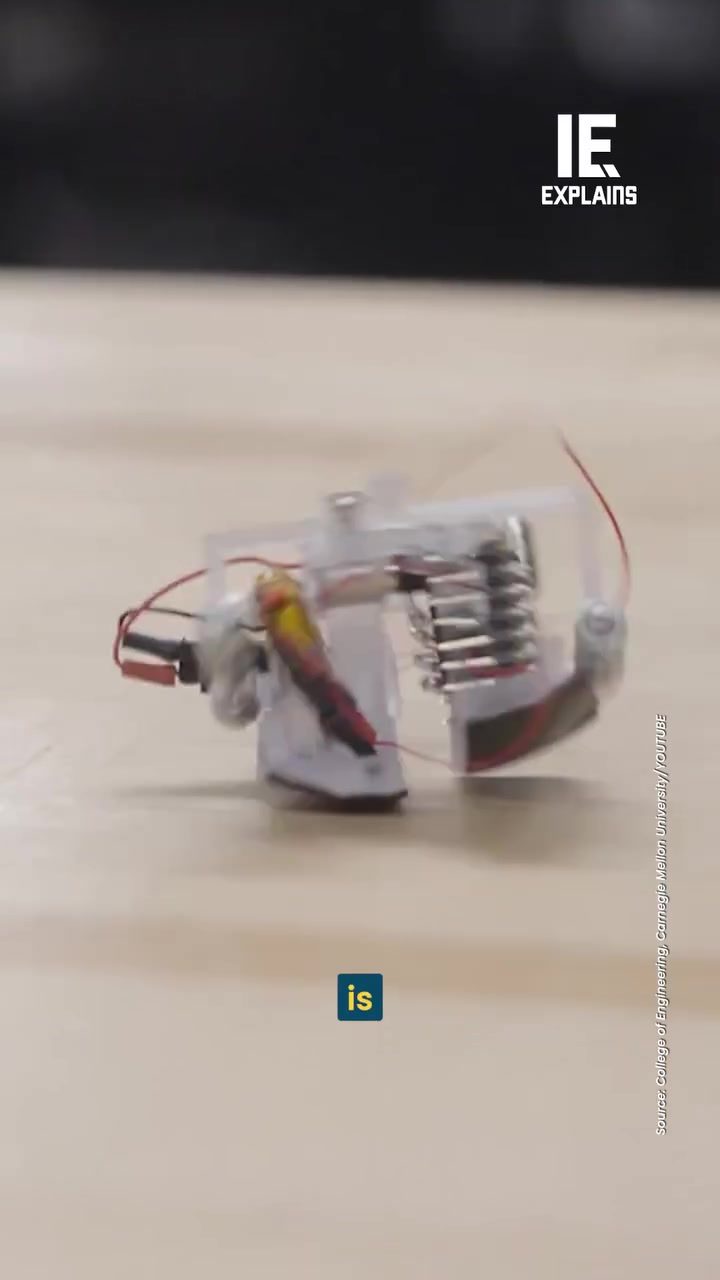
Zippy, a bipedal robot developed at Carnegie Mellon University, stands at a mere 3.6 centimeters tall, making it the smallest self-contained walking robot in existence. This tiny marvel is approximately the size of a LEGO minifigure and operates entirely on its own power, carrying everything it needs—battery, actuator, and control system—on board. For a robot of its size, Zippy is remarkably quick, with a top speed of 25 centimeters per second, equivalent to 10 leg lengths per second.
Context / Why this matters
Zippy has significant implications in the field of robotics, particularly in areas that require small, agile, and independent machines. This innovation could revolutionize industries like inspection, surveillance, and even medical fields where small, precise movements are crucial.
Main discussion
The Design and Capabilities of Zippy
At just 3.6 centimeters tall, Zippy is designed to carry out tasks that are typically beyond the reach of humans and larger robots. Its design incorporates an actuator and control system that are both lightweight and powerful, all while being housed within the robot itself. It operates without any tether or external power, making it entirely self-sufficient.
The Mechanics Behind Zippy's Movement
One of the most impressive aspects of Zippy is its ability to move at a speed of 25 centimeters per second. This speed translates to moving at 19 miles per hour in human terms. The robot uses a single motor and passive dynamics, which means that momentum and the natural forces at play do most of the work. This results in a highly efficient and effective movement system. The robot's rounded feet and mechanical hard stop system replace the traditional servo used in larger robots, making it compact and lightweight.
Versatility in Motion
Zippy isn't just fast; it's also incredibly versatile. It can start from a standstill, turn, skip, and even climb small steps. This versatility makes it suitable for a wide range of applications, especially in environments that require precise and agile movements.
Applications and Future Developments
While Zippy currently focuses on inspection and navigation, future developments are expected to include onboard cameras. This addition will allow a swarm of these robots to navigate autonomously, potentially revolutionizing the way certain tasks are performed. This technology could be used in a variety of fields, including industrial inspection, medical procedures, and environmental monitoring.
Practical tips
There are several key takeaways from Zippy's design that could influence future robotics innovations:
- Minimalist Design: The use of a single motor and passive dynamics reduces complexity and improves efficiency. This principle could be applied to larger robots to enhance their performance.
- Weight and Size: Zippy's small size and lightweight design make it possible to reach places that larger robots cannot. This is a crucial factor in fields like medical procedures and environmental monitoring.
- Self-Sufficiency: The fact that Zippy carries all its power and control systems on board makes it highly versatile and independent. This could be a game-changer in fields that require autonomous robotics.
Important takeaways
The incredible achievements of Zippy in terms of speed and self-sufficiency represent a major leap forward in robotics. The efficiency and versatility of its design make it a model for future innovations. Whether it's for industrial inspection, medical applications, or environmental monitoring, Zippy's technology has the potential to revolutionize these fields.
Conclusion
Zippy, developed by Carnegie Mellon University, is a testament to the advancements in robotics. Its small size, self-sufficiency, and incredible speed make it a model for future innovations. As technology continues to evolve, we can expect to see more robots like Zippy, which will open up new possibilities and revolutionize various industries.
Watch the Reel
Related deep dives
Similar reads based on topic and creator.


Recent articles
Fresh deep dives from the latest Reels we unpacked.




Comments
Be the first to comment.