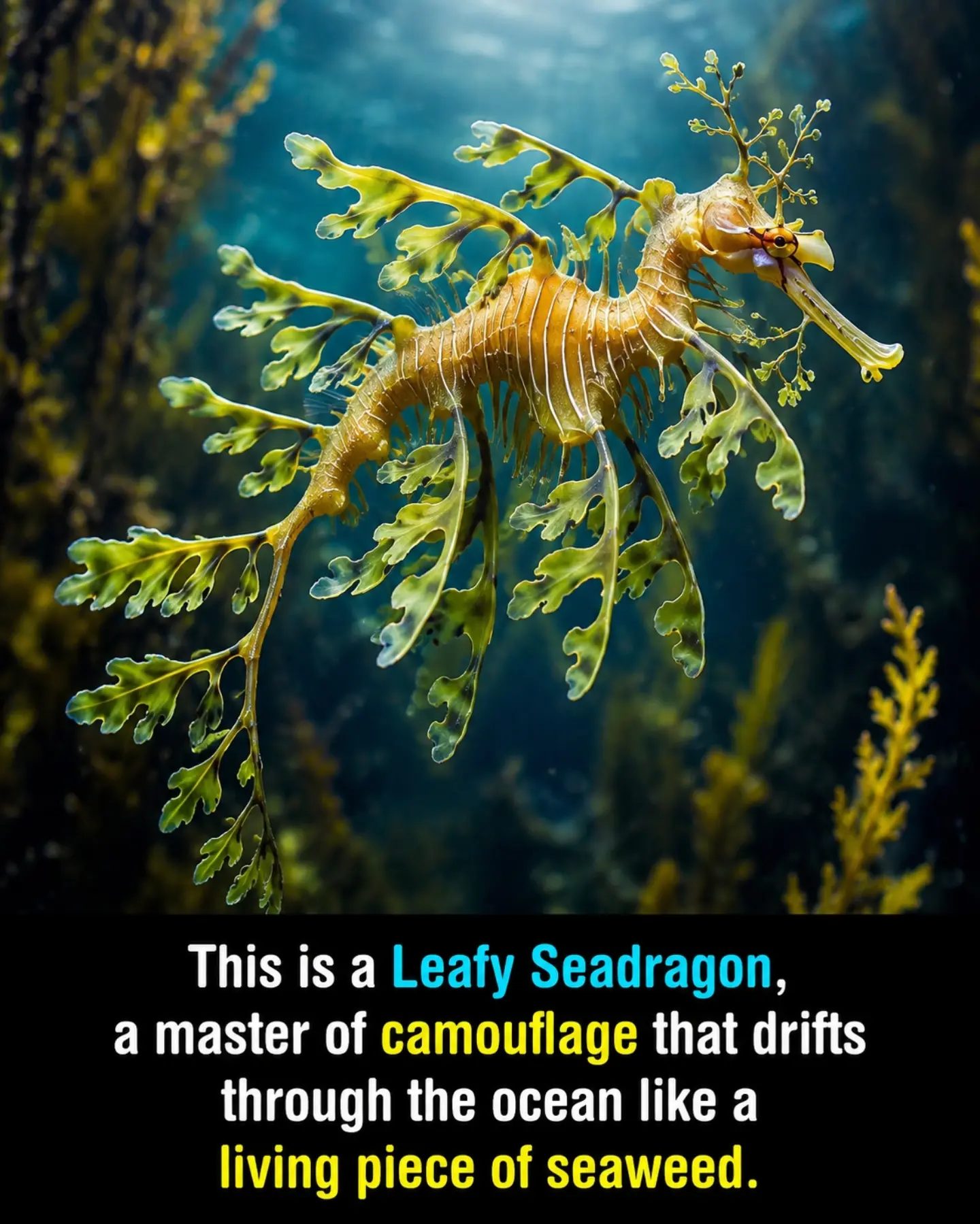
Leafy Seadragon: Masters of Marine Camouflage
Leafy seadragons are enchanting marine creatures renowned for their exceptional ability to blend into their surroundings. These fascinating animals are found in the coastal waters of southern and western Australia, where they inhabit kelp forests and seaweed beds.
In these environments, Leafy Seadragons are masters of camouflage, drifting through the ocean like living pieces of seaweed. Their unique appearance, characterized by long, leaf-like protrusions, helps them avoid predators and sneak up on their prey.
Leafy Seadragons are part of the syngnathidae family, which also includes seahorses and pipefish. They are characterized by their long, slender bodies and leaf-like appendages that resemble seaweed. Their coloration can range from shades of yellow and green to brown and orange, depending on their surroundings. This adaptability in coloration makes them nearly indistinguishable from their aquatic environment.
Leafy Seadragons have evolved an array of camouflage strategies that contribute to their survival. Their leaf-like protrusions, for instance, serve as a form of mimicry, allowing them to blend seamlessly with the surrounding seaweed.
How Camouflage Works
Mimicry
The Leafy Seadragon's body structure is a testament to the power of mimicry. The long, slender body, along with the leaf-like appendages, makes it difficult for predators and prey to distinguish them from the surrounding seaweed.
Coloration
Coloration is another critical aspect of the Leafy Seadragon's camouflage. These creatures can change their color to match their surroundings, further enhancing their ability to blend in. This color-changing ability is a remarkable adaptation that helps them remain undetected in various environments.
Motion
Leafy Seadragons are masters of subtle movement. They use their delicate fins to slowly drift through the water, mimicking the gentle swaying of seaweed. This slow, deliberate motion makes it nearly impossible for predators to detect them.
Behavior
Their behavior also plays a significant role in their survival. Leafy Seadragons are solitary creatures, preferring to spend their time alone rather than in groups. This solitary behavior minimizes the risk of predators detecting them by reducing the overall presence in a given area.
Importance of Camouflage
Camouflage is essential for the survival of Leafy Seadragons. It allows them to avoid detection by predators, including fish and other marine creatures. This adaptive strategy ensures that they can survive in an environment where they would otherwise be easy targets.
However, camouflage is not just about avoiding predators. It also plays a crucial role in hunting. Leafy Seadragons rely on their ability to blend in to sneak up on their prey, which includes small crustaceans and plankton. Their stealthy approach ensures that they can capture their prey without alerting them to their presence.
Where to Find Leafy Seadragons
Leafy Seadragons are endemic to the coastal waters of Australia's southern and western regions. They can be found in the waters around Port Phillip Bay, Western Australia, and are primarily inhabitants of kelp forests and seaweed beds. These environments provide the perfect backdrop for their camouflage, ensuring that they can remain undetected by predators and prey alike.
These underwater habitats are rich in biodiversity, teeming with various marine species. The Leafy Seadragon's ability to blend seamlessly with its surroundings makes it a fascinating addition to this diverse ecosystem. It plays a vital role in maintaining the balance of the marine environment by controlling the populations of small crustaceans and plankton.
Protection and Conservation
Leafy Seadragons are a protected species under Australian law. Their unique characteristics and critical role in the marine ecosystem make them a valuable addition to the country's biodiversity. Efforts are being made to conserve their habitats and protect them from threats such as pollution and overfishing.
Threats to Leafy Seadragons
While Leafy Seadragons are well-adapted to their environment, they face several threats. Pollution, habitat destruction, and climate change can disrupt their delicate ecosystems, making it harder for them to survive.
Human activities, such as pollution and habitat destruction, also pose a significant threat to Leafy Seadragons. Efforts to protect their habitats and reduce pollution are essential for ensuring their survival.
Practical Tips for Observing Leafy Seadragons
For those interested in observing Leafy Seadragons in their natural habitat, there are a few practical tips to consider:
- Choose the Right Time: The best time to observe Leafy Seadragons is during the early morning or late afternoon when the water is calm, and the lighting is optimal.
- Use a Calm Boat: If you are planning to go out on a boat, ensure that it is calm and allows for a stable viewing experience.
- Dive Carefully: If you are diving, be mindful of your movements, as Leafy Seadragons are sensitive to disturbances.
- Bring the Right Equipment: A good quality underwater camera or GoPro can help capture the beauty of these fascinating creatures.
- Respect Their Environment: Avoid touching or harassing the Leafy Seadragons, as this can disturb their natural behavior and harm their delicate ecosystems.
Important Takeaways
Leafy Seadragons are extraordinary marine creatures with a remarkable ability to blend into their surroundings. Their unique appearance, behavior, and coloration make them masters of camouflage, ensuring their survival in an environment where they would otherwise be easy targets.
Observing these creatures in their natural habitat is a memorable experience that provides a deeper understanding of the marine ecosystem and the importance of conservation efforts. By understanding the significance of their camouflage and the threats they face, we can better appreciate the need to protect these fascinating creatures and their habitats.
Conclusion
Leafy Seadragons are a testament to nature's ingenuity, showcasing the incredible adaptations that allow them to thrive in their marine environments. Their mastery of camouflage not only helps them avoid predators but also enables them to hunt effectively, making them a vital part of the marine ecosystem. By appreciating and protecting these remarkable creatures, we can ensure that future generations will have the opportunity to marvel at their beauty and complexity.
Watch the Reel
Questions readers ask
How do leafy seadragons use their leafy appendages for camouflage?
Leafy seadragons use their distinctive leaf-like appendages to mimic the appearance of seaweed. These appendages sway and move with the ocean currents, making the seadragon nearly invisible to both predators and prey. This unique adaptation helps them blend seamlessly into their natural habitats.
Where are leafy seadragons primarily found?
Leafy seadragons are primarily found in the coastal waters of southern and western Australia. They inhabit kelp forests and seaweed beds, where their camouflage abilities are most effective.
What techniques do leafy seadragons employ for underwater camouflage?
Leafy seadragons employ several techniques for underwater camouflage, including mimicking seaweed with their leaf-like appendages and adapting their coloration to match their surroundings. They also move gracefully through the water, mimicking the natural motion of seaweed.
How does the leafy seadragon's camouflage help in its survival?
The leafy seadragon's camouflage is crucial for its survival as it helps them avoid predators by making them nearly invisible. Additionally, their ability to sneak up on prey is greatly enhanced by their mastery of camouflage, allowing them to thrive in their oceanic habitats.
What are the typical habitats of leafy seadragons?
The typical habitats of leafy seadragons are kelp forests and seaweed beds. These environments provide ample opportunities for the seadragons to use their camouflage techniques effectively, ensuring their survival and success in these underwater ecosystems.
What family do leafy seadragons belong to?
Leafy seadragons belong to the syngnathidae family, which also includes seahorses and pipefish. This family is known for its unique characteristics, such as the male's role in carrying the eggs and the distinctive body shapes.
How do leafy seadragons blend into seaweed?
Leafy seadragons blend into seaweed through a combination of their leaf-like appendages and adaptable coloration. These features allow them to mimic the appearance and movement of seaweed, making them nearly indistinguishable from their surroundings.
Related deep dives
Similar reads based on topic and creator.



Recent articles
Fresh deep dives from the latest Reels we unpacked.




Comments
Be the first to comment.