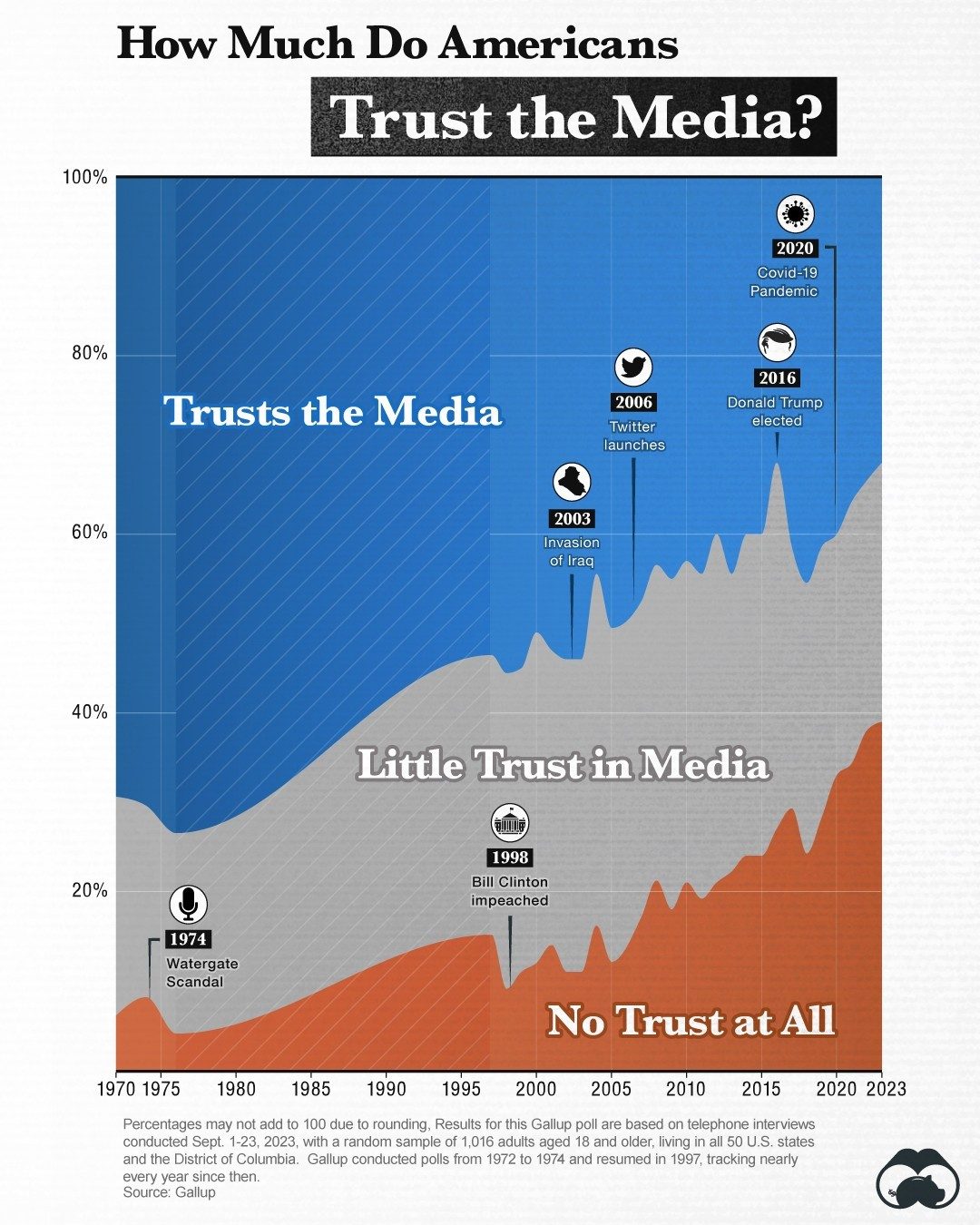
Media Trust Among Americans
Trust in media outlets among Americans has significantly fluctuated over the past five decades. This shift has been influenced by numerous factors, including major political events, technological advancements, and the rise of social media. The latest data reveals that media trust has reached its lowest point in six years, prompting a closer look at the factors contributing to this decline.
Why This Matters
Understanding the ebb and flow of media trust is crucial for several reasons. For one, it helps media outlets adjust their strategies to better serve their audiences. It also sheds light on broader trends in societal perception and information consumption, which can impact everything from political discourse to public health initiatives.
Main Discussion
The Evolution of Media Trust
Media trust among Americans has been a rollercoaster ride since the 1970s. According to Gallup polls, trust fluctuated significantly from 1970 to 2023. Significant dips and rises in trust have corresponded with major events such as the Watergate Scandal, Bill Clinton's impeachment, the Iraq invasion, the election of Donald Trump, and the Covid-19 pandemic.
The Watergate Scandal
The 1974 Watergate Scandal marked a critical turning point in media trust. The scandal, which involved a break-in at the Democratic National Committee headquarters and the subsequent cover-up by the Nixon administration, led to a surge in public trust in the media. This event highlighted the media's role in uncovering and reporting on government misconduct, earning it significant credibility.
Bill Clinton's Impeachment
The impeachment of President Bill Clinton in 1998 was another pivotal moment. The media's coverage of the scandal and the subsequent impeachment trial led to a dip in trust. Many Americans felt that the media was overly focused on sensationalism rather than substantial issues, leading to a decline in trust.
The Iraq Invasion
The 2003 invasion of Iraq was a turning point as well. Mistrust in the media surged as it became clear that some of the information provided to justify the invasion was inaccurate or misleading. This event underscored the importance of accurate reporting and the consequences of misinformation.
The Election of Donald Trump and the Rise of Social Media
The election of Donald Trump in 2016 and the rise of social media platforms have also significantly impacted media trust. The proliferation of social media has given rise to alternative sources of information, often leading to a more fragmented media landscape. This fragmentation has made it challenging for traditional media outlets to maintain their influence and credibility.
The Covid-19 Pandemic
The Covid-19 pandemic has further complicated the media trust landscape. The rapid spread of misinformation and conflicting reports have eroded public trust in media outlets. The pandemic has highlighted the need for accurate, timely, and reliable information, making it more challenging for traditional media to maintain their credibility.
The Role of Social Media
The rise of platforms like X/Twitter and Facebook has significantly changed how people consume media. These platforms have provided new avenues for information dissemination and have disrupted the traditional media status quo. The ability to share and consume information instantaneously has led to a more dynamic and less controlled media environment.
Social media has also given rise to "citizen journalists" — individuals who report on events and share their perspectives without the traditional gatekeeping processes of mainstream media. While this democratization of information has its benefits, it has also led to the spread of misinformation and fake news, further complicating the media trust landscape.
The Impact of Major Events
Major events have a profound impact on media trust. Events such as political scandals, wars, and public health crises can either bolster or erode public trust in media outlets. Understanding these dynamics is crucial for media organizations and the public alike.
Practical Tips
For media organizations, maintaining trust involves several key strategies:
Prioritize Accuracy and Transparency
Accuracy and transparency are paramount in maintaining public trust. Media outlets should ensure that their reporting is based on reliable sources and that any corrections or updates are promptly communicated to the public.
Engage with the Audience
Engaging with the audience builds trust. Media outlets should encourage dialogue and feedback, addressing concerns and questions in a timely and transparent manner. Social media platforms can be leveraged to foster this engagement, but it's important to do so in a way that maintains journalistic integrity.
Embrace Digital Innovation
The rise of digital media and social media has changed the way information is consumed. Embracing digital innovation can help media outlets stay relevant and credible. This includes leveraging data analytics, interactive content, and multimedia storytelling to engage audiences in new and meaningful ways.
Important Takeaways
Media trust is a complex and evolving issue. Several key takeaways emerge from the discussion:
- Public trust in the media has fluctuated significantly over the past five decades, influenced by major events and technological advancements.
- The rise of social media has disrupted traditional media outlets, leading to a more fragmented and dynamic media landscape.
- Maintaining trust involves prioritizing accuracy, transparency, and audience engagement.
- Embracing digital innovation is crucial for staying relevant and credible in the modern media environment.
Conclusion
Understanding the dynamics of media trust is essential for media organizations and the public alike. As the media landscape continues to evolve, it's crucial to stay informed and engaged. By prioritizing accuracy, transparency, and innovation, media outlets can better serve their audiences and maintain their credibility in an ever-changing world.
Watch the Reel
Questions readers ask
How has media trust in America changed from 1970 to 2023?
Media trust in America has experienced significant fluctuations over the past 50 years. It has been influenced by major political events, such as the Watergate scandal in the 1970s and the Bill Clinton media scandal, as well as technological changes, including the rise of social media. Current trends indicate that media trust has declined to its lowest point in six years, according to recent data.
What impact did significant political events have on media trust?
Key political events, like the Watergate scandal, have had a profound impact on media trust. The Watergate scandal, for instance, initially boosted trust in media as journalists played a pivotal role in exposing the truth. However, other events, such as the Bill Clinton media scandal and others, have led to a decline in public trust.
How do technological advancements and social media affect trust in media?
Technological advancements, particularly the rise of social media, have significantly altered the media landscape. Social media platforms have provided new avenues for news consumption, but they have also created challenges in verifying information, thus affecting overall media trust.
What are the main factors influencing the decline in media trust?
Several factors contribute to the decline in media trust, including the proliferation of misinformation, partisan biases, and the challenges of verifying information from numerous sources. The role of social media in spreading news and misinformation has also exacerbated this trend.
What is the significance of studying media trust trends?
Studying media trust trends is important because it helps media outlets understand and adapt to audience perceptions. It also provides insights into broader societal trends related to information consumption, which can impact various aspects of public life, from political discourse to public health initiatives.
How does the Gallup poll reflect trends in media trust?
The Gallup poll is a key indicator of media trust trends in America. It has consistently tracked public opinion on media trust, offering valuable insights into how major events and technological changes impact public perception of media credibility.
Related deep dives
Similar reads based on topic and creator.

Recent articles
Fresh deep dives from the latest Reels we unpacked.




Comments
Be the first to comment.