Data gigantism and the new customer requests
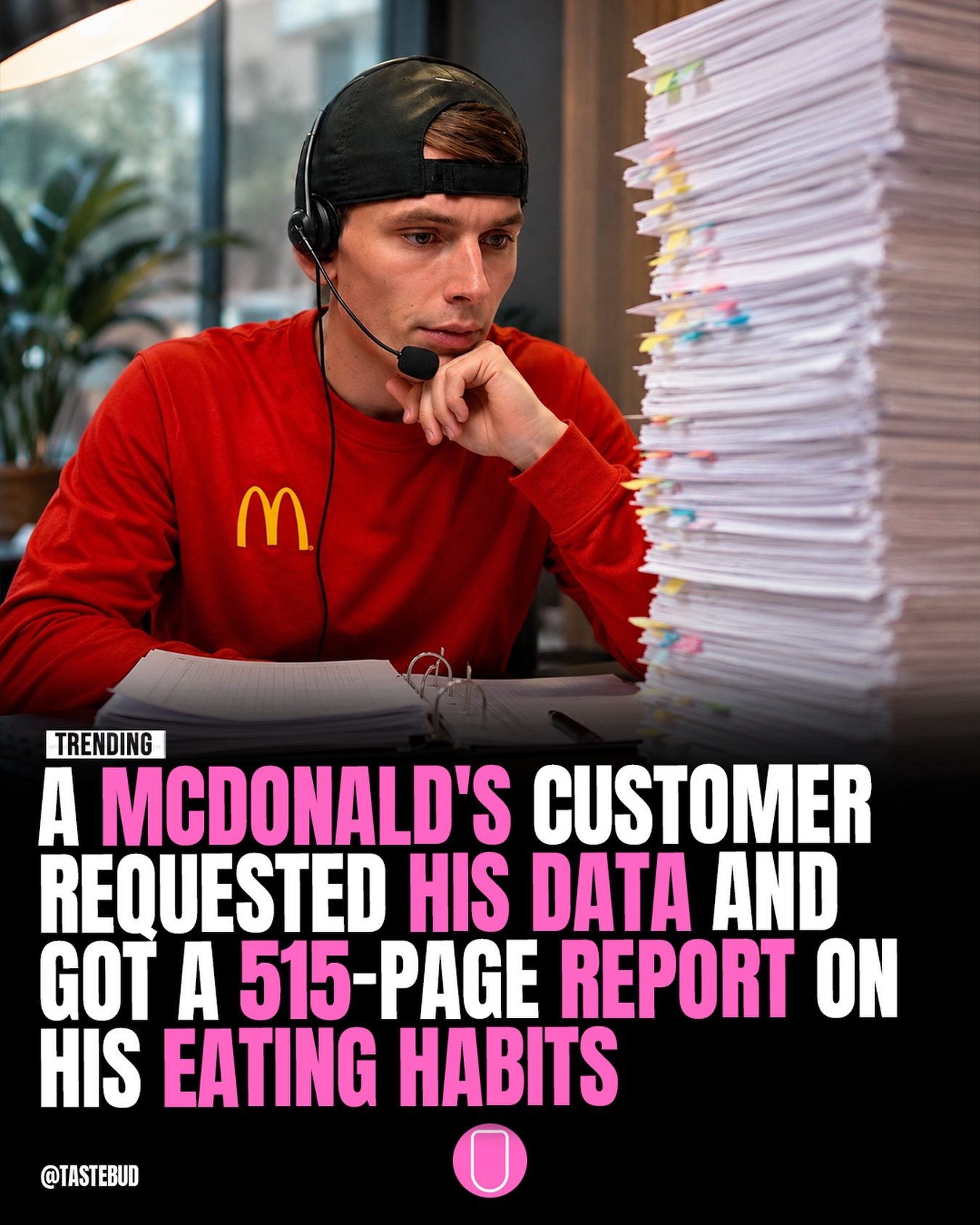
Customer data requests symbolize a quiet revolution in consumer privacy. These days, asking for your data entails wading through mountains of information. TASTEBUD’s video shows a person wearing a McDonald's headset gripping a 515-page report. Many might agree that this isn't just amusing but a chilling indication of the scale of data companies retain. Imagine if every data request came with a mountain of minutiae. The customer gets what they asked for: a deluge of individual transactions, unprocessed data, and parsed analytics. This isn't unique to McDonald's. Every branded experience generates data. When customers exercise their right to access it, the request can be overwhelming.
License to snoop
The customer services headsets in the video have become common on both sides of the transaction. As organizations gather more precise insights, customers seek greater transparency. In this information age, customers aren't just consumers; they're data subjects. These information ecosystems can benefit from the simplification of data requests— the customer can ask for a simplified summary and the company can deem that as a valid request in time. The shift towards data access has led to a growing sense of agency among consumers. Requests like these are part of an ongoing trend in customer rights. People want to understand what organizations know about them. They want to scratch the surface of data. Companies should consider a move away from exhaustive reports. Imagine if restaurants served only two sizes of fries. Regular and large. Imagine if customers had to choose between a 515-page report and a two-page summary.
Who owns the customer relationship?
All signs point to a future where customers are conscious of their digital footprint. Companies are increasingly realizing it is no longer sufficient to deposit customer information in some vaults hoping they will stay out of reach. Many companies are starting to recognize the value in acting in good faith as opposed to fulfilling requests. There is a demand for the goodwill that comes from simplifying the process of resolving the request. The sooner the company recognizes this, the sooner they can start to establish themselves as trustworthy. Imagine the McDonald’s report as a simplistic view of a customer’s relationship with the brand. Many people have the intuitive sense that the sheer volume must bear some implicit message. For the customer, getting the report is like getting an unforeseen gift. The growing notion that companies acknowledge their customers in this way may prove to be an asset to consumer brands in the future.
Watch the Reel
Related deep dives
Similar reads based on topic and creator.



Recent articles
Fresh deep dives from the latest Reels we unpacked.
Comments
Be the first to comment.