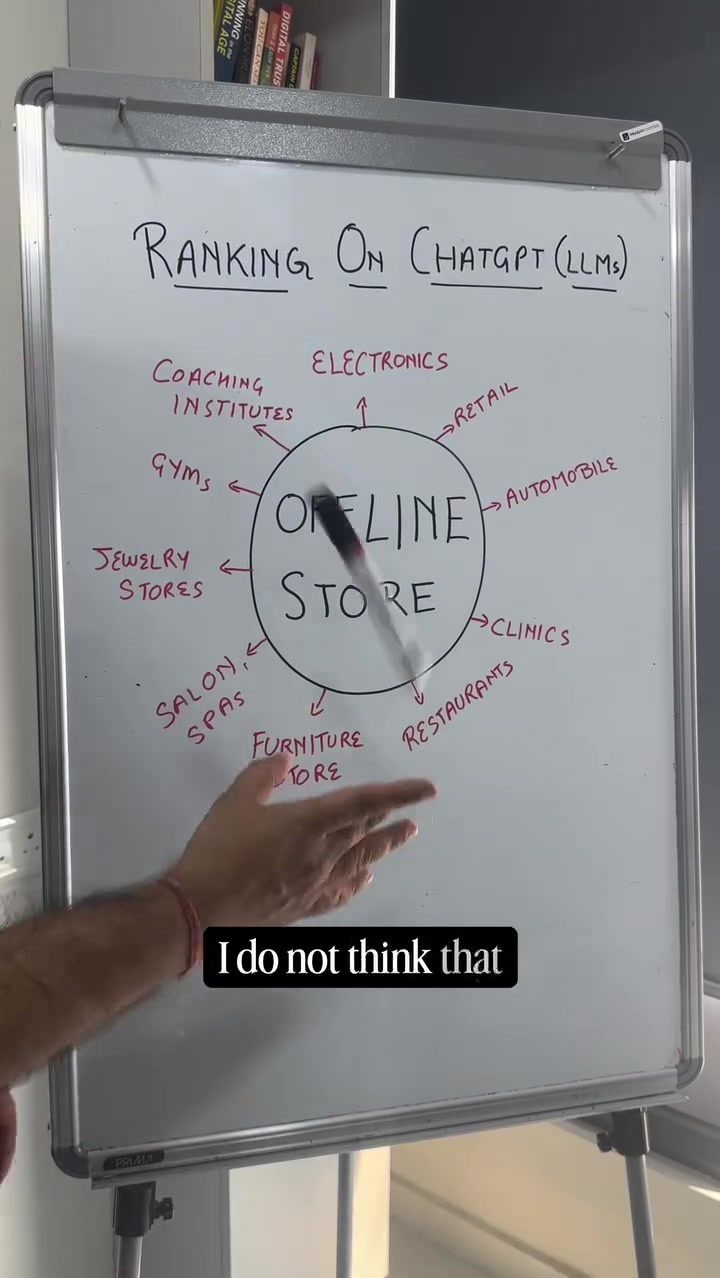
Optimizing Offline Businesses for LLMs
With the rise of AI-driven search engines like ChatGPT, Gemini, and Perplexity, offline businesses must adapt their strategies to stay visible and relevant. The shift towards AI-assisted searches means that traditional search engine optimization (SEO) techniques are no longer enough. Here's how offline businesses can optimize for large language models (LLMs) to ensure they rank well in these new search environments.
Why This Matters
The way people search for local businesses is evolving rapidly. AI-driven search engines like ChatGPT can provide quick, contextually relevant answers to user queries, often pulling information directly from online reviews and store locator pages. For offline businesses, this means that optimizing for LLMs is crucial for maintaining visibility and attracting customers.
Strategies for Ranking on LLMs
Trojan Horse Strategy
The first strategy involves maximizing the context provided in customer reviews. When a customer leaves a review on Google My Business or your website, don't just respond with a simple "thank you." Instead, use this opportunity to provide detailed, context-rich information.
Here's how to do it:
-
Mention the Product Name: Clearly state the specific product the customer bought. This helps LLMs understand the context and improve the relevance of your response.
-
Compare with Competitors: If possible, compare your product with a competitor’s product. This provides a clearer picture of what sets your product apart.
-
Highlight Your Specific Services: Mention any unique services or features that your business offers. This additional information can help LLMs understand the full scope of your offering.
Feed the Beast Strategy
The second strategy involves enhancing your store locator page to provide comprehensive, aggregated reviews. LLMs rely heavily on context, and the more information you provide, the better they can serve up relevant results.
Here’s how to implement this strategy:
-
Add Aggregated Reviews: Instead of just adding a review widget, create a section for aggregated reviews on your store locator page. This section should include a blend of positive and negative reviews to provide a balanced view.
-
Format for Maximum Context: Follow a specific format for these reviews. For example, mention the product name, the location of the store, and any notable details about the purchase experience. You can also highlight best-selling, high-margin, or new products.
-
Highlight Key Products and Services: Showcase key products and services that customers frequently mention in their reviews. For example, if you run a kitchen appliance store, you might highlight the availability of specific brands or models.
Sentiment to FAQ Pipeline
The third strategy focuses on turning negative and neutral reviews into authoritative answers on your FAQ page. This helps to intercept and address negative sentiment proactively.
Here’s how to do it:
-
Monitor Reviews: Keep an eye on negative and neutral reviews. These often contain valuable insights that customers are looking for.
-
Add to FAQs: Take these insights and convert them into FAQs on your store locator page. For example, if customers frequently ask about parking, add a question and answer directly about parking availability and convenience.
-
Provide Factual Answers: Ensure that your answers are factually accurate and authoritative. This helps LLMs prioritize your answers over random reviews or queries.
Practical Tips for Implementing These Strategies
-
Regularly Update Reviews: Ensure that your reviews and FAQs are regularly updated. This keeps the information current and relevant.
-
Use Clear and Concise Language: Make sure your responses and FAQs are clear and concise. LLMs thrive on clear, unambiguous information.
-
Leverage Customer Feedbacks: Utilize customer feedback to continually improve your strategies. The more you understand your customers, the better you can tailor your responses.
-
Contextualize Information: Always provide context when adding information to your reviews or FAQs. This helps LLMs understand the relevance and significance of the data.
Important Takeaways
Optimizing for LLMs is not just about keywords and meta descriptions anymore. It's about providing detailed, context-rich information that AI-driven search engines can easily parse and understand. By following the Trojan Horse, Feed the Beast, and Sentiment to FAQ pipeline strategies, offline businesses can ensure they rank well in AI-driven searches and attract more customers.
Conclusion
The future of search is here, and it's powered by AI. Offline businesses need to adapt quickly to stay relevant. By optimizing for LLMs, you can ensure that your business stays visible and attracts more customers. The key is to provide detailed, context-rich information that AI can easily understand and use to serve up relevant results.
Watch the Reel
Questions readers ask
What is offline SEO and why is it important for local businesses?
Offline SEO refers to the strategies and techniques used by physical, brick-and-mortar businesses to improve their online presence and visibility. It's important because AI-driven search engines like ChatGPT often source information from online reviews and store locator pages to answer user queries, making it crucial for local businesses to have a strong offline SEO strategy.
How can gyms optimize their online presence for ChatGPT?
Gyms can optimize for ChatGPT by ensuring their Google My Business listing is up-to-date with accurate information, encouraging customers to leave detailed reviews, and creating a dedicated page with class schedules, membership details, and other relevant information. This helps ChatGPT provide accurate and helpful responses to user queries about gym services and amenities.
What are the benefits of optimizing store locator pages for LLMs?
Optimizing store locator pages for LLMs can significantly improve a business's visibility in AI-driven search results. By providing detailed, context-rich information such as store hours, contact details, and directions, businesses can help LLMs like ChatGPT provide precise and relevant answers to user queries, driving more foot traffic to physical locations.
How do online reviews impact local business SEO for LLMs?
Online reviews play a pivotal role in local business SEO for LLMs. They provide context-rich information that LLMs can use to generate accurate and helpful responses to user queries. Encouraging customers to leave detailed, honest reviews can enhance a business's online reputation and improve its visibility in AI-driven search results.
What steps can a retail store take to add its listings to ChatGPT?
To ensure a retail store is included in ChatGPT’s search results, the business should focus on optimizing its Google My Business listing, ensuring all information is accurate and up-to-date. Additionally, maintaining a strong online presence with consistent NAP (Name, Address, Phone number) details across various platforms, and encouraging positive customer reviews can increase the likelihood of appearing in search results.
How can restaurants improve their SEO strategy for better visibility on LLMs?
Restaurants can enhance their SEO strategy for LLMs by optimizing their menu pages, ensuring they are mobile-friendly, and including detailed descriptions of dishes. Encouraging customers to leave reviews on multiple platforms, and maintaining accurate business information across all online directories can further improve their visibility in AI-driven search results.
What specific information should be included in a store locator page for optimal LLM optimization?
For optimal LLM optimization, a store locator page should include the store's name, address, phone number, operating hours, and directions. Additionally, incorporating a map, customer reviews, and any unique features of the store can provide the context-rich information that LLMs need to generate accurate and helpful responses to user queries.
Recent articles
Fresh deep dives from the latest Reels we unpacked.




Comments
Be the first to comment.