Conversion Rate Optimization
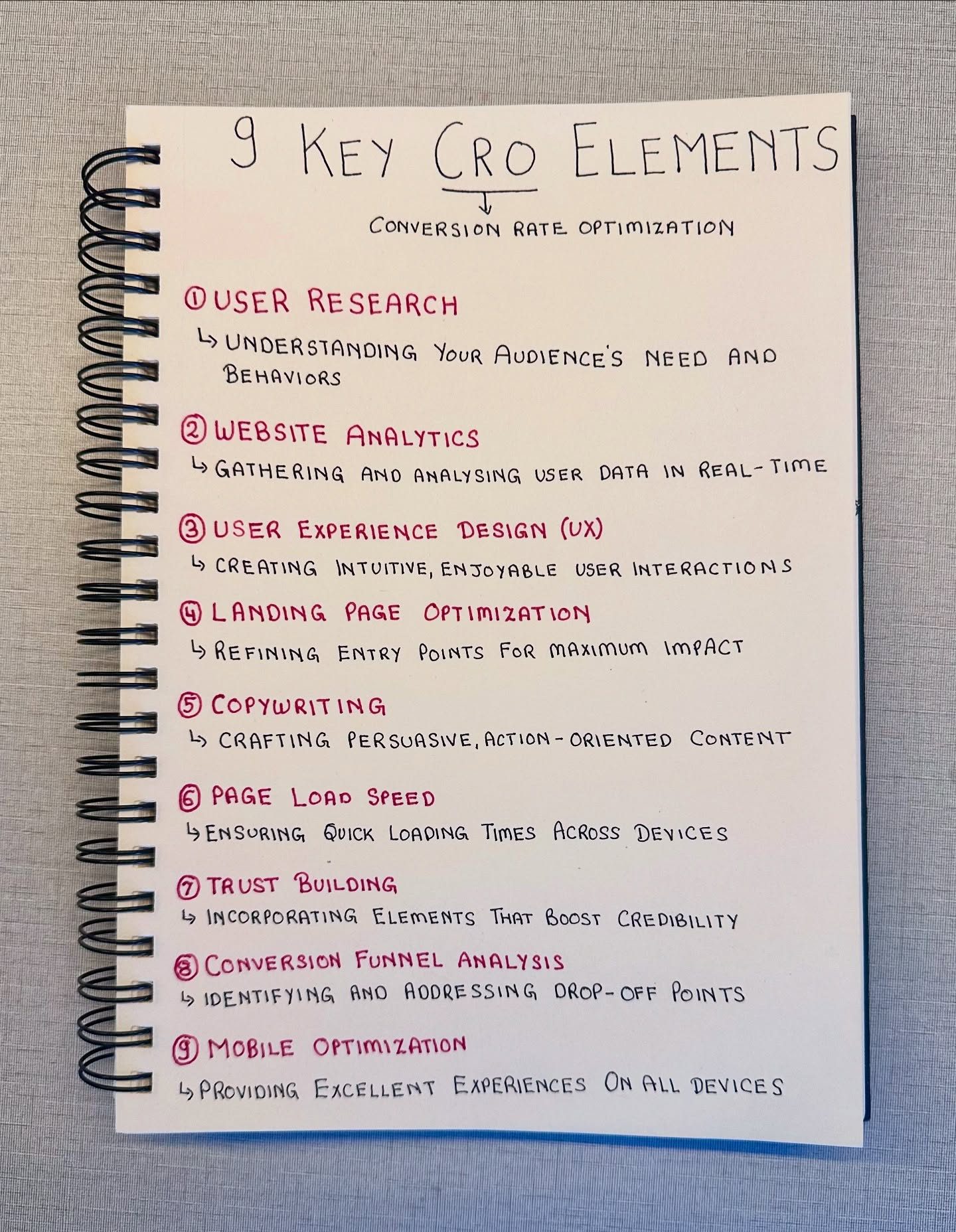
Conversion rate optimization (CRO) is a crucial strategy for improving a website's ability to convert visitors into paying customers. This checklists highlights nine key elements to review regularly to maximize conversions and increase sales.
Why This Matters
A well-designed CRO strategy can turn a lackluster website into a high-performance sales machine. The checklist emphasizes that no matter how effective your ads are, a sub-par website experience will hinder sales. By focusing on these key elements, businesses can create a seamless, user-friendly environment that encourages visitors to take action.
Main Discussion
Understanding Your Audience
User Research
User research is the foundation of effective CRO. It involves understanding your audience's needs, behaviors, and pain points. By gathering and analyzing this information, you can tailor your website to meet their expectations and provide a more satisfying experience. This process can include surveys, interviews, and usability testing to gain insights into user behavior and preferences.
Website Analytics
Website analytics provide valuable data on how users interact with your site. By leveraging tools like Google Analytics, you can track key metrics such as bounce rates, time on page, and conversion rates. This data helps identify areas for improvement and informs your optimization strategies. Regularly reviewing analytics can highlight trends, pinpoint issues, and reveal opportunities to enhance user engagement.
Design and Content
User Experience Design (UX)
Creating an intuitive and enjoyable user experience (UX) is essential for conversion rate optimization. A well-designed UX ensures that visitors can easily navigate your site, find what they need, and complete desired actions. This includes clear call-to-action buttons, logical site structure, and aesthetically pleasing design elements that guide users through the conversion funnel.
Copywriting
Effective copywriting can make or break a conversion. It involves crafting compelling, clear, and concise content that resonates with your audience. Well-written copy addresses user needs, highlights benefits, and encourages action. It should be tailored to different stages of the customer journey and optimized for search engines to improve visibility and attract relevant traffic.
Performance and Trust
Page Load Speed
Page load speed is a critical factor in user experience and conversion rates. A slow-loading website can frustrate users and increase bounce rates, leading to lost sales. Ensuring that your pages load quickly across all devices is essential. This can be achieved through optimizing images, minimizing server response times, and using efficient coding practices.
Trust Building
Trust is a vital component of any successful website. Incorporating elements that boost credibility, such as customer testimonials, security badges, and transparent policies, can reassure visitors and encourage them to complete a purchase. Building trust involves creating a sense of security, reliability, and authenticity, which can significantly improve conversion rates.
Conversion Path and Mobile Optimization
Conversion Analysis
Conversion analysis involves identifying and addressing drop-off points in the conversion funnel. By analyzing user behavior at each stage, you can pinpoint where visitors are leaving the funnel and take steps to mitigate these issues. This process might involve A/B testing different elements, such as landing pages, calls-to-action, or checkout processes, to see which versions perform better.
Mobile Optimization
Providing excellent experiences on all devices, particularly mobile, is crucial for optimization. With a growing number of users accessing the internet via mobile devices, ensuring that your website is mobile-friendly is non-negotiable. This includes responsive design, fast load times, and easy navigation on smaller screens.
Regular Review and Optimization
Consistent review and optimization are key to maintaining high conversion rates. Regularly assessing your website against the nine key elements of CRO helps ensure that it remains effective and aligned with user needs. This ongoing process allows for continuous improvement and adaptation to changing market conditions and user behaviors.
Practical Tips
- Conduct Regular User Research: Regularly gather data on user needs and behaviors to stay informed about what drives their decisions.
- Utilize Analytics Tools: Implement and review analytics tools to track key metrics and identify areas for improvement.
- Optimize Page Load Speeds: Ensure your website loads quickly by using efficient coding practices and optimizing media.
- Build Trust with Credibility Elements: Incorporate elements like testimonials, security badges, and transparent policies to build user trust.
- Test and Iterate: Continuously test different elements of your site to see what works best for your audience.
- Ensure Mobile-Friendly Design: Make sure your website is responsive and user-friendly on all devices.
Important Takeaways
By regularly reviewing and optimizing your website, you can enhance user experience, boost credibility, and drive conversions. A well-executed CRO strategy involves a holistic approach, addressing user needs, performance metrics, and design aspects. It's about creating a cohesive and engaging environment that guides users seamlessly through the conversion path.
Conclusion
Mastering CRO requires a systematic approach to understanding and optimizing each element of the conversion funnel. By focusing on user research, website analytics, UX design, copywriting, page load speed, trust-building, conversion analysis, and mobile optimization, you can create a high-performing website that converts visitors into loyal customers. Regular reviews and updates ensure that your site remains effective and aligned with evolving user needs and market trends.
Watch the Reel
Questions readers ask
What is the first step in implementing a successful conversion rate optimization (CRO) strategy?
The first step in implementing a successful CRO strategy is understanding your audience through user research. This involves gathering data on user behavior, preferences, and needs to tailor your website's design and content to better meet their expectations.
How can website load time optimization improve my conversion rate?
Optimizing website load time is crucial as slow-loading pages can significantly increase bounce rates. By ensuring your website loads quickly, you provide a better user experience, which can lead to higher engagement and more conversions. Aim for a load time of 3 seconds or less for optimal results.
What role does CRO analytics play in enhancing user experience?
CRO analytics provides valuable insights into user behavior, helping you identify areas for improvement. By regularly analyzing data, you can make informed decisions to enhance user experience, optimize page design, and ultimately drive more sales. It allows you to see what's working and what's not, enabling continuous improvement.
Why is website copywriting important for conversion rate optimization?
Effective website copywriting is essential for CRO as it communicates your message clearly and persuasively. Good copy can guide users through the sales funnel, address their pain points, and encourage them to take the desired action, whether that's making a purchase or signing up for a newsletter.
What are some key CRO page design elements to consider for improving conversions?
Key CRO page design elements include clear calls-to-action (CTAs), easy navigation, mobile responsiveness, and visually appealing layouts. These elements work together to create an intuitive user experience, making it easier for visitors to find what they need and complete their desired actions.
How often should a CRO checklist be reviewed and updated?
A CRO checklist should be reviewed and updated regularly, ideally every quarter, to ensure it remains relevant and effective. Websites, user behavior, and market trends evolve over time, so continuous review helps identify new opportunities for improvement and keeps your optimization efforts up-to-date.
Recent articles
Fresh deep dives from the latest Reels we unpacked.




Comments
Be the first to comment.