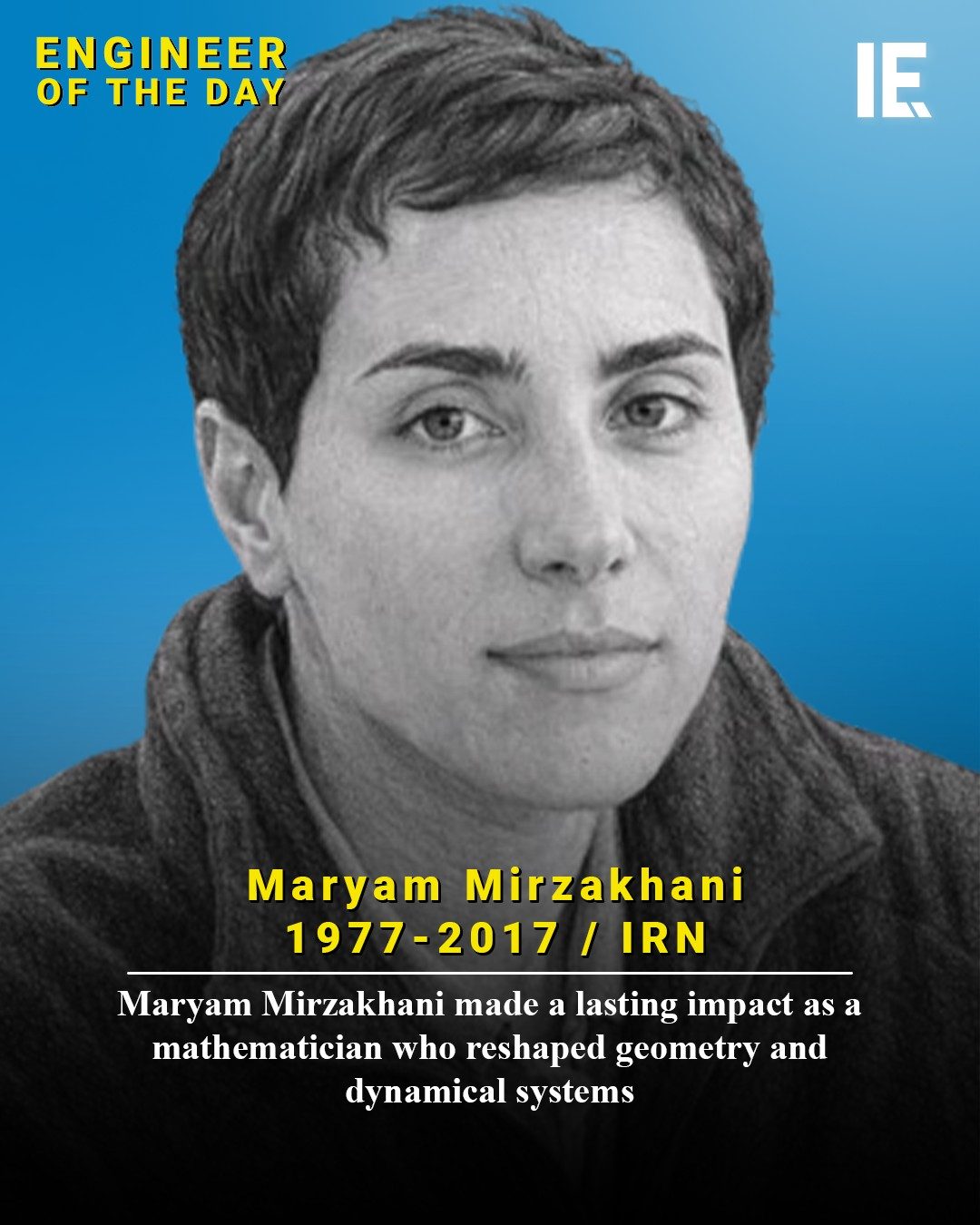
Maryam Mirzakhani: The First Woman to Win the Fields Medal
Maryam Mirzakhani, born in 1977 in Iran, was a trailblazing mathematician whose groundbreaking work on the geometry and dynamics of curved surfaces earned her the prestigious Fields Medal in 2014, making her the first woman to receive this highest honor in mathematics. Her contributions reshaped the fields of geometry and dynamical systems, and her innovative research bridged previously separate areas of mathematics.
Context / Why This Matters
Mathematics is a field where significant advancements often come from connecting disparate theories and approaches. Mirzakhani's work exemplifies this by integrating insights from geometry and dynamical systems, thereby altering the way scholars understand and work with complex spaces. Understanding her research can provide valuable insights into the evolving landscape of modern mathematics and its applications in various scientific and engineering disciplines.
Contributions to the Field
Geometry and Dynamical Systems
Mirzakhani's contributions to the field of geometry, particularly in the study of curved surfaces and their dynamics, were groundbreaking. She focused on the behavior of surfaces and geometric structures under various transformations, a topic that had long been a staple in theoretical mathematics. Her work not only expanded the boundaries of these fields but also provided new tools for researchers to explore complex mathematical structures.
Fields Medal and Recognition
The Fields Medal, often described as the "Nobel Prize of Mathematics," is awarded every four years to recognize outstanding achievements in the field. Mirzakhani's work earned her this distinction in 2014. Her research on the dynamics of curved surfaces and her innovative approaches to geometric problems have since become foundational in the field. This recognition underscores the significance of her contributions and her lasting impact on mathematics.
Bridging Separate Areas of Mathematics
One of the most notable aspects of Mirzakhani's work was her ability to connect previously separate areas of mathematics. By integrating concepts from geometry and dynamical systems, she created new pathways for research and problem-solving. Her interdisciplinary approach not only enriched these fields but also opened up new avenues for exploration in other related areas of science and engineering.
Practical Tips
Understanding Complex Spaces
For those interested in exploring the work of Maryam Mirzakhani, a good starting point is to delve into the dynamics of curved surfaces. This involves studying how geometric shapes can be deformed and how these deformations can be mathematically described. Traditional mathematics and theoretical physics often intersect in this area, making it a rich field for interdisciplinary study.
Exploring Interdisciplinary Connections
A key takeaway from Mirzakhani's work is the importance of bridging seemingly disparate fields. For aspiring mathematicians and scientists, this means looking beyond the confines of a single discipline and exploring how concepts from different areas can intersect and complement each other. This approach can lead to innovative solutions and new areas of research.
Important Takeaways
Mirzakhani's journey highlights several important aspects of her contributions to the field:
-
Innovation in Geometry and Dynamical Systems: Her work fundamentally altered how we understand and work with curved surfaces, providing new tools and methodologies for researchers.
-
Interdisciplinary Approach: By integrating concepts from different areas of mathematics, she demonstrated the power of cross-disciplinary thinking in solving complex problems.
-
Inspiration for Women in STEM: As the first woman to win the Fields Medal, Mirzakhani's achievement serves as a powerful inspiration for women in STEM fields, showcasing the heights they can reach with dedication and innovation.
-
Impact on Mathematics and Beyond: Her research has implications not only within mathematics but also in fields like physics, engineering, and computer science, highlighting the broad applicability of her work.
Conclusion
Maryam Mirzakhani's contributions to the field of geometry and dynamical systems have had a profound impact on our understanding of complex spaces. Her innovative approaches and interdisciplinary thinking have not only advanced the field of mathematics but have also opened new pathways for research in various scientific and engineering disciplines. Her legacy continues to inspire and guide future generations of mathematicians, underscoring the importance of pushing the boundaries of knowledge and exploring the connections between different areas of science.
Watch the Reel
Questions readers ask
Who was Maryam Mirzakhani and why is she significant in the field of mathematics?
Maryam Mirzakhani was a groundbreaking mathematician, born in 1977 in Iran. She is significant for being the first woman to win the prestigious Fields Medal in 2014, the highest honor in mathematics. Her work in geometry and dynamical systems has reshaped the understanding of complex spaces and bridged gaps between different areas of mathematics.
What was the Fields Medal and why is it important?
The Fields Medal is a prestigious award given every four years to recognize outstanding mathematical achievement for existing work and for the promise of future achievements. It is often described as the 'Nobel Prize of Mathematics.' Winning the Fields Medal is a significant milestone for any mathematician, and Mirzakhani's win marked a historic moment as the first woman to receive this honor.
What kind of research did Maryam Mirzakhani focus on?
Mirzakhani's research focused on the geometry and dynamics of curved surfaces, specifically in complex hyperbolic geometry, and also the dynamics of curves and surfaces. Her work integrated insights from geometry and dynamical systems, leading to a deeper understanding of complex spaces and reshaping the way scholars approach these fields.
What impact did Mirzakhani's work have on the mathematics community?
Mirzakhani's innovative research bridged previously separate areas of mathematics, particularly geometry and dynamical systems. Her work not only advanced these fields but also inspired a new generation of mathematicians, particularly women, to pursue complex and groundbreaking research.
What does the work on curved surfaces in geometry entail?
The study of curved surfaces in geometry involves exploring shapes that deviate from flat planes, such as spheres, cylinders, and hyperbolic surfaces. Mirzakhani's work in this area focused on understanding the dynamics and geometric properties of these surfaces, contributing to a deeper understanding of complex spaces and their behavior.
How did Mirzakhani's achievements influence the representation of women in STEM fields?
Mirzakhani's achievements, particularly her historic Fields Medal win, highlighted the contributions of women in STEM fields. Her success served as an inspiration for aspiring female mathematicians and scientists, demonstrating that women can achieve the highest levels of recognition and success in mathematics and other STEM disciplines.
What can we learn from Mirzakhani's approach to mathematics?
Mirzakhani's approach to mathematics emphasizes the importance of integrating different areas of study to gain new insights. Her work on the geometry and dynamics of curved surfaces exemplifies how combining disparate theories can lead to groundbreaking advancements. This interdisciplinary approach can serve as a valuable lesson for mathematicians and scientists across various fields.
Related deep dives
Similar reads based on topic and creator.




Recent articles
Fresh deep dives from the latest Reels we unpacked.




Comments
Be the first to comment.