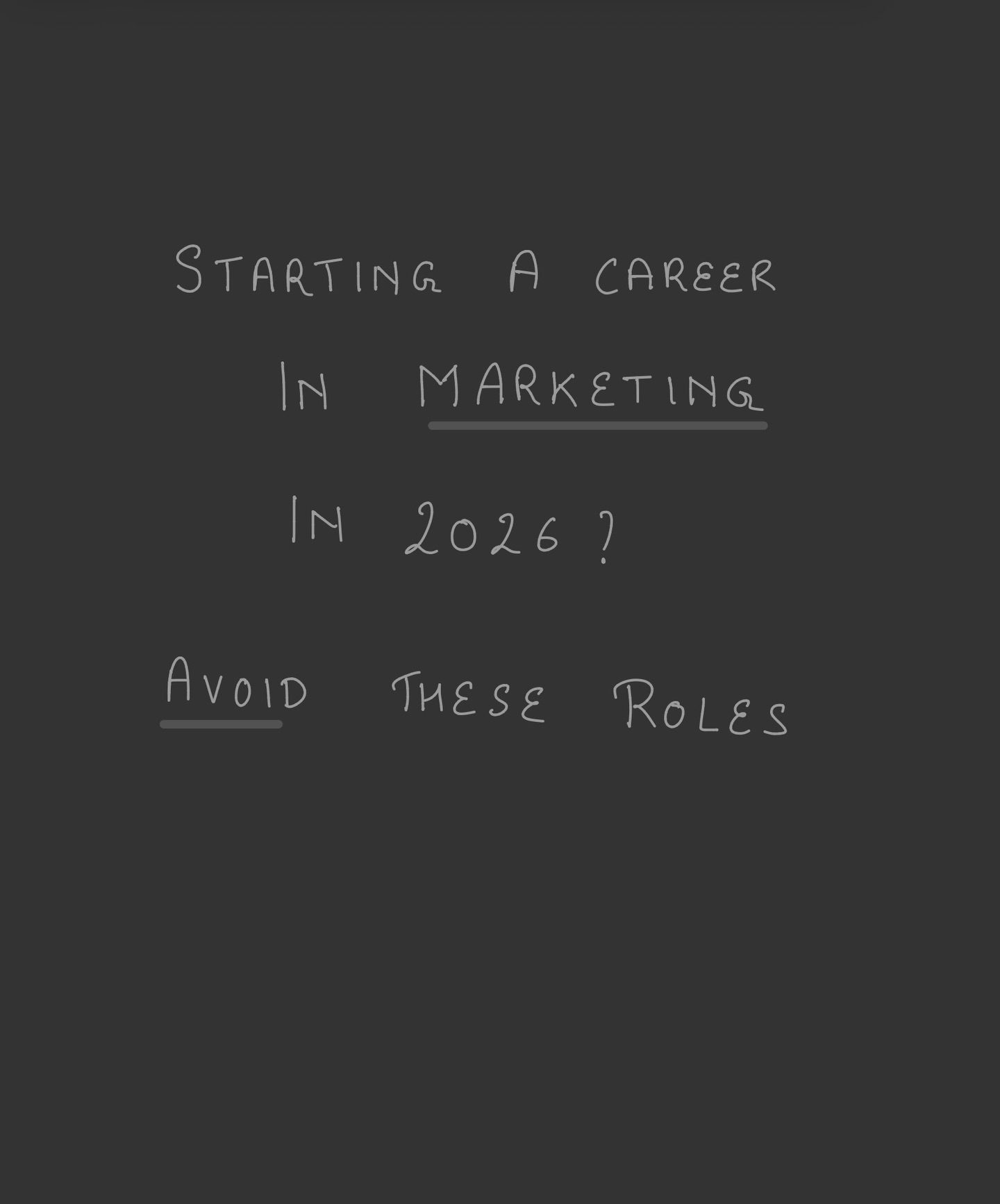
Marketing Career Advice for 2026: Roles to Avoid and How to Adapt
A career in marketing offers a multitude of opportunities, but the landscape is ever-changing. As automation and AI continue to advance, certain roles are becoming less desirable. Understanding which roles to avoid and how to adapt is crucial for staying relevant in the marketing industry. This guide explores the roles that may become obsolete by 2026 and provides actionable steps for those currently in these positions to stay competitive.
Why This Matters
The marketing industry is evolving rapidly, driven by technological advancements and shifting consumer behaviors. Roles that were once in high demand are now at risk of being automated, making it essential for professionals to adapt and pivot their skill sets. By understanding which roles to avoid and how to transition, marketers can future-proof their careers and stay ahead of the curve.
Automation and AI: The New Norm
Automation and AI are increasingly present in the marketing landscape, affecting a wide range of roles. From data analysis to content creation, AI can now handle many tasks that were once the domain of human marketers. This shift means that professionals need to focus on areas where human creativity and strategic thinking are irreplaceable.
Main Discussion
Roles to Avoid in 2026
Programmatic Expert
Programmatic experts focus on bidding strategies and platform dynamics. This role requires minimal creativity, making it highly susceptible to automation. As platforms become more sophisticated, the need for human intervention in bid management will decrease. To stay relevant, programmatic experts should move beyond simple bid management and into data strategy, audience architecture, and cross-channel performance forecasting. This involves understanding complex data sets and using them to drive strategic decisions that enhance overall marketing performance.
On-Page SEO Executive
On-page SEO executives traditionally focus on keyword optimization. However, the search landscape is evolving, requiring a deeper understanding of search optimization that extends beyond keywords. Today, SEO needs a holistic approach that includes topical authority building, AI-search strategy, and content-led growth systems. Rather than relying solely on manual keyword optimization, professionals should adopt a comprehensive strategy that integrates AI insights and content planning to enhance search visibility and drive organic traffic.
Marketing Analyst
Marketing analysts, especially those focused on reporting, are at risk of being automated. AI can generate reports and insights faster and more accurately than humans. To stay relevant, marketing analysts should shift their focus from reporting dashboards to designing experiments, interpreting causality, and influencing revenue-level decisions. This involves leveraging data to generate actionable insights and to drive strategic initiatives that impact the bottom line.
Transitions and Adaptations
Media Buyer
For media buyers, the shift from campaign-level optimization to growth modeling, creative testing systems, and full-funnel unit economics is essential. This involves understanding the entire customer journey and optimizing each stage for maximum profitability. By integrating data-driven strategies, media buyers can enhance the effectiveness of their campaigns and drive growth.
Agency-Side Meta Ads Expert
Agency-side Meta Ads experts need to move from dashboard-level optimizations to owning full-funnel system design, signal architecture, creative strategy, and profitability modeling. This involves understanding the entire customer journey and optimizing each stage for maximum profitability. By integrating data-driven strategies, Meta Ads experts can enhance the effectiveness of their campaigns and drive growth.
Practical Tips
Skill Development
To stay relevant, marketers should focus on developing skills in areas that are less likely to be automated. These include:
- Data Analysis and Strategy: Deepen your understanding of data analysis and strategy to drive informed decisions.
- AI and Automation: Familiarize yourself with AI tools and automation to understand how they can enhance your work.
- Creative Thinking: Develop your creative thinking skills to come up with innovative solutions and strategies.
- Content Creation: Enhance your content creation skills to produce high-quality, engaging content that resonates with audiences.
Networking and Continuous Learning
Networking with industry professionals and staying updated with the latest trends and technologies is crucial. Engage in continuous learning through online courses, workshops, and conferences to stay ahead of the curve.
Important Takeaways
- Avoid Roles Susceptible to Automation: Roles that require minimal creativity and are heavily reliant on platform dynamics are at risk of being automated.
- Deepen Your Skill Set: Focus on developing skills in areas that are less likely to be automated, such as data strategy, AI, and creative thinking.
- Stay Updated: Keep abreast of the latest trends and technologies in the marketing landscape to stay competitive.
Conclusion
The marketing landscape is rapidly evolving, driven by automation and AI. While certain roles may become obsolete, there are ample opportunities for marketers to stay relevant by adapting their skill sets and focusing on areas that require human creativity and strategic thinking. By understanding the roles to avoid and how to transition, marketers can future-proof their careers and thrive in the ever-changing marketing landscape.
Watch the Reel
Questions readers ask
Which marketing roles are most at risk of being automated in 2026?
Roles such as programmatic experts and on-page SEO executives are likely to be significantly impacted by automation. These positions often involve tasks that can be easily handled by algorithms, making them less desirable for human professionals.
Why are programmatic expert roles becoming less relevant?
Programmatic expert roles are becoming less relevant due to the increasing sophistication of automation tools. These tools can efficiently manage programmatic advertising tasks, reducing the need for human intervention and making it difficult for these roles to stay competitive.
What is audience architecture and why is it important?
Audience architecture involves structuring and organizing customer data to create targeted and personalized marketing strategies. This skill is crucial because it leverages human creativity and strategic thinking, making it less likely to be fully automated and future-proofing a marketer’s career.
How can I future-proof my marketing career in 2026?
To future-proof your marketing career, focus on developing skills in data strategy, audience architecture, and cross-channel performance forecasting. These roles require human creativity and strategic thinking, ensuring long-term relevance and growth.
What is the role of a marketing strategy analyst, and how does it differ from automated roles?
A marketing strategy analyst focuses on developing and executing strategic marketing plans, analyzing data to inform decisions, and optimizing performance across multiple channels. This role requires critical thinking and strategic planning, which are skills that automated systems cannot fully replicate.
What is cross-channel performance forecasting and why is it in demand?
Cross-channel performance forecasting involves predicting and optimizing the performance of marketing campaigns across various channels. This skill is in demand because it requires a deep understanding of consumer behavior and the ability to integrate data from multiple sources, making it a valuable asset for any marketing team.
Recent articles
Fresh deep dives from the latest Reels we unpacked.




Comments
Be the first to comment.