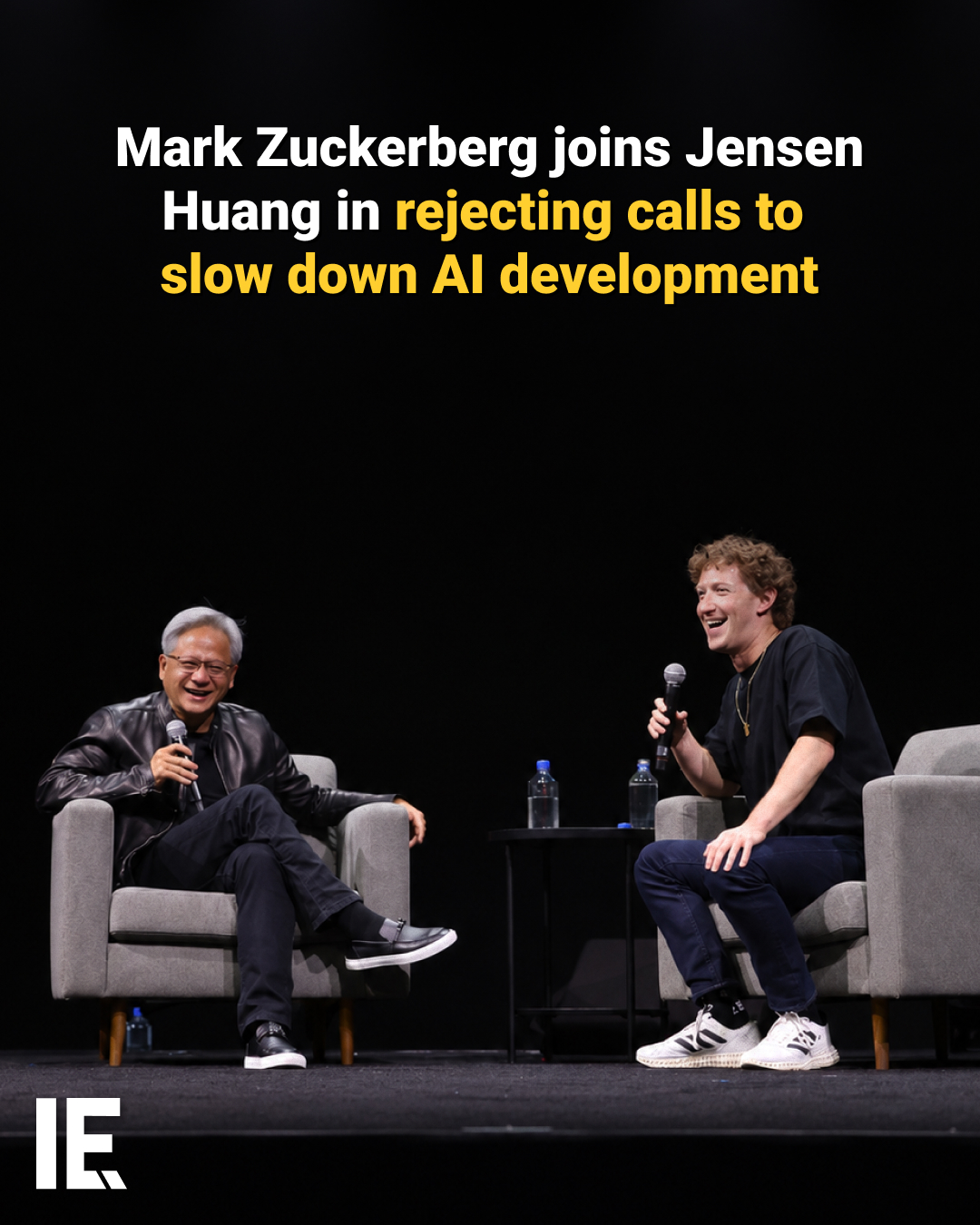
In a striking display of consensus, tech titans Mark Zuckerberg and Jensen Huang have publicly aligned to dismiss calls for a pause on AI development. They are not alone; their stance reflects a growing sentiment within the AI community that progress cannot be halted.
The Stance on AI Development
The rejection of calls to slow AI development is not a simple action of denial. For Zuckerberg and Huang, this stance represents a conviction that innovation carries more benefits than risks, particularly when it comes to social media and creativity. Zuckerberg, the CEO of Meta, emphasizes, “Slow development would mean missing out on all the benefits that AI can bring us.” Huang, the CEO of NVIDIA, has echoed similar sentiments in their resistance to calls to pause AI development. Huang believes that the pace of innovation should be “as fast as we can go with as much rigor as we can.” He contends that the societal risks of AI are not worth the delay, and instead, efforts should focus on mitigating those risks. He has gone as far as calling AI advancement "the most important thing that we've done in humanity." Despite his role in AI, Jensen Huang claimed that he is not "fearful" of the technology. Instead, Huang sees an opportunity to "open up" a new world of creativity, especially in fields like art. Huang's point of view is shared by prominent figures in the AI industry, as well as those in the broader tech industry, who view the field as ripe for new innovation and development.
AI Progress in Cultural Context
The growing spotlight on AI development stems from innovations that lead to groundbreaking productivity innovations and entertainment possibilities. Huang's optimism for AI and the future of tech in society reflects a broader narrative where the mind-set is, "You have to believe in technology to open up a whole new world of creativity." Huang's position aligns with other tech leaders who see potential in leveraging AI and are cautiously optimistic about the implications for society. Leaders like Huang see art as an area where AI can unlock creativity, specifically noting functionalities that allow for creation of new art forms. The biggest issue, in their eyes, is not the risk that AI poses but the potential lost benefit from a pause in development. However, there is no mention of the potential negative implications of unfettered AI development.
What Slowing AI Would Mean
Increased risk If the pause on development were to be implemented, Zuckerberg, Huang, and their allies see it as a lost opportunity. Zuckerberg, the CEO of Meta, has stated that slow AI development could mean losing out on potential benefits of AI in both the near and long term. This underscores a larger tech community concern: a pause would not necessarily lessen the risk but would certainly prevent the rapid advancement in AI technology that yields benefits for society and productivity. It could lead to a halt in the creation of new jobs and innovative solutions. Jensen Huang's approach to AI development centers around its transformative potential. He believes that slow AI development holds back the innovation of new technological art forms. Huang's emphasis on the benefits of AI aligns with similar sentiments from other tech leaders, who advocate for maintaining AI momentum despite acknowledgeing its potential dangers.
How Technology is Progressing
Tech leaders argue that the rate of AI development, while fast, is not haphazard. As a result, Zuckerberg and Huang have made it clear that they are instead not advocating for a pause but rather an embrace of AI. They see that the pace of AI development aligns with other rapid advancements in technology. Olveda points out that the pace of AI development has accumulated a sense of urgency to better combat human threats. Zhuang chooses instead to focus on the development of a technological solution to AI advancement.
Tools of Resistance
Slowing down the pace of innovation isn’t the only tool for mitigating risks. Huang stated that the best way to mitigate the risk is "go move a whole faster", before then adding that "you are going to get a whole lot of things done but you're going to get all the risks mitigated safely." He noted that it is “the most important thing that we've done in humanity” and instead of being fearful of it, society should move faster. The analogy between the pace of AI advancement and a growing tidal wave makes one thing clear: rushing towards the edge of the cliff means avoiding some future dangers, but also potentially missing out on the full benefits of AI progress. “It would be a mistake to not move forward as fast as you can while mitigating the risks as you go.”
Staying Up-to-Date
AI development is not a monolithic process. The conversation surrounding AI development is multifaceted. To stay informed, one should delve into independent sources at the forefront of AI technology and learn about the various voices involved. Read widely. This way, one can stay grounded in the nuanced discussions happening in the AI world.
Watch the Reel
Questions readers ask
What specific benefits do Zuckerberg and Huang believe AI will bring to social media and creativity?
Zuckerberg and Huang argue that AI will bring significant benefits to social media and creativity. They believe AI can enhance user experiences, foster new forms of artistic expression, and drive innovation. For example, Huang sees AI as a way to 'open up' a new world of creativity, especially in fields like art, where it can enable the creation of new art forms.
How do Zuckerberg and Huang propose to address the risks associated with AI development?
Zuckerberg and Huang do not believe that halting AI development is the solution to mitigating risks. Instead, they advocate for continuing AI development at a rapid pace while simultaneously implementing rigorous measures to address potential risks. Huang emphasizes the importance of focusing on mitigating risks rather than slowing down innovation.
What are the potential negative implications of pausing AI development, according to Zuckerberg and Huang?
Zuckerberg and Huang believe that pausing AI development could lead to significant missed opportunities. They argue that a pause would hinder the creation of new jobs, innovative solutions, and groundbreaking productivity enhancements. Additionally, it could slow down the advancement of AI technology, which they see as crucial for societal progress.
Why do Zuckerberg and Huang believe that AI advancement is the most important thing humanity has done?
Huang, in particular, views AI advancement as the most important achievement in human history because of its transformative potential. He sees AI as a catalyst for unlocking new worlds of creativity and innovation, especially in areas like art and technology. This perspective is shared by other tech leaders who view AI as a pivotal force for societal progress.
How does Jensen Huang view the potential of AI in the field of art?
Jensen Huang sees AI as a powerful tool for unlocking new forms of creativity in the field of art. He believes that AI can enable the creation of entirely new art forms and artistic expressions, which aligns with his broader vision of leveraging technology to open up new creative possibilities.
What is the broader sentiment within the AI community regarding the pace of AI development?
The broader sentiment within the AI community, as reflected by figures like Zuckerberg and Huang, is that the pace of AI development should not be slowed down. Many in the community believe that the benefits of rapid AI progress outweigh the risks, and that efforts should focus on mitigating risks rather than halting development.
What are the potential societal benefits of rapid AI development, according to Zuckerberg and Huang?
According to Zuckerberg and Huang, rapid AI development can yield significant societal benefits, including enhanced productivity, new job creation, and innovative solutions. They argue that the pace of AI development should be as fast as possible, with a focus on mitigating risks rather than slowing down innovation. These benefits are seen as crucial for societal progress and technological advancement.
Related deep dives
Similar reads based on topic and creator.

Recent articles
Fresh deep dives from the latest Reels we unpacked.


Comments
Be the first to comment.