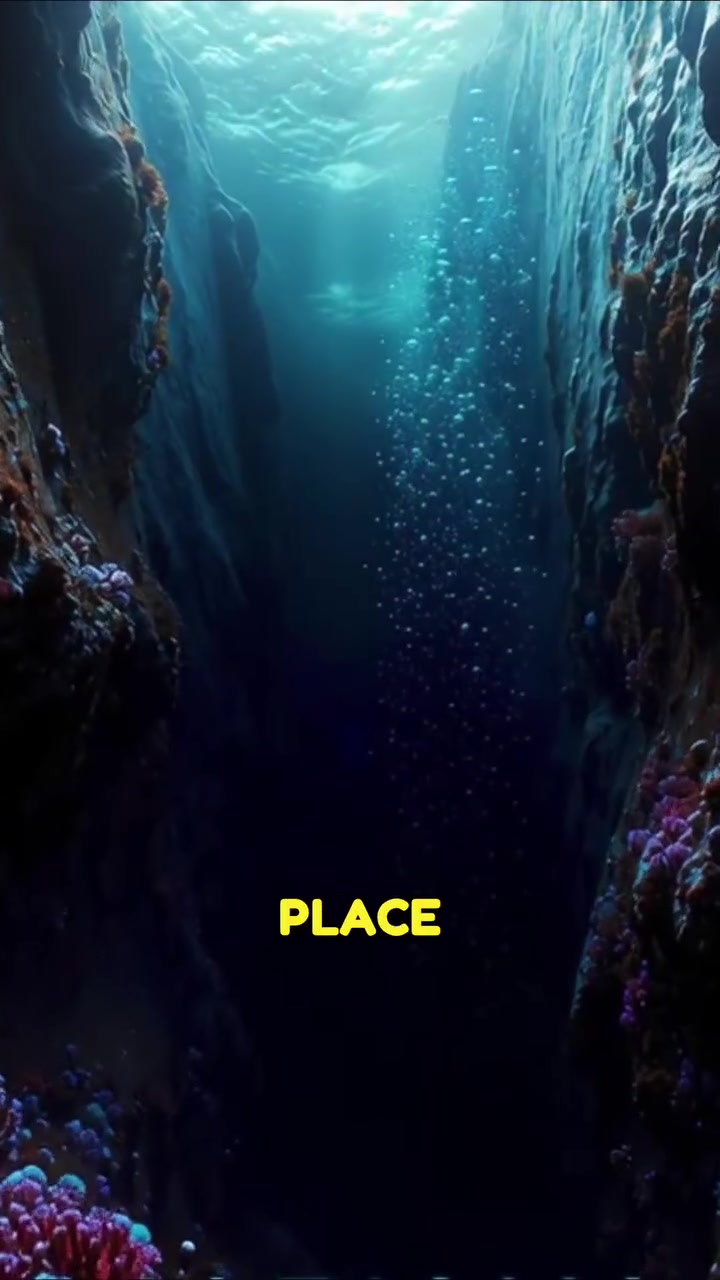
Plunging nearly 11 kilometers below sea level, the Mariana Trench is a place of extremes — and mysteries. At its bottom, Challenger Deep is the deepest point ever discovered, where strange creatures thrive despite the crushing pressure.
The Abyss: Welcome to the Mariana Trench
The Mariana Trench is a gaping wound in the Earth's crust, stretching for over 2,500 kilometers in the Pacific Ocean. Its average width is 69 kilometers. Like a vast, underwater canyon, this subterranean ravine is the deepest known natural point on the planet. The trench starts at approximately six kilometers below sea level, reaching a mind-bending low at the Challenger Deep, where the pressure exceeds 1,000 times the atmospheric pressure at sea level. The trench took over 450 million years to form as tectonic plates collided, forcing Earth's crust downward. The deepest part of the Mariana Trench is called the Challenger Deep. Here, the average depth is over 10.92 kilometers, but it reaches a maximum-known depth of over 10.99 kilometers. And yet, despite the darkness and freezing temperatures, unique lifeforms, such as amphipods and snailfish, survive this underwater abyss.
The Final Frontier: Earth's Last Mysteries
While scientists once imagined that the ocean's depths were barren and lifeless, research expeditions have revealed that many creatures thrive in Challenger Deep. The effects of immense pressure, low oxygen, and freezing temperatures were expected to prevent life from surviving. But organisms found in this trench challenge the notion that life is defined by a narrow set of conditions. Venturing into this underwater world remains a challenge as humans cannot visit without extreme equipment. Despite Earth being our home, it remains one of the most unexplored realms.
The Underwater Abyssal Zone: The Challenger Deep
The Last Unknown
Nearly 22,000 meters below the surface of the Pacific Ocean lies the deepest point on the planet. Descending here without the right technology is impossible. No human can survive the crushing pressure. There's very little oxygen or sunlight, yet life survives. Its first recorded explorer was with the Bathyscaphe Trieste — a Swiss-engineered deep-submersible vessel — in 1960. The crew included a Swiss scientist, Auguste Piccard, and a U.S. Navy lieutenant, Don Walsh. They descended into the trench in the Trieste. A thrilling discovery, a handful of people have ever been to the bottom. The first solo dive into the trench occurred only in 2012, during which filmmaker James Cameron went to the bottom of Challenger Deep in his submersible, the DSV Deepsea Challenger.
Pressure and Dangers
Understanding the conditions of the Mariana Trench requires appreciating the immense pressure. Pressure is the result of the weight of water above a point. A meter below the surface is roughly 14.7 PSI, but pressure increases exponentially with depth. This is why humans cannot survive without equipment. The pressure is so immense that it crushes the human body. Additionally, the high pressure means that it's difficult to even get to this point. Only extreme technology can withstand the intense conditions. The water is extremely cold and dark, not conducive to sustaining human life. Yet, it's home to alien-like life, offering a glimpse of lifeforms on other planets within extreme conditions.
A World of Adaptations
The world is filled with wonders and strange creatures. From microbes to amphibians, each marine creature has a unique way of adapting to its harsh environment. No animal life can exist without food and other animals. Each animal in the trench has adapted to survive in these extreme circumstances. The pressure here is 15,000 psi, which is more than enough to crush almost anything. But the amphipod, one creature found here, has evolved to deal with the immense pressure. It lives in the trench's interior, avoiding the deadly exterior. The snailfish, too, has adapted to the immense pressure, and other creatures exist despite the extreme conditions. These strange creatures survive in the harshest conditions imaginable, thriving where humans cannot.
Exploring Challenger Deep
Only a handful of people have reached Challenger Deep. The Japanese unmanned probe Kaikō explored the deep trench. The submersible Nereus also explored the trench on a mission to explore the deep ocean. Additionally, the ship Amphine discovered many fish and other creatures. Many expeditions have uncovered this deep trench, and still, much of the underwater world remains a mystery.
A Mystery Yet to Unfold
If Mount Everest were dropped inside it, the mountain would completely disappear beneath the water. While countless terrestrial explorations have occurred, the underwater world is a different story. The Mariana Trench, reaching nearly 11 kilometers below sea level, is an extreme and mysterious realm. The dive requires extreme pressure-resistant equipment. The sheer depth and immense pressure pose formidable challenges, making underwater exploration difficult. Only a few have ever reached Challenger Deep. The trench is vast — the further one dives, the less light, oxygen, and warmth there is. The fewer resources there are, the harder the exploration. Technological advancements such as submersibles and robotic vehicles are pushing the limits of underwater exploration.
The Call of the Deep
Interested in exploring the Mariana Trench? You'll first need to close your eyes — Challenger Deep is impossible to reach. But there are ways to dive, so to speak, into this mysterious world without literally descending. Some unmanned expeditions have been broadcasted live. There are tonnes of documentaries that show the mysteries of the trench. Some museums showcase the lifeforms of the Mariana Trench and the discoveries that have surfaced from it. There are even online simulations. If you're curious about the intricacies of deep-sea environments, you can learn more about these lifeforms and pressure adaptations. Experts spend years deciphering lifeforms and their adaptations in the trench, and there are many ways to get involved. Marine science programs and organizations study marine life, so diving into one's research is a good place to start. Some expeditions have even gathered rocks from Challenger Deep and brought them to the surface for research. Studying these rocks can provide insight into the phenomenon that makes this trench so unique. Lastly, discovering the secrets of underwater life is on the forefront of many scientists' minds. There are many ways to learn more about the underwater world, from academic research to documentaries. The more researchers know, the better they can understand the intricacies of deep-sea life.
Watch the Reel
Questions readers ask
What makes the Mariana Trench so inhospitable to humans?
The Mariana Trench is incredibly inhospitable due to the extreme pressure, which is over 1,000 times the atmospheric pressure at sea level. This pressure can crush a human body in minutes. Additionally, the lack of oxygen and sunlight, along with freezing temperatures, make it nearly impossible for humans to survive without specialized equipment.
How was the Mariana Trench formed, and how deep is it?
The Mariana Trench was formed over 450 million years ago as a result of tectonic plate collisions, which forced the Earth's crust downward. The deepest point, known as the Challenger Deep, reaches a maximum-known depth of over 10.99 kilometers. The trench stretches for over 2,500 kilometers in the Pacific Ocean, with an average width of 69 kilometers.
What kind of life can be found in the Mariana Trench?
Despite the harsh conditions, unique lifeforms such as amphipods and snailfish thrive in the Mariana Trench. These organisms challenge the notion that life is defined by a narrow set of conditions, as they have adapted to the immense pressure, low oxygen, and freezing temperatures. Scientists are still studying how these creatures survive in such an extreme environment.
Who were the first people to reach the bottom of the Mariana Trench, and how did they do it?
The first people to reach the bottom of the Mariana Trench were Swiss scientist Auguste Piccard and U.S. Navy Lieutenant Don Walsh in 1960. They descended in the Bathyscaphe Trieste, a Swiss-engineered deep-submersible vessel. The first solo dive into the trench was made by filmmaker James Cameron in 2012, using his submersible, the DSV Deepsea Challenger.
What challenges do scientists face when exploring the Mariana Trench?
Exploring the Mariana Trench is incredibly challenging due to the extreme pressure, lack of oxygen, and darkness. Scientists must rely on advanced technology that can withstand these conditions, and even with this equipment, the journey is risky and difficult. The trench remains one of the most unexplored realms on Earth, despite being our home.
How does the pressure in the Mariana Trench compare to the pressure at sea level?
The pressure at the bottom of the Mariana Trench is over 1,000 times greater than the atmospheric pressure at sea level. At sea level, the pressure is roughly 14.7 PSI, but it increases exponentially with depth. This immense pressure is what makes it so difficult for humans to visit and survive in the trench.
Related deep dives
Similar reads based on topic and creator.
Recent articles
Fresh deep dives from the latest Reels we unpacked.

Comments
Be the first to comment.