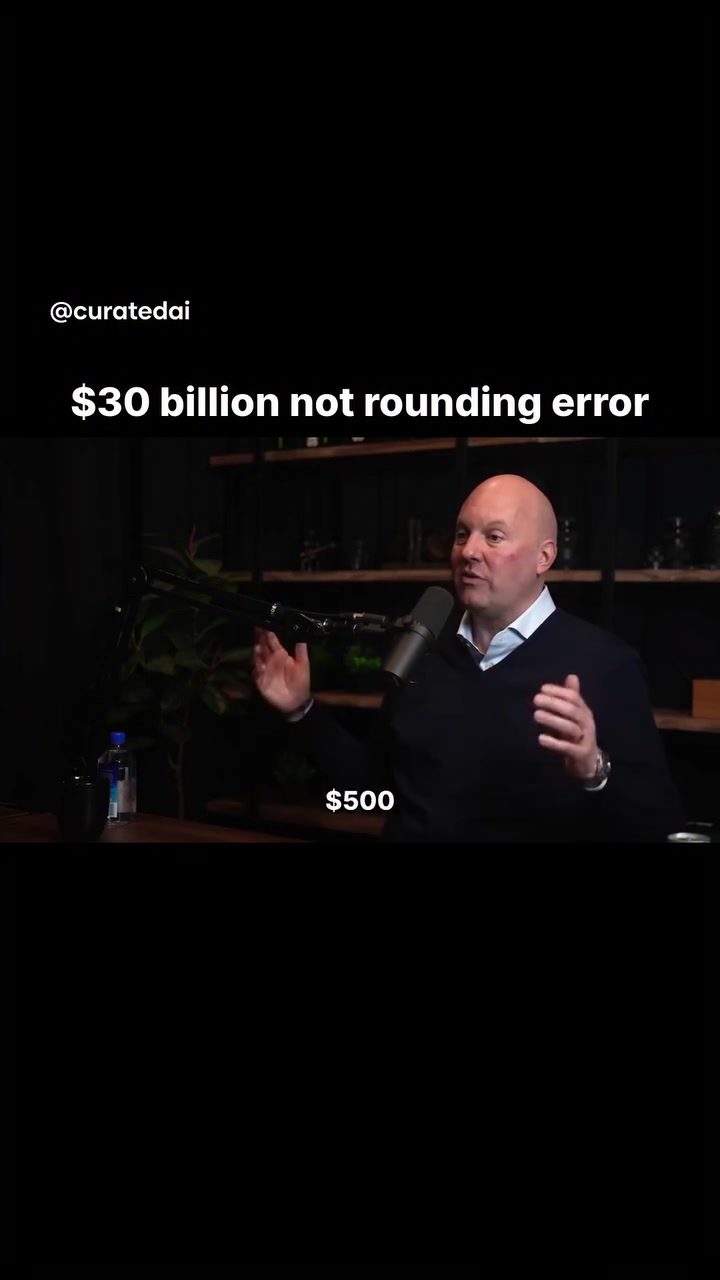
Podcast discussion about government spending and public perception
The phrase "$30 billion not rounding error" highlights a critical point in the discussion of government spending. This topic was explored in a podcast episode featuring Marc Andreessen and host Lex Fridman, where Andreessen discusses some high-profile government projects that have failed to deliver on their promises, despite significant funding.
Why this matters
The conversation around government spending and public perception is relevant because it underscores the disconnect between what policymakers and experts perceive as acceptable financial losses and what the general public views as wasteful spending. Understanding this disconnect is crucial for fostering better communication and transparency between government entities and taxpayers.
Main discussion
The scale of wasted funds
Andreessen cites several examples to illustrate the scale of wasted funds in government projects. These projects, often referred to as "boondoggles," range from charging stations that never materialized to broadband internet plans that failed to deliver broadband to anyone. These projects, despite being allocated substantial budgets, have been deemed failures.
The mindset of Washington
The mindset prevalent in Washington is that these large sums of money, such as the $30 billion mentioned, are mere rounding errors in the federal budget. This perception leads to a cavalier attitude towards spending, where even significant amounts of money are seen as inconsequential. However, the general public sees these expenditures as substantial and expects accountability for how their tax dollars are used.
Expert and media perspectives
Both experts and the media play a significant role in shaping public perception. Experts often downplay the importance of these budgetary missteps, attributing them to the larger budgetary context. The media, too, can sometimes amplify this perspective, leading to a disconnect between official narratives and public sentiment. This divergence in perception can result in widespread frustration and a lack of trust in government institutions.
Public outcry
The public's reaction to such missteps is often one of bewilderment and frustration. Taxpayers expect accountability and transparency in how their funds are allocated, and they are deeply concerned by the casual attitude towards such large sums of money. This public outcry is a call for greater accountability and more careful stewardship of public funds.
Practical tips
For policymakers
- Increase Transparency: Provide clear, detailed reports on how funds are allocated and used. Transparency helps build trust and accountability.
- Engage with the Public: Regularly engage with the public through town hall meetings, surveys, and social media to better understand their concerns and expectations.
- Implement Robust Oversight Mechanisms: Develop and enforce strict oversight mechanisms to monitor the progress and effectiveness of government projects.
For the public
- Stay Informed: Educate yourself on government spending and the projects being funded with tax dollars.
- Engage with Policymakers: Voice your concerns to your representatives and demand accountability for how public funds are used.
- Engage with Local Projects: Participate in local government initiatives and community projects to stay informed and contribute to effective spending.
For media and experts
- Provide Balanced Coverage: Offer a balanced and comprehensive view of government spending, highlighting both the successes and the failures.
- Explain the Context: Provide clear explanations of the context and implications of government spending decisions.
- Engage with the Public: Engage with the public through interviews, social media, and public forums to better understand their perspectives.
Important takeaways
Public trust is crucial
Maintaining public trust is essential for the effective functioning of government institutions. Transparency, accountability, and open communication can help bridge the gap between policymakers and the public.
Accountability matters
Accountability in government spending is vital for ensuring that public funds are used effectively and efficiently. Robust oversight mechanisms and clear reporting can help achieve this.
Public engagement is key
Engaging with the public and fostering a two-way dialogue can help policymakers better understand public concerns and expectations, leading to more informed and effective decision-making.
Conclusion
The discussion around government spending and public perception underscores the importance of transparency, accountability, and public engagement. By addressing these key areas, policymakers, the public, and experts can work together to ensure that public funds are used effectively, fostering a more trustworthy and responsive government.
Watch the Reel
Questions readers ask
What are 'boondoggles' as mentioned by Marc Andreessen?
Boondoggles, as referred to by Marc Andreessen, are government projects or programs that are perceived to have wasted significant amounts of money without delivering the promised benefits. These projects often fail to meet their objectives, despite substantial funding, and are typically cited to illustrate the inefficiencies in government spending.
Which examples did Andreessen provide to illustrate government boondoggles?
Andreessen discussed specific government projects, including broadband initiatives, that have consumed vast sums of money. These projects often fall short of their intended outcomes, highlighting the disconnect between what policymakers consider acceptable losses and the public's perception of wasteful spending.
Why is it important to understand the disconnect between policymakers and taxpayer expectations?
Understanding this disconnect is crucial because it highlights the need for better communication and transparency in government spending. When policymakers and the public have different views on what constitutes acceptable financial losses, it can lead to frustration and mistrust. This understanding can help bridge the gap and promote more informed decision-making.
What is the significance of the phrase '$30 billion not rounding error'?
The phrase '$30 billion not rounding error' underscores the magnitude of government spending and the seriousness of financial mismanagement. Marc Andreessen uses this phrase to emphasize that even large-scale projects that fail to meet their goals represent significant waste, and these losses should not be dismissed as minor errors or acceptable risks.
How does public perception of government spending affect policymaking?
Public perception of government spending can significantly influence policymaking. When taxpayers believe that their money is being wasted on ineffective projects, it can lead to increased scrutiny and demands for accountability. This, in turn, can prompt policymakers to reevaluate their priorities and implement more transparent and efficient spending practices. This interaction highlights the importance of aligning government initiatives with public expectations.
What are the implications of broadband projects being cited as boondoggles?
Broadband projects are often cited as examples of boondoggles because they frequently receive substantial funding with the promise of widespread internet access. However, these projects often fail to deliver the intended benefits, leading to the perception of wasted resources. This is a crucial illustration of the broader issue of government spending inefficiencies and the need for better management and oversight.
What role do policymakers and experts play in addressing government spending inefficiencies?
Policymakers and experts have a critical role in addressing government spending inefficiencies. They need to ensure that projects are well-planned, effectively managed, and aligned with public expectations to reduce waste. This involves conducting thorough assessments, maintaining transparency, and fostering public trust to ensure that taxpayer money is used responsibly and effectively.
Recent articles
Fresh deep dives from the latest Reels we unpacked.




Comments
Be the first to comment.