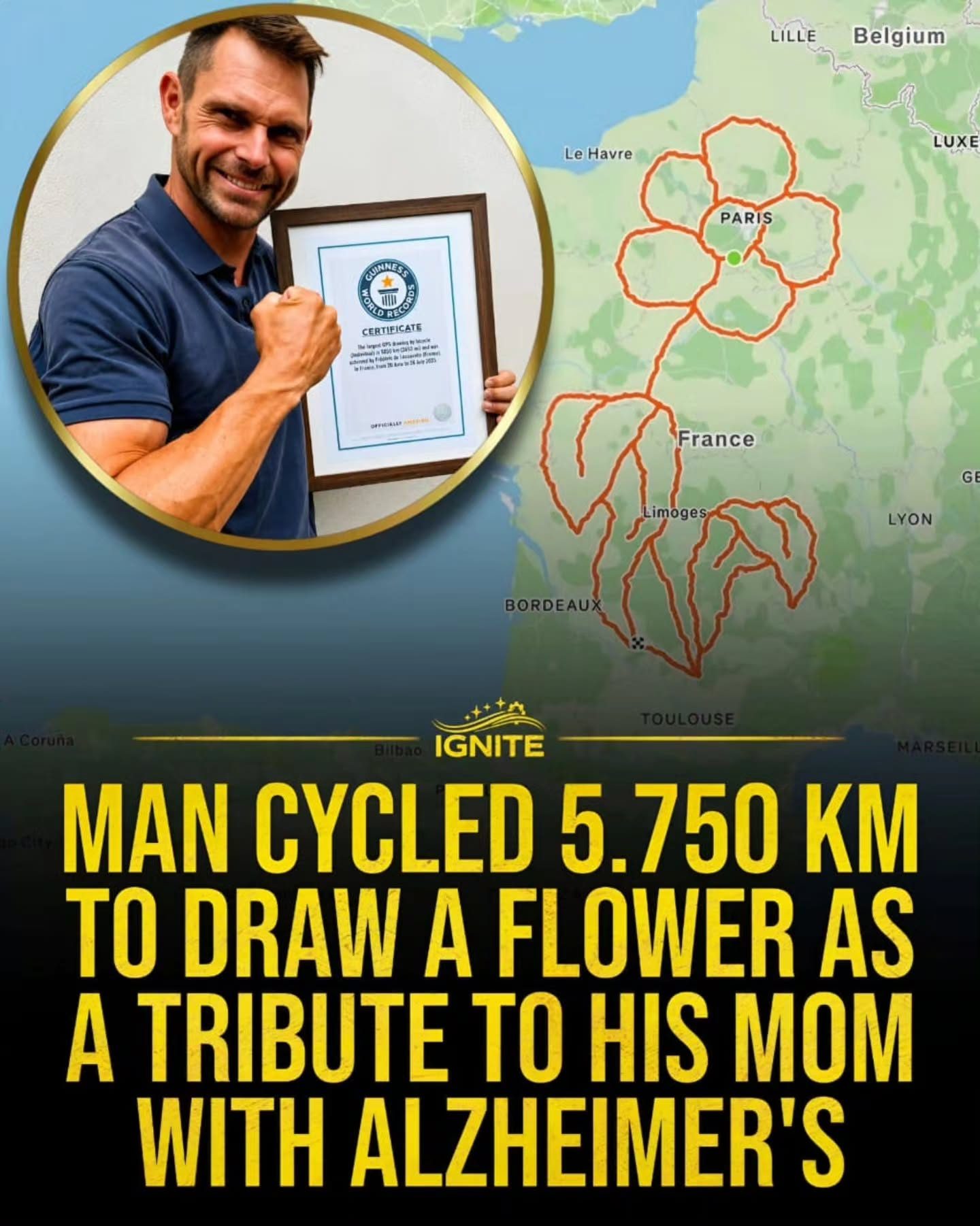
Guinness World Record: Cycling 5,750 km to Draw a Flower
In a remarkable feat of endurance and devotion, a man recently achieved a Guinness World Record by cycling an astonishing 5,750 kilometers. This extraordinary journey was not just a test of physical prowess, but also a profound tribute to his mother, who is living with Alzheimer's.
Context: Why This Matters
Alzheimer's disease is a progressive neurological disorder that affects millions of people worldwide. It impacts not only the individuals diagnosed but also their families and caregivers. This journey underscores the deep emotional and psychological toll that Alzheimer's can take, and how such challenges can inspire extraordinary acts of love and dedication.
The Journey
The Challenge
Cycling 5,750 kilometers is no small feat. To put this into perspective, it's roughly equivalent to cycling from the southern tip of France to the northernmost point, and then back down again. The journey required immense physical endurance, meticulous planning, and an unyielding spirit. The cyclist navigated various terrains, weather conditions, and logistical challenges, all while maintaining a clear focus on his ultimate goal: drawing a flower.
The Tribute
The flower he drew was more than just a visual representation; it was a symbol of love, remembrance, and hope. Alzheimer's can be isolating for both the individual and their family. This cycling journey served as a powerful reminder of the unbreakable bond between a son and his mother, despite the challenges posed by the disease. The flower he drew was a tribute to his mother, representing the beauty and resilience that can emerge from even the most difficult circumstances.
The Route
The journey took place in France, with a map highlighting the route the cyclist followed. The route was carefully planned to ensure it was both challenging and meaningful. Cycling through diverse landscapes, from bustling cities to serene countryside, the cyclist's journey was a physical and emotional pilgrimage, each kilometer a testament to his dedication and love.
Practical Tips
Embarking on a journey like this requires meticulous planning and preparation. Here are some practical tips for those considering a long-distance cycling adventure:
Planning and Training
- Set Clear Goals: Define what you want to achieve with your journey. Whether it's a personal challenge or a tribute to someone special, having a clear goal will keep you motivated.
- Physical Training: Long-distance cycling requires excellent physical fitness. Start training well in advance, gradually increasing the distance and intensity of your rides.
- Logistics: Plan your route, accommodations, and support systems. This includes knowing where to stop for rest, refueling, and maintenance.
- Mental Preparation: Long-distance cycling can be mentally demanding. Develop strategies to stay focused and motivated, whether it's through meditation, visualizing your goal, or connecting with loved ones.
Equipment and Gear
- Bicycle: Ensure your bicycle is in top condition and suitable for long-distance riding. Regular maintenance and upgrades can make a big difference.
- Safety Gear: Invest in high-quality helmets, reflective gear, and protective clothing. Safety should always be a top priority.
- Navigation Tools: Use GPS devices or apps to track your route and monitor your progress. This is crucial for staying on course and knowing your location at all times.
- Navigation Tools: Use GPS devices or apps to track your route and monitor your progress. This is crucial for staying on course and knowing your location at all times.
Support and Community
- Support Team: Have a support team or friend who can assist you with logistical issues, medical emergencies, and emotional support.
- Join a Community: Engage with cycling communities or support groups. Sharing your journey and experiences with others can provide motivation and a sense of belonging.
- Document Your Journey: Keep a journal, take photos, or even create a blog to document your journey. This can serve as a record of your achievements and a way to share your story with others.
Important Takeaways
Resilience and Love
This journey highlights the power of resilience and love in overcoming adversity. The cyclist's dedication to his mother, despite the challenges posed by Alzheimer's, is a testament to the unbreakable bond between family members.
The Impact of Alzheimer's
Alzheimer's disease affects not only the individual diagnosed but also their loved ones. This journey serves as a reminder of the emotional and psychological toll that the disease can take and the importance of finding ways to support and honor loved ones living with it.
The Power of Personal Challenges
Setting and achieving personal challenges can be incredibly rewarding. Whether it's for personal growth, a cause, or to honor someone special, embarking on a journey like this can have a profound impact on your life and the lives of those around you.
Conclusion
Cycling 5,750 kilometers to draw a flower is not just a remarkable athletic achievement, but a powerful act of love and devotion. This journey showcases the resilience and dedication of a son honoring his mother, and serves as a poignant reminder of the unbreakable bonds between family members. Whether you're inspired to embark on a similar adventure or simply want to support someone affected by Alzheimer's, let this extraordinary feat serve as a beacon of hope and inspiration.
Watch the Reel
Questions readers ask
What inspired the man to undertake the 5,750 km cycling journey?
The man's primary inspiration was his mother, who is living with Alzheimer's. He wanted to raise awareness about the disease and its profound impact on families and caregivers, while also attempting to set a Guinness World Record.
How did the cycling journey contribute to Alzheimer's awareness?
By undertaking this mammoth task, the cyclist aimed to shine a spotlight on Alzheimer's disease, encouraging conversations and fostering a greater understanding of the challenges faced by those affected. The journey also served as a fundraiser, with donations going towards Alzheimer's support and research.
What was the significance of the 5,750 km distance?
The 5,750 km distance was chosen as it was the length required to beat a world record. To draw a flower in the shape of his mother's face, he drew this shape on a map, which he cycled around. The route was meticulously planned to cover this precise distance, symbolizing his dedication and love.
How did the cyclist prepare for the challenging journey?
The cyclist likely engaged in extensive physical training, mental preparation, and careful planning of his route and logistics. He would have needed to ensure proper nutrition, hydration, and rest to endure the grueling 5,750 km journey.
What message did the cyclist hope to convey through his journey?
Through his journey, the cyclist hoped to convey the emotional and psychological toll that Alzheimer's takes on families and caregivers. He aimed to inspire others to support those affected by the disease and to contribute to ongoing efforts to combat Alzheimer's.
What kind of support did the cyclist receive during his journey?
While the article does not specify, it is common for long-distance cyclists to receive support from friends, family, and even strangers. This support can come in the form of encouragement, assistance with logistics, and donations to the cause. This support is often crucial in helping cyclists complete such challenging journeys.
How can others support Alzheimer's awareness and research?
Others can support Alzheimer's awareness and research by participating in awareness events, donating to relevant organizations, and advocating for more funding and resources. Additionally, sharing personal stories and experiences can help foster a greater understanding of the disease and its impact.
Recent articles
Fresh deep dives from the latest Reels we unpacked.




Comments
Be the first to comment.