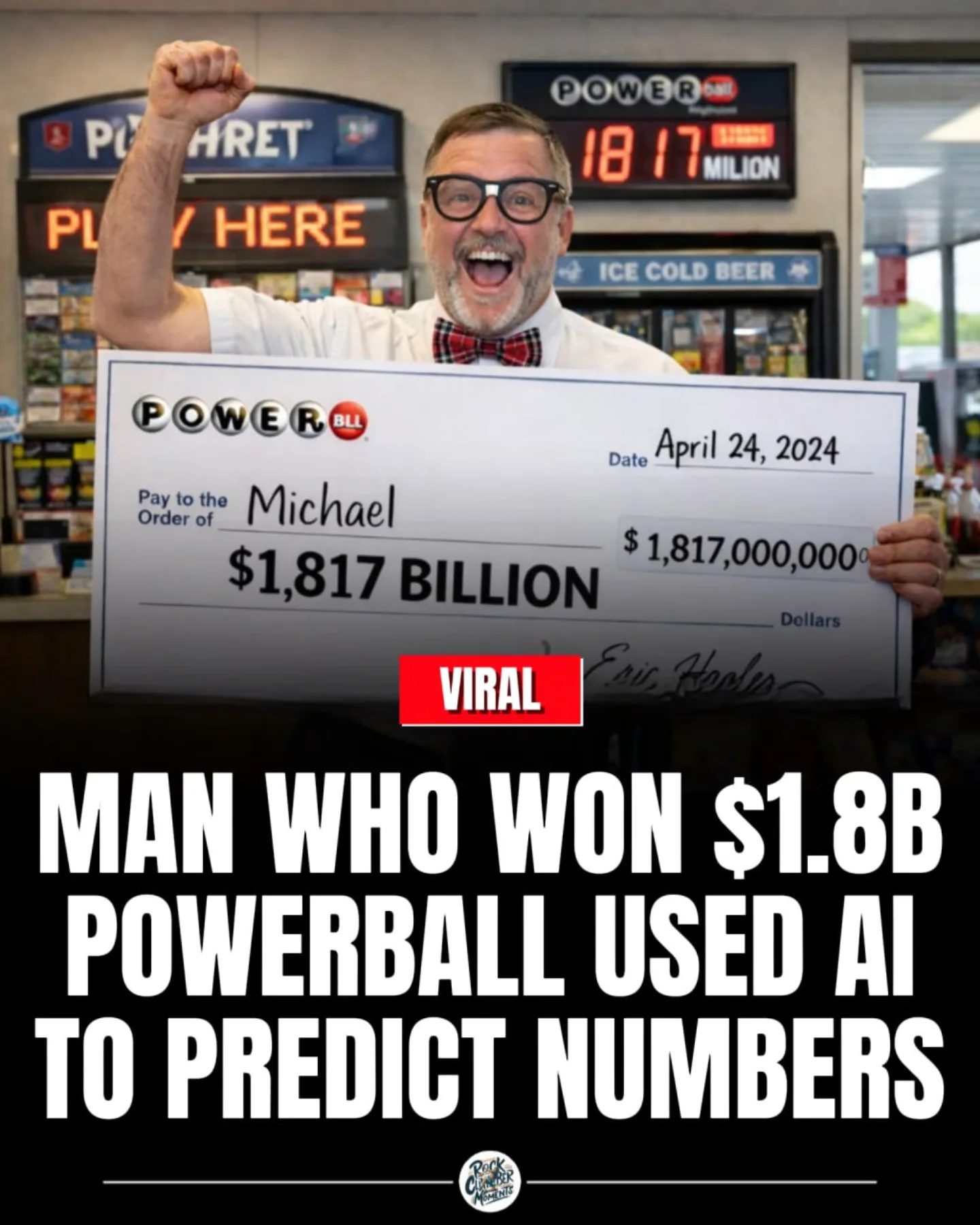
Winning $1.817 Billion in Powerball: The AI Connection
A man from Arkansas made headlines by winning an astonishing $1.817 billion in the Powerball lottery. But what's even more intriguing is that he claims to have used artificial intelligence (AI) to generate the winning numbers.
Why This Matters
The integration of AI in lottery predictions has sparked a lot of interest, not just because of the massive win, but also because it highlights the potential of AI in areas beyond traditional gaming. This story underscores the growing capability of AI to analyze vast amounts of data and make predictions based on complex patterns. While it is rare and exciting, it raises questions about the future of AI in decision making, both in gaming and in other fields.
Main Discussion
AI and the Future of Gambling
The use of AI in predicting lottery numbers represents a significant shift in how people approach gambling. Traditionally, lottery predictions have been based on randomness and luck. However, AI algorithms can sift through enormous datasets to identify patterns that might not be apparent to the human eye. This capability could revolutionize gambling, making it more strategic and less reliant on pure chance. The Arkansas man’s win suggests that AI could potentially be used to identify winning combinations in other gambling games, although it’s important to note that the lottery’s randomness is designed to ensure that no system can guarantee a win.
How AI Was Used
The man from Arkansas apparently used AI to analyze every winning Powerball ticket from the beginning of the lottery. By inputting vast amounts of historical data, the AI could identify trends and patterns that might have been overlooked by humans. This allowed the AI to generate a set of numbers that were statistically more likely to win. While the specifics of the AI algorithm used are not publicly known, the process likely involved machine learning techniques such as neural networks, which can recognize complex patterns in data.
However, it is crucial to remember that no AI system can guarantee a win. While AI can make educated guesses based on historical data, the lottery remains a game of chance. The outcome of any single draw is inherently unpredictable, and AI can only improve the odds, not eliminate the element of luck.
The Role of Historical Data
The key to the AI’s success in this case appears to be the use of historical data. By analyzing past winning numbers, the AI was able to discern patterns that might not be immediately obvious. For example, certain numbers might have been drawn more frequently than others, or there might have been specific combinations that occurred more often than would be expected by chance. This information could then be used to generate a list of numbers with a higher likelihood of being drawn.
Practical Tips
While the specifics of the Arkansas man’s AI system are not publicly known, there are some general tips that can be applied to anyone interested in using AI to predict lottery numbers:
-
Collect Comprehensive Data: The more historical data you have, the better your AI can make predictions. Ensure you have access to a complete dataset of past winning numbers.
-
Use Advanced Algorithms: Utilize sophisticated machine learning algorithms that can recognize complex patterns in the data. Neural networks, decision trees, and support vector machines are all examples of algorithms that could be used.
-
Regular Updates: AI models need to be updated regularly to account for new data. As more numbers are drawn, your AI should be retrained to include the latest information.
-
Combine Multiple Approaches: Don’t rely on a single AI model. Combining multiple models can improve the accuracy of your predictions. Techniques like ensemble learning, where several models work together, can provide better results.
-
Consider the Randomness: Always remember that the lottery is a game of chance. Even with AI, there is no guarantee of winning.
Important Takeaways
-
AI Can Enhance Predictions: AI has the capability to analyze vast amounts of data and identify patterns that might be overlooked by humans. This can enhance the likelihood of predicting lottery numbers.
-
No Guarantee of Winning: While AI can improve the odds, it cannot guarantee a win. The lottery remains a game of chance, and the outcome of any single draw is unpredictable.
-
Ethical Considerations: The use of AI in gambling raises ethical questions. It’s important to ensure that the use of such technologies is fair and does not give an unfair advantage to those who have access to advanced AI systems.
-
Continuous Learning: AI models need to be continuously updated and retrained to include the latest data. This ensures that the predictions remain as accurate as possible.
Conclusion
The story of the man from Arkansas who won $1.817 billion in the Powerball using AI is both thrilling and thought-provoking. It showcases the potential of AI to revolutionize gambling and other fields by analyzing vast amounts of data to make informed predictions. However, it's important to remember that no AI system can eliminate the element of chance that is inherent in games like the lottery. As AI continues to evolve, it will be interesting to see how it shapes the future of gambling and other areas where predictions and decisions are based on complex data.
Watch the Reel
Questions readers ask
How did the AI help the Arkansas man win the Powerball jackpot?
The AI analyzed vast amounts of historical lottery data to identify patterns and predict the most likely winning numbers. This strategic approach allowed the man to select the winning combination for the Powerball jackpot.
Is using AI to predict lottery numbers a common practice?
While not widespread, using AI for lottery predictions is gaining traction. AI can process and analyze large datasets more efficiently than humans, making it a powerful tool for identifying potential winning combinations.
What does the Arkansas winner's success mean for the future of AI in gambling?
This win highlights AI's potential in strategic decision-making within gambling. It suggests that AI could be used more extensively in games of chance, although it's important to note that lottery outcomes are inherently random and not guaranteed.
Can anyone use AI to win the lottery?
In theory, yes, but there are no guarantees. AI can assist in generating potential winning numbers, but the lottery is random, and luck plays a significant role. Additionally, developing and using such AI systems requires technical expertise and resources.
How does AI analyze lottery data?
AI uses complex algorithms to process historical lottery data, identifying patterns, trends, and correlations. By learning from this data, AI can generate predictions about future lottery draws, focusing on the most statistically likely outcomes.
What is the significance of the $1.817 billion Powerball win for AI technology?
This win demonstrates AI's capability to handle and analyze complex datasets, leading to real-world success. It shows that AI can be a valuable tool in making predictions and informed decisions in various fields, not just gambling.
What kind of AI was used to win the Powerball?
The specific type of AI used is not detailed, but it likely involved machine learning algorithms designed to analyze historical lottery data. These algorithms can identify patterns and make predictions based on the data they've processed.
Related deep dives
Similar reads based on topic and creator.


Recent articles
Fresh deep dives from the latest Reels we unpacked.




Comments
Be the first to comment.