Automotive Manufacturing in the U.S. (and Beyond)
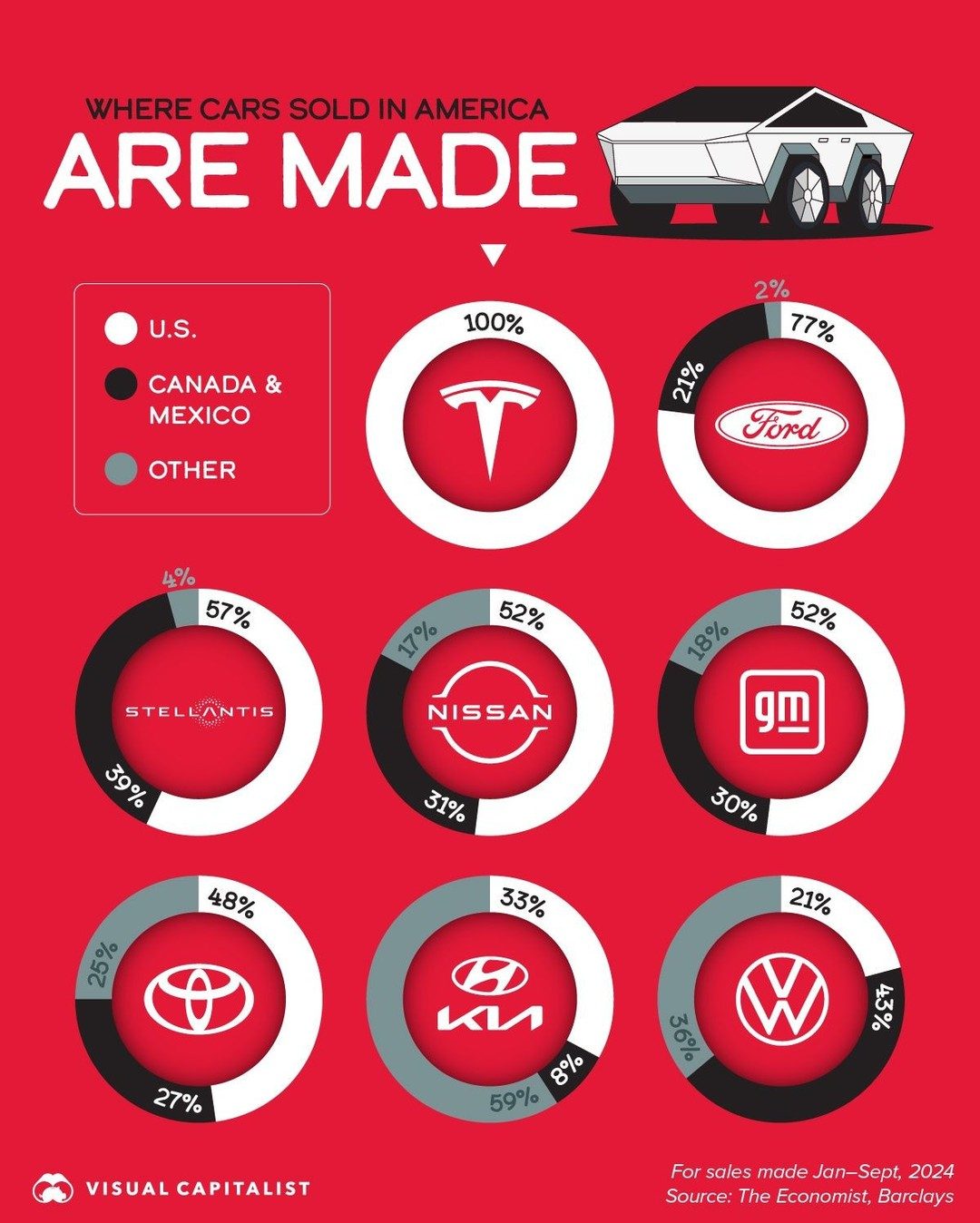
Understanding where the vehicles sold in the U.S. are manufactured can provide valuable insights into the automotive industry, trade dynamics, and consumer preferences. In 2024, the manufacturing landscape for cars sold in the U.S. reveals a mix of domestic and foreign production. Tesla, for instance, assembled 100% of the vehicles it sold in the U.S. domestically. In contrast, major automakers like Ford, GM, and Stellantis imported between 25% and 33% of their U.S. vehicle sales from Canada and Mexico.
Why This Matters
The location of automotive manufacturing has significant implications for the economy, job market, and trade policies. By examining where major automakers produce their vehicles, we can understand the broader economic impact, including job creation, supply chain management, and trade relations. This information is also crucial for consumers who prioritize domestic manufacturing and for policymakers who shape trade and tariff policies.
Breakdown of Manufacturing Locations
The Big Picture
The automotive industry in the U.S. is a complex web of domestic and international manufacturing. The infographic highlights that a significant portion (77%) of cars sold in America are made in Canada and Mexico. This indicates a strong reliance on North American trade partners for vehicle production. The remaining 23% is split between the U.S. and other global locations.
Key Automakers
Tesla
Tesla stands out for its commitment to domestic manufacturing. In 2024, Tesla assembled 100% of the vehicles it sold in the U.S. domestically. This strategy not only supports local economies but also aligns with consumer preferences for American-made products. Tesla's approach to domestic manufacturing is a testament to its investment in U.S.-based production facilities and supply chains.
Ford
Ford manufactures 52% of its vehicles in the U.S., with the remaining 48% produced in Canada and Mexico. This mix reflects a balanced strategy, leveraging lower production costs in neighboring countries while maintaining a significant domestic presence. Ford's manufacturing strategy allows it to optimize production costs and supply chain efficiency.
Stellantis
Stellantis, which includes brands like Chrysler, Dodge, Jeep, and RAM, manufactures 48% of its vehicles in the U.S., 39% in Canada and Mexico, and 13% in other locations. This distribution indicates a robust North American manufacturing network, with a notable focus on Canada and Mexico for additional production capacity.
Other Major Automakers
- General Motors (GM): GM produces 57% of its vehicles in the U.S., 21% in Canada and Mexico, and 22% in other locations.
- Nissan: Nissan manufactures 52% of its vehicles in the U.S., 17% in Canada and Mexico, and 31% in other locations, indicating a diverse global production strategy.
- Hyundai: Hyundai produces 59% of its vehicles in the U.S., 8% in Canada and Mexico, and 33% in other locations, highlighting a strong U.S. manufacturing base.
- Volkswagen: Volkswagen manufactures 43% of its vehicles in the U.S., 36% in Canada and Mexico, and 21% in other locations, showing a balanced approach across North America.
Practical Tips for Consumers
If you're a consumer looking to support domestic manufacturing, consider the following tips:
- Research Brand Origins: Before purchasing a vehicle, research where the brand manufactures its cars. This information is often available on the manufacturer's website or through independent reviews.
- Look for 'Made in USA' Labels: While not all vehicles are fully assembled in the U.S., many brands proudly display 'Made in USA' labels on parts or components. These labels can guide your purchasing decisions.
- Check for Supplier Information: Sometimes, the supplier information can provide insights into where the vehicle's components are sourced. This can help you make a more informed decision about supporting domestic or local suppliers.
Important Takeaways
- Domestic Manufacturing Matters: For automakers like Tesla, domestic manufacturing is a significant selling point and a key part of their business strategy.
- Trade Dynamics: The automotive industry relies heavily on trade agreements and partnerships, with a substantial portion of vehicles sold in the U.S. manufactured in Canada and Mexico.
- Consumer Preference: There is a growing consumer preference for vehicles manufactured in the U.S., which can influence purchasing decisions and market trends.
- Economic Impact: The location of manufacturing directly impacts local economies, job markets, and trade policies, making it a critical factor in the automotive industry's landscape.
Conclusion
The automotive manufacturing landscape in the U.S. is a complex network of domestic and international production. Understanding where major automakers build their vehicles sold in America provides valuable insights into economic impact, trade dynamics, and consumer preferences. Whether you're a consumer, investor, or policymaker, knowing these details can help you make informed decisions and support the automotive industry's growth and sustainability.
Watch the Reel
Questions readers ask
Which automaker leads in domestic production for vehicles sold in the U.S.?
Tesla stands out as the leader in domestic production, manufacturing 100% of the vehicles it sold in the U.S. within the country itself.
What is the percentage of vehicles sold in the U.S. that are produced in Canada and Mexico?
77% of cars in the U.S. are produced in Canada and Mexico. This is a significant portion of the overall automotive market in the U.S.
How does Ford's production strategy for the U.S. market compare to Tesla's?
Ford imports a significant portion, around 25% to 33%, of its U.S. vehicle sales from Canada and Mexico, which is in stark contrast to Tesla's 100% domestic production.
Which automakers are heavily tied to North American trade partners for vehicle manufacturing?
Major automakers like Ford, GM, and Stellantis are heavily tied to North American trade partners for vehicle manufacturing, importing a significant portion of their vehicles from Canada and Mexico.
What are the implications of vehicle manufacturing locations on the economy and job market?
The location of vehicle manufacturing has significant implications for the economy and job market, including job creation, economic growth, and trade policies. Understanding where major automakers produce their vehicles provides insight into these dynamics.
Where are Ford, GM, and Stellantis vehicles sold in the U.S. manufactured?
Ford, GM, and Stellantis manufacture a significant portion of their vehicles sold in the U.S. in Canada and Mexico, with approximately 25% to 33% of their U.S. vehicle sales imported from these countries.
How does the U.S. automotive industry benefit from North American trade partners?
The U.S. automotive industry benefits from North American trade partners through increased production capacity and cost efficiency, allowing automakers to source a significant portion of their vehicles from Canada and Mexico.
Related deep dives
Similar reads based on topic and creator.




Recent articles
Fresh deep dives from the latest Reels we unpacked.




Comments
Be the first to comment.