The Aleutian Event
Understanding earthquakes involves grasping the subtle yet powerful forces at work within the Earth. A magnitude 6.3 earthquake shook the Aleutian region. According to the U.S. Geological Survey, the quake struck about 35 kilometers deep, just south-southwest of Nikolsky, Alaska. The Aleutian region is highly active, with earthquakes triggering more frequently here than in many other parts of the world. Despite its magnitude, this particular event caused no immediate damage or triggered a tsunami. Epicenter location awareness is critical. Geophysicists have identified the location of the epicenter: 84 kilometers south-southwest of Nikolsky. Precise knowledge of the earthquake's location allows for more effective disaster response and helps mitigate its impact. The parameters of an earthquake are not always immediately clear. The magnitude and depth of an earthquake may be revised as more data becomes available. This process reflects the complex nature of seismic activity and the need for continuous monitoring and analysis. The preliminary magnitude of 6.3 and a depth of 35 kilometers underscore the power and depth of the quake. Immediate reports stated the event did not cause damage or lead to a tsunami. Still, seismic events of this kind warrant close observation.
Visualizing Seismic Waves
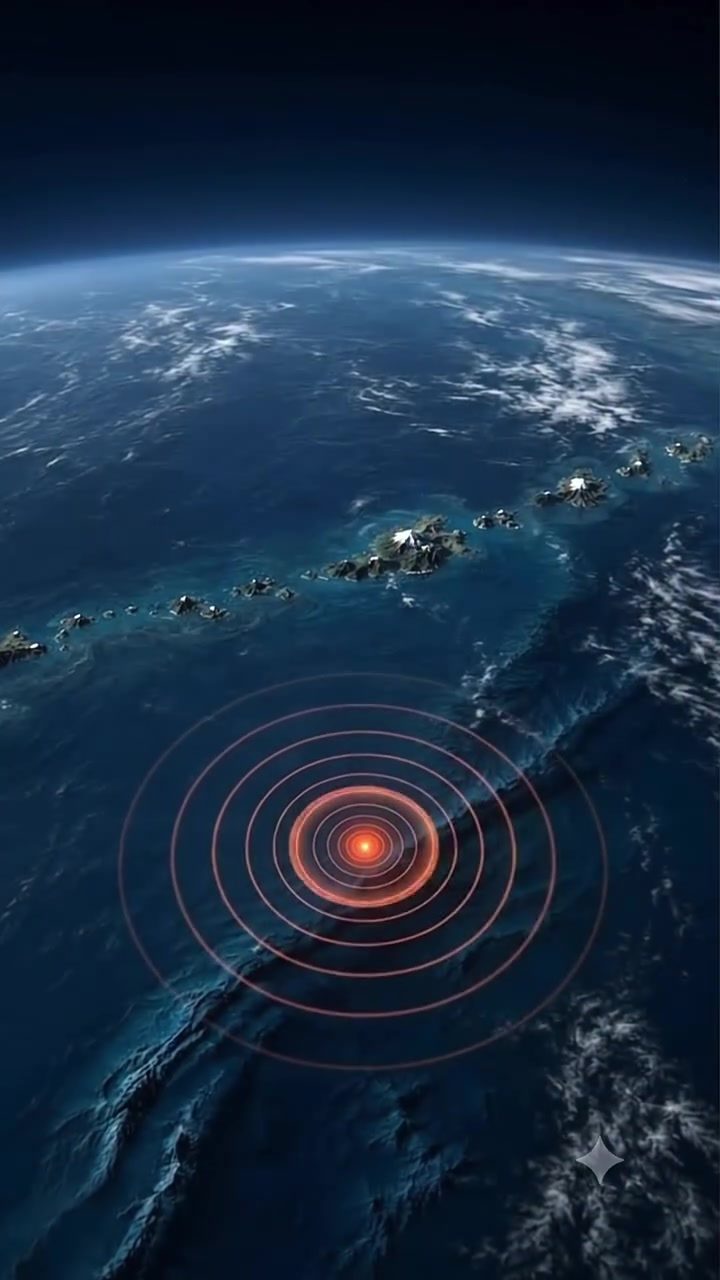
Seismic waves illustrate the violence of an earthquake and reveal the shaking of the land. Viewing an earthquake from space provides a unique perspective. The visual presented included a simulated view from space, focusing on an area of the ocean with islands. This perspective highlights the remote and often isolated nature of seismic events in these regions. The graphic used concentric circles to represent the seismic waves when an earthquake occurs. These waves expand and contract. This illustrates how the energy from a seismic event ripples outward, affecting everything in its path. The animated graphic effectively conveys the dynamic nature of seismic wave propagation. The waves expand from the epicenter in a series of concentric circles, depicting the outward movement of seismic energy. This visualization is essential for understanding the impact and reach of an earthquake, allowing experts to model and predict its effects more accurately.. The focus on an ocean area with islands underscores the geological complexity of the region. Islands are particularly vulnerable to seismic activity, as their geological structures are often more fragile and susceptible to the forces generated.
Assessing Risk and Impact
The absence of reports is no indication of a lack of impact in a quake zone. The USGS's initial report stated no damage or tsunami warnings were imminent. The fact the area experienced no immediate damage is a testament to the region's preparedness. However, these statements reflect the ongoing assessment and reassessment of seismic activity, where hazards are continually monitored. In any case, the lack of an immediate threat remains a positive indicator of the area's resilience. The Aleutian region's geology has been shaped by its proximity to the tectonic plate boundary. Earthquakes and volcanic activity are common here. While this region stands as a stark reminder of the forces at work within our earth, it is vital to remember that these events can occur anywhere, anytime. The absence of immediate damage or a tsunami warning should not lull us into a false sense of security. However, this update shows that preparedness and early warning systems are crucial in mitigating the effects of seismic activity.
Future Disaster Preparedness
The potential for hazards in the future cannot be ruled out. The focus on potential hazards in the Aleutian region should not only be on the immediate threat but also on long-term preparedness. The region's history of seismic activity underscores the need for continuous monitoring, as well as robust and adaptable response plans. In addition to preparedness, it is crucial to understand the mechanisms behind these events. This ensures a comprehensive approach to earthquake safety that includes all levels of society. This is why focusing on modeling the propagation of seismic waves and studying the geological conditions of the region is essential.
Watch the Reel
Related deep dives
Similar reads based on topic and creator.




Recent articles
Fresh deep dives from the latest Reels we unpacked.


Comments
Be the first to comment.