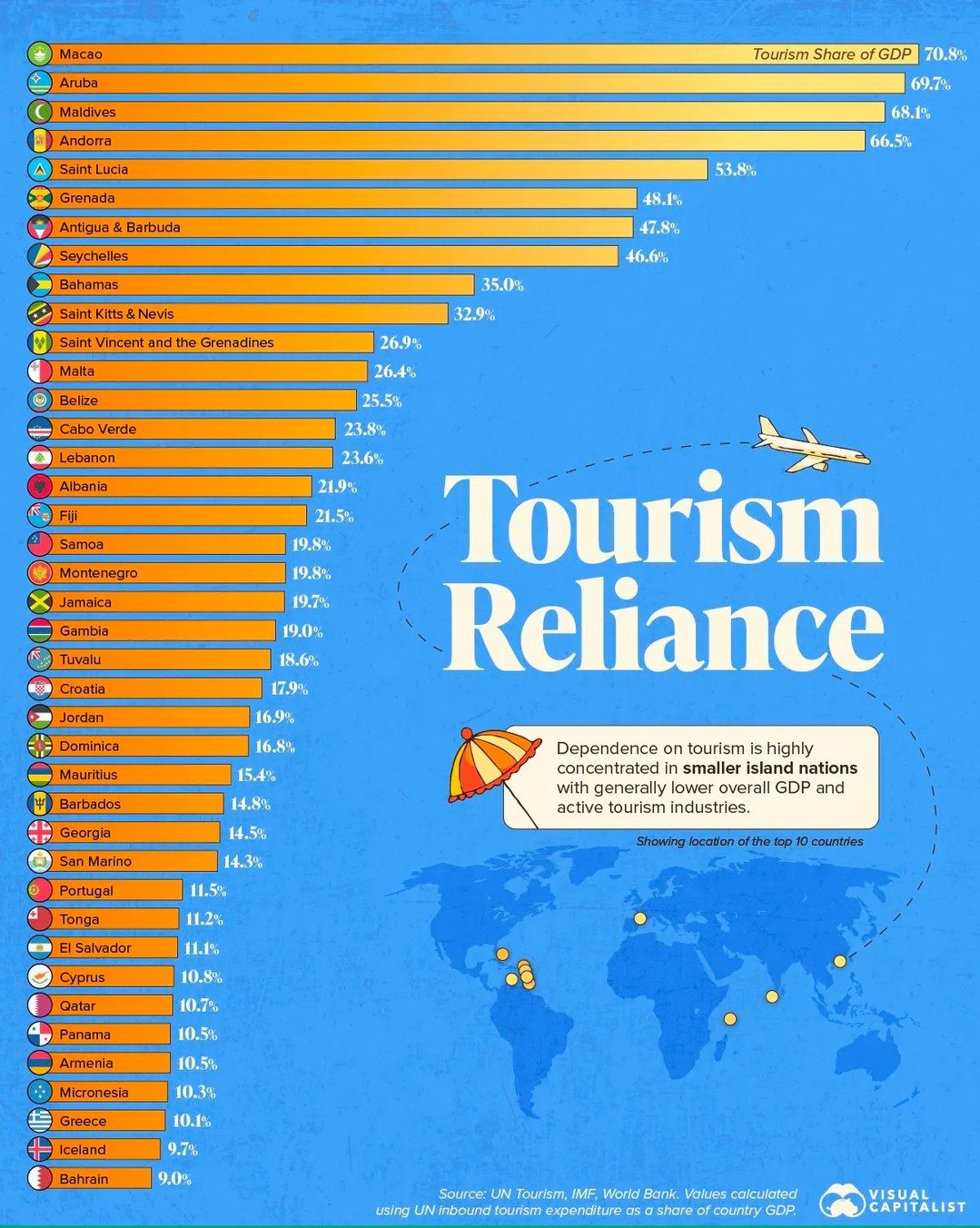
Tourism Reliance: Global Economic Impact
Tourism plays a significant role in the economies of many countries, but its impact varies greatly around the world. Understanding which countries rely most heavily on tourism can provide valuable insights into global economic trends and the unique challenges these nations face.
Context: Why this matters
Tourism is a vital sector for many economies, generating jobs, fostering cultural exchange, and contributing substantially to GDP. However, an over-reliance on tourism can make an economy vulnerable to external shocks, such as natural disasters, pandemics, or economic downturns in source markets. By examining the countries most dependent on tourism, we can better understand the risks and opportunities associated with this sector.
Main discussion
The Most Tourism-Dependent Economies
According to the latest data from UN Tourism and the IMF, Macao tops the list as the world’s most tourism-dependent economy. An astonishing 70.8% of its GDP is tied to international tourism. This heavy reliance is a double-edged sword, offering substantial economic benefits but also exposing the region to significant risks. Other countries with high tourism dependencies include Saint Lucia (69.7%), Aruba (68.1%), and the Maldives (66.5%). These nations, along with others like Andorra and Saint Kitts & Nevis, share a common characteristic: they are small island nations.
Small Island Nations and Tourism
It is notable that eight out of the top ten countries most reliant on tourism are small island nations. These countries often have limited economic diversity, making tourism a critical driver of economic growth and employment. For instance, the Maldives, with its pristine beaches and luxury resorts, attracts a significant number of tourists each year, contributing heavily to its GDP. Similarly, countries like Saint Lucia and the Maldives rely on tourism for over 60% of their GDP. The concentration of tourism in smaller island nations highlights the importance of tourism as a development strategy for these economies.
Variations in Tourism Contribution
The impact of tourism on GDP varies significantly across different countries. While some nations rely heavily on tourism, others see a more modest contribution. For instance, in 47 countries, tourism contributes less than 1% of GDP. These countries typically have more diversified economies, with other sectors such as manufacturing, technology, or natural resources playing significant roles. Examples include Algeria and Albania, which show a tourism contribution of less than 10%.
Data Sources and Methodology
The data presented in this analysis is sourced from UN Tourism, the IMF, and the World Bank. The values are calculated using UN inbound tourism expenditure as a share of country GDP. This methodology provides a comprehensive understanding of how tourism impacts different economies, allowing for a clear comparison of tourism reliance across various countries. It is essential to recognize that this data offers a snapshot of a dynamic economic landscape, and fluctuations can occur based on various factors.
Geographic and Economic Factors
Tourism reliance is not evenly distributed across the globe. Smaller island nations often have a higher dependence on tourism due to their limited land area, lack of natural resources, and fewer opportunities for industrial development. These countries have turned to tourism as a primary economic driver, leveraging their unique landscapes and cultural attractions to draw in visitors. Although tourism offers substantial benefits, over-reliance on this sector can also pose risks, particularly in the face of external disruptions.
Practical tips
Diversifying Economic Sectors
For countries heavily reliant on tourism, diversifying the economy is a critical strategy. By developing other sectors such as manufacturing, technology, or agriculture, these countries can reduce their vulnerability to tourism shocks. Investing in infrastructure, education, and innovation can help foster new economic opportunities and create a more resilient economy.
Promoting Sustainable Tourism
Sustainable tourism practices can help ensure that the benefits of tourism are long-lasting. This involves protecting natural and cultural heritage, promoting eco-friendly tourism, and ensuring that local communities benefit from tourism revenues. By adopting sustainable tourism practices, countries can preserve their natural beauty and cultural richness for future generations.
Building Resilience
Countries reliant on tourism must develop strategies to build resilience against external shocks. This can include creating emergency funds, diversifying tourism offerings, and fostering partnerships with other countries. By taking proactive measures, these nations can better withstand the impacts of events like natural disasters, pandemics, or economic downturns.
Leveraging Technology
Technology can play a pivotal role in enhancing the tourism sector. By leveraging digital tools, countries can improve marketing, streamline visitor experiences, and create new tourism products. For instance, virtual reality and augmented reality can offer immersive experiences, while data analytics can provide valuable insights into visitor behavior and preferences.
Important takeaways
- Macao is the world’s most tourism-dependent economy, with 70.8% of its GDP tied to international tourism.
- Small island nations dominate the top ranks of tourism-dependent countries, highlighting the uneven global impact of tourism.
- Diversifying economic sectors, promoting sustainable tourism, building resilience, and leveraging technology are essential strategies for countries heavily reliant on tourism.
- The reliance on tourism is a double-edged sword, offering significant economic benefits but also posing risks in the face of external disruptions.
Conclusion
Tourism is a powerful economic force, particularly for small island nations and countries with limited economic diversity. While it offers substantial benefits, over-reliance on tourism can also lead to vulnerability. By understanding the global trends in tourism reliance and adopting strategic measures, countries can harness the potential of tourism while mitigating its risks.
Watch the Reel
Questions readers ask
Which countries are the most dependent on tourism besides Macao?
While Macao leads the list, other countries significantly reliant on tourism include the Maldives, Seychelles, and Antigua and Barbuda. These nations also have a substantial portion of their GDP tied to international tourism, making them highly sensitive to fluctuations in tourist arrivals and spending.
How does tourism benefit economies like Macao?
Tourism brings in substantial revenue, creates job opportunities across various sectors, and promotes cultural exchange. In Macao, tourism supports a wide range of industries, from hospitality to entertainment, and contributes significantly to the region's overall economic growth.
What risks do tourism-dependent economies face?
Economies heavily reliant on tourism are vulnerable to external shocks such as natural disasters, pandemics, and economic downturns in source markets. These events can lead to a sudden drop in tourist arrivals, resulting in job losses, reduced revenue, and potential economic instability.
How can countries mitigate the risks associated with tourism dependence?
Diversifying the economy by investing in other sectors, such as technology, manufacturing, or agriculture, can help reduce reliance on tourism. Additionally, implementing robust risk management strategies and maintaining financial reserves can provide a safety net during tourism downturns.
Why is it important to visualize tourism's contribution to GDP?
Visualizing tourism's contribution to GDP helps policymakers and stakeholders understand the sector's importance and identify trends. This can guide more informed decision-making, assist in resource allocation, and support the development of targeted strategies to enhance tourism sustainability and resilience.
Related deep dives
Similar reads based on topic and creator.



Recent articles
Fresh deep dives from the latest Reels we unpacked.




Comments
Be the first to comment.