Winning the Dark Matter Race
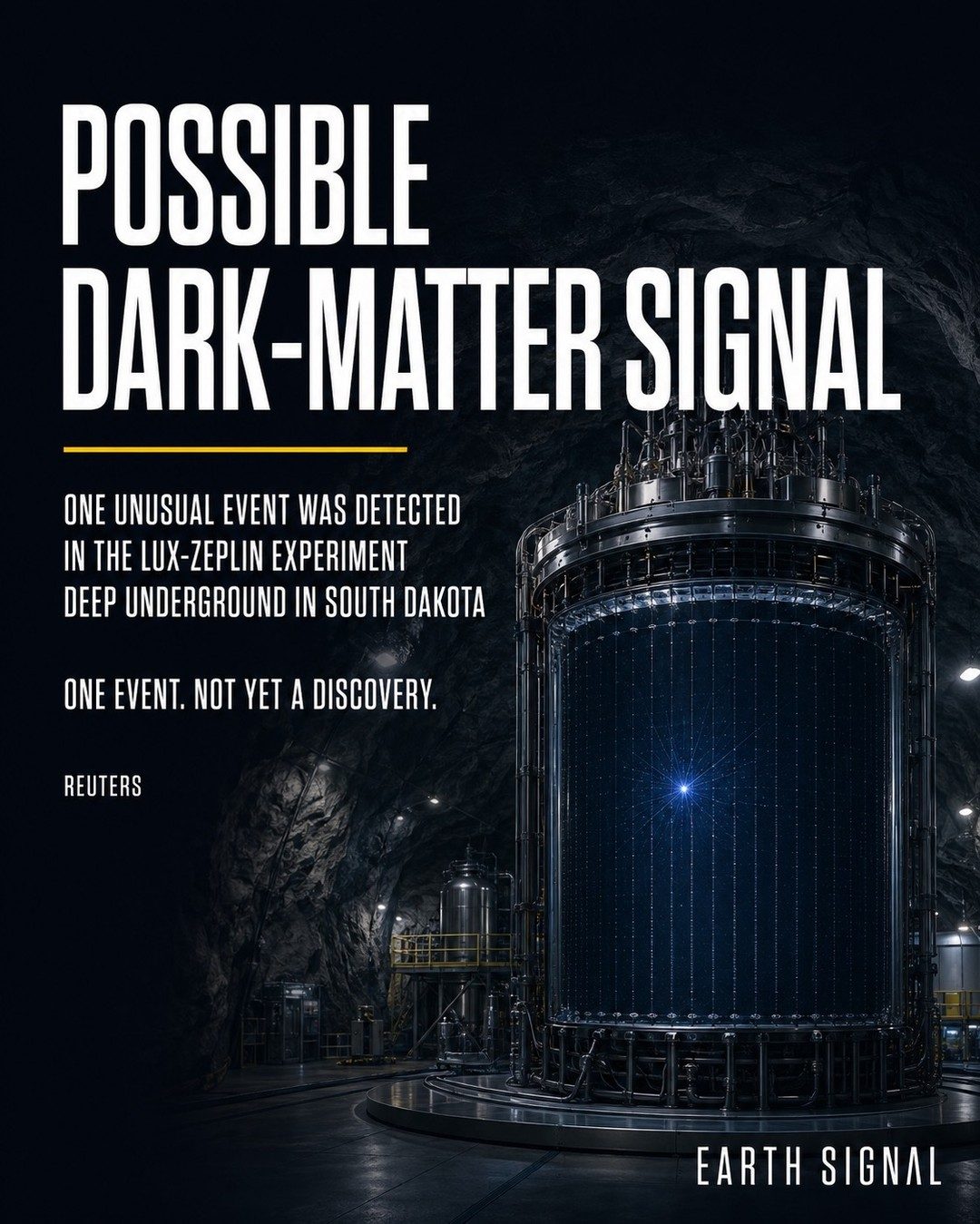
The LUX-Zepilin experiment has made a remarkable leap in the pursuit of dark matter. The project is situated underground in South Dakota. Scientists reported detecting a possible signal. This was not a conclusion of the experiment. Instead, it was merely a single event—one unusual event. The experiment focuses on the elusive substance believed to constitute about 85% of the universe's matter. This signal, despite its ambiguity, sparked anticipation because it could significantly advance understanding of dark matter. This isn't quite a discovery, as further verification is needed. It remains a step forward from past unknown.
Laboratory Underground
The LUX-Zepilin (“LZ”) detector’s location was no mistake. Located deep underground, the LUX-Zepilin experiment is shielded from cosmic rays and other interference that could distort its readings. The detector's design maximizes its sensitivity to weak, rare signals. This is because a dark matter particle interacts with ordinary matter through gravity and weak nuclear forces. The design includes a central tank filled with a liquid xenon target. Any dark matter interaction within this would create a unique signature — like a possible light blue glow. The detector's extreme sensitivity means it can pick up signals that might otherwise be overlooked. Which might explain the unusual event. The environment and hardware of the LUX-Zepilin help to gather information; to glean insights from the background noise.
The Next Step
One single event can't yet substantiate a discovery. It is however a hopeful indication that dark matter is approachable. Further observation is required to conclusively identify dark matter. The collaboration is ongoing. Follow-up experiments by LUX-Zepilin—along with independent verification from other research teams—are crucial to determining if this signal is a revolution, or a mere anomaly. As the science community digs deeper, the implications of this event could broaden our understanding. The potential unlocks new questions and areas of study. It is also worth noting that this announcement was made to the public to build awareness. It could uncover new areas of study, like entirely new physics, cosmic mysteries that remain to be unraveled.
Watch the Reel
Related deep dives
Similar reads based on topic and creator.




Recent articles
Fresh deep dives from the latest Reels we unpacked.




Comments
Be the first to comment.