Humanoid Robot Production
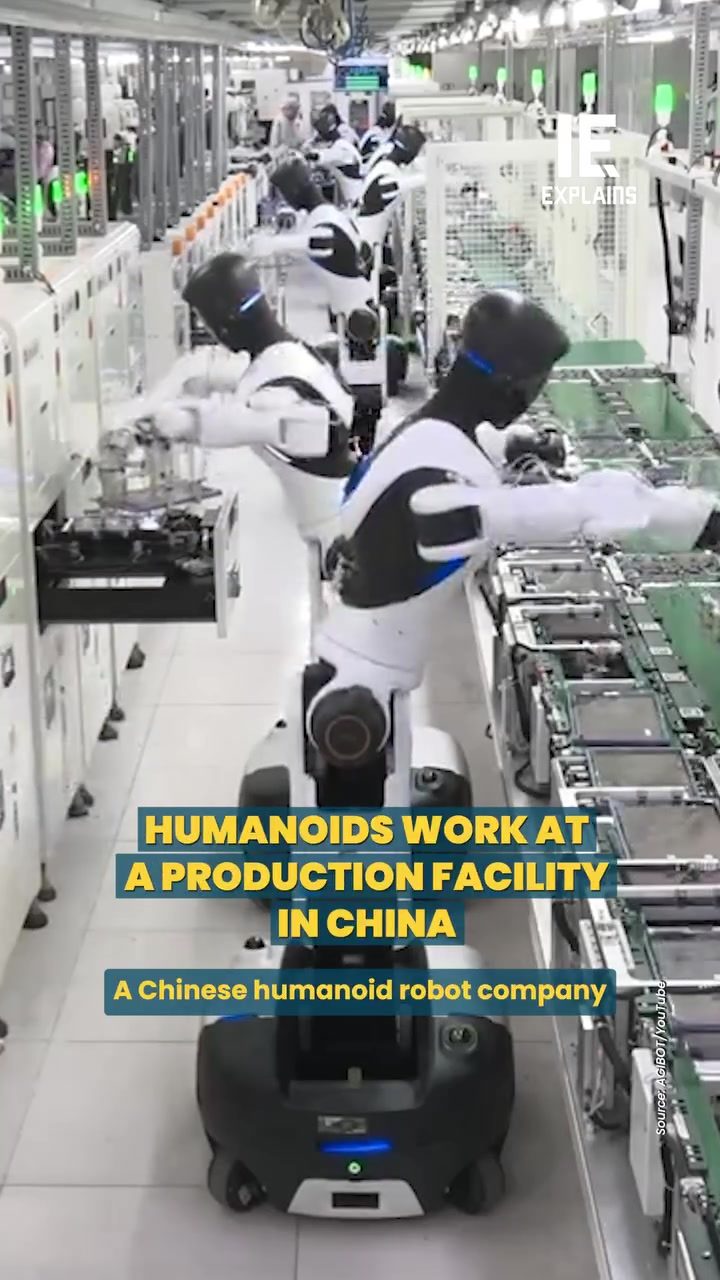
The integration of humanoid robots in industrial settings is no longer a futuristic concept but a present reality in China. Longcheer, a notable player in the field of humanoid robots, has demonstrated the practical application of these advanced machines in a live factory production line. This move is particularly noteworthy as it counters the Western tech industry's controlled lab demonstrations, showcasing a direct challenge to Western competitors.
Context / Why this matters
China's rise in the field of advanced robotics is not merely a technological advancement but a strategic move with significant economic implications. The country is home to a thriving manufacturing sector, and the integration of humanoid robots into this sector could revolutionize production efficiency and quality control.
Robots like the Longcheer G2 are designed to work alongside human workers, enhancing productivity without displacing human labor. This integration is crucial for industries like manufacturing, where precision and efficiency are paramount. By leveraging humanoid robots, companies can achieve higher success rates, improved cycle times, and a more reliable quality assurance process.
Main discussion
The Longcheer G2: Real-World Application
Longcheer's G2 humanoid robots have been deployed in the quality inspection section of a tablet mass production line. These robots operate seamlessly alongside human workers, performing real-time quality checks on tablets as they move through the production line. The robots are designed to handle various tasks, from visual inspections to detailed quality checks, ensuring that each product meets the required standards.
A Live Challenge to Western Competitors
The six-day livestream of the Longcheer G2 robots, running from June 23rd to June 28th, was a direct challenge to Western competitors. Unlike Figure AI, which conducted a 200-hour livestream of robots sorting packages in a lab, Longcheer showcased their robots working in real factory conditions. This demonstrates a significant shift in the robotics race, moving it out of controlled lab environments and into actual production lines.
Efficiency and Success Rates
The Longcheer G2 robots boast a 99% plus success rate, processing 310 units per hour with a cycle time of just 19 seconds. These metrics highlight the efficiency and reliability of humanoid robots in industrial settings. The ability to maintain such high success rates and quick cycle times is crucial for mass production, where efficiency and precision are key to competitive advantage.
Integration with Existing Workflows
One of the key advantages of Longcheer's G2 humanoid robots is their ability to integrate with existing industrial workflows. These robots do not disrupt the current processes but rather enhance them, working alongside human workers to achieve higher productivity and quality.
Practical tips
For manufacturers considering the integration of humanoid robots into their production lines, several practical tips can ensure a smooth transition:
1. Comprehensive Training and Support
Ensure that your workforce is well-trained in operating and maintaining the humanoid robots. Provide comprehensive training programs and ongoing support to address any issues that may arise.
2. Regular Maintenance
Regular maintenance is crucial for the longevity and reliability of humanoid robots. Establish a maintenance schedule and ensure that all parts are inspected and replaced as needed.
3. Gradual Integration
Gradually integrate humanoid robots into your production line. This approach allows for a smoother transition and provides time to address any unforeseen issues.
4. Continuous Monitoring
Continuously monitor the performance of the robots and make adjustments as needed. Use data analytics to track the robots' efficiency and make data-driven decisions to improve productivity.
5. Quality Assurance
Ensure that the robots are performing quality checks at every stage of the production process. This will help maintain high-quality standards and minimize defects.
Important takeaways
- Real-World Application: Humanoid robots like Longcheer's G2 are being deployed in live production lines, showcasing their practical application in real-world settings.
- Efficiency and Reliability: These robots offer high success rates, quick cycle times, and reliable quality checks, making them ideal for mass production.
- Integration with Existing Workflows: Humanoid robots can seamlessly integrate with existing industrial workflows, enhancing productivity without disrupting current processes.
- Challenge to Western Competitors: The deployment of these robots is a direct challenge to Western companies, demonstrating China's advancements in the field of robotics.
- Economic Implications: The integration of humanoid robots in manufacturing has significant economic implications, potentially revolutionizing production efficiency and quality control.
Conclusion
The future of manufacturing lies in the hands of advanced robotics, and China is at the forefront of this technological revolution. Longcheer's G2 humanoid robots demonstrate the practical application and economic benefits of integrating humanoid robots into industrial settings. As the robotics race heats up, companies around the world will need to adapt and innovate to keep pace with these advancements. The deployment of Longcheer's robots in real-world production lines marks a significant milestone, shifting the focus from controlled lab environments to actual production floors. This move not only challenges Western competitors but also sets a new standard for the integration of robotics in manufacturing.
Watch the Reel
Questions readers ask
How do Longcheer's humanoid robots improve efficiency in live factory production?
Longcheer's humanoid robots enhance efficiency by working alongside human workers, automating repetitive tasks, and maintaining consistent performance levels. This collaboration allows for optimized workflows and reduced downtime, leading to increased overall productivity in the factory.
Why is the use of humanoid robots in live factory production significant for China's manufacturing sector?
The integration of humanoid robots in live factory production is significant because it demonstrates China's ability to apply advanced robotics in real-world manufacturing scenarios. This showcases the country's prowess in the field and strengthens its competitive edge in global manufacturing.
How do Longcheer's humanoid robots differ from controlled lab demonstrations by Western tech companies?
Longcheer's humanoid robots are deployed in actual factory production lines, unlike many Western tech companies that often showcase their robots in controlled lab settings. This real-world application provides a more accurate assessment of the robots' capabilities and reliability in industrial environments.
What are the economic implications of integrating humanoid robots into China's manufacturing sector?
The integration of humanoid robots into China's manufacturing sector can lead to increased production output, improved product quality, and reduced operational costs. These factors contribute to a more competitive and robust industrial base, further solidifying China's position in the global market.
Can humanoid robots completely replace human workers in factory production?
While humanoid robots can automate many tasks, they are designed to work alongside human workers, not replace them entirely. This collaboration leverages the strengths of both, with robots handling repetitive tasks and humans managing complex decision-making and problem-solving processes.
What kind of tasks do humanoid robots perform in a factory setting?
Humanoid robots in a factory setting typically perform tasks such as material handling, assembly, quality inspection, and other repetitive tasks. They are equipped with advanced sensors and algorithms to ensure precision and consistency in their operations, contributing to overall production quality and efficiency.
What are the key benefits of implementing humanoid robots in live factory production?
The key benefits include increased productivity, improved product quality, reduced human error, and the ability to operate in environments that may be challenging or hazardous for humans. Additionally, real-time adjustments and continuous monitoring can be performed by these robots to optimize production processes.
Related deep dives
Similar reads based on topic and creator.


Recent articles
Fresh deep dives from the latest Reels we unpacked.




Comments
Be the first to comment.