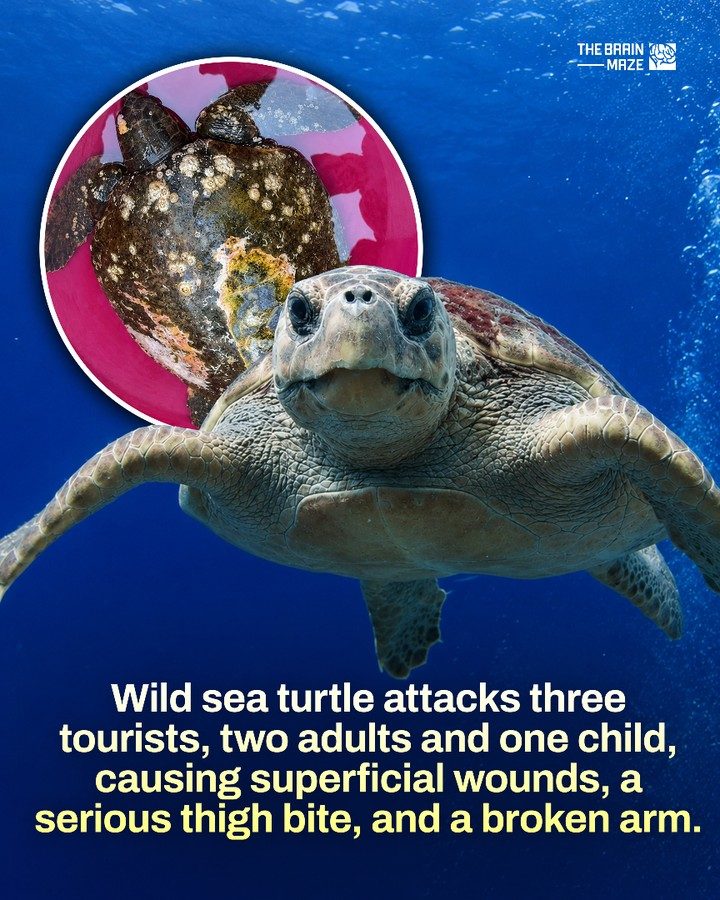
Loggerhead Sea Turtle Attack on Swimmers in Kaštela, Croatia
In July 2026, an unusual event unfolded along the coast of Kaštela, Croatia: a wild loggerhead sea turtle attacked three swimmers, including two adults and one child. The incident, which resulted in injuries ranging from superficial wounds to a deep bite on the thigh and a broken arm, has raised questions and concerns among locals and marine life experts alike.
A loggerhead sea turtle attack is highly unusual. Loggerhead turtles are generally known for their docile nature and typically avoid human interaction. These turtles are part of the Cheloniidae family, known for their powerful jaws and strong shells, but they generally feed on crustaceans, mollusks, and jellyfish, not humans.
These attacks are so rare that experts are still puzzling over the reasons behind this unusual behavior. However, marine biology experts suggest that a series of factors could have contributed to the attack. One possibility is a perceived threat to the turtle's territory or offspring. Loggerhead turtles are known to be territorial and protective, especially during nesting season, which could explain the turtle's aggressive behavior.
Context / Why this matters
The attack highlights the complex relationship between humans and marine life. As coastal tourism and water-based activities continue to rise, encounters between humans and marine animals are becoming more frequent. Understanding the triggers for such aggressive behavior is crucial for both public safety and the conservation of these endangered species.
Loggerhead turtles are listed as vulnerable on the IUCN Red List, and their populations face numerous threats, including habitat loss, pollution, and accidental capture in fishing gear. Incidents like the one in Kaštela underscore the importance of promoting responsible tourism and marine conservation efforts.
Main discussion
Loggerhead Turtle Behavior and Habitat
Loggerhead turtles are one of the seven species of sea turtles found in the world's oceans. They are known for their distinctive reddish-brown shells and powerful jaws. Loggerhead turtles are migratory, traveling long distances between nesting and feeding grounds. Along the coasts of Kaštela, Croatia, loggerhead turtles are known to nest on the sandy beaches, making the area a critical habitat for these endangered creatures.
Factors Contributing to the Attack
Several factors could have contributed to the loggerhead turtle's aggressive behavior. Nesting season is a particularly sensitive time for these turtles, as they become highly protective of their eggs and hatchlings. During this period, turtles may perceive swimmers as threats to their nests, leading to defensive actions.
Additionally, human activities in the area, such as swimming, snorkeling, and boating, can disturb the turtles and their natural behaviors. Noise, vibrations, and the presence of humans can cause stress and alter the turtles' movements and feeding patterns. In some cases, this disturbance can lead to aggressive responses, especially if the turtle feels cornered or threatened.
Practical tips
If you encounter a loggerhead turtle or any sea turtle while swimming or snorkeling, it's essential to follow these guidelines:
- Maintain a Safe Distance: Keep a respectful distance from the turtle to avoid startling it. This will also help you avoid any potential defensive actions.
- Avoid Nesting Areas: During nesting season, be cautious around beaches where turtles are known to nest. Avoid approaching nests and do not disturb any hatchlings.
- Report Sightings: If you encounter a turtle that appears injured or behaving strangely, report it to local wildlife authorities or conservation groups. They can provide the necessary assistance and monitor the turtle's behavior.
- Educate Yourself and Others: Learn more about sea turtles and their habitats. Share this knowledge with friends and family to promote responsible tourism and conservation efforts.
Important takeaways
Loggerhead sea turtle attacks on humans are extremely rare, but incidents like the one in Kaštela highlight the importance of understanding and respecting these marine animals. Human activities can impact turtle behavior, and responsible tourism practices are crucial for both public safety and conservation.
While the exact reason for the attack remains unknown, experts suggest that the turtle may have felt threatened or defensive, possibly due to nesting behaviors. It is essential for swimmers and beachgoers to be aware of their surroundings and respect the natural habitats of these animals.
Conclusion
The Kaštela incident serves as a reminder of the delicate balance between human activities and marine life. Loggerhead turtles, while generally docile, can exhibit defensive behaviors when threatened. Understanding these behaviors and taking responsible actions can help prevent such incidents and promote the conservation of these magnificent creatures. By maintaining a safe distance, avoiding nesting areas, and reporting any unusual behavior, we can enjoy our coastal environments while protecting the animals that call them home.
Watch the Reel
Questions readers ask
What types of injuries did the loggerhead sea turtle inflict on the swimmers in Croatia?
The loggerhead sea turtle attack in Kaštela, Croatia, resulted in a range of injuries, including superficial wounds, a deep bite on the thigh, and a broken arm among the three swimmers.
Why is a loggerhead sea turtle attack so unusual?
Loggerhead sea turtles are typically docile and avoid interacting with humans, making an attack on swimmers highly uncommon. They are known to feed on marine life like crustaceans, mollusks, and jellyfish, rather than humans.
What potential triggers could have caused the loggerhead sea turtle to attack swimmers in Croatia?
Experts suggest several possible triggers for the unusual behavior, including territorial behavior, perceived threats, or potential disturbances in the turtle's environment.
What should you do if you encounter a loggerhead sea turtle while swimming?
If you encounter a loggerhead sea turtle, maintain a safe distance and avoid approaching or harassing the animal. Most loggerheads will not interact with humans, but it is essential to be cautious and respectful of their space.
What is the Cheloniidae family known for?
The Cheloniidae family, which includes loggerhead turtles, is known for its powerful jaws and strong shells. While these turtles have formidable features, they are not typically aggressive towards humans.
How rare are loggerhead turtle attacks on humans?
Loggerhead turtle attacks on humans are extremely rare. These attacks are so uncommon that experts are still studying the factors that might have caused the 2026 incident in Kaštela, Croatia.
What happened during the July 2026 loggerhead sea turtle attack in Kaštela, Croatia?
In July 2026, a loggerhead sea turtle attacked three swimmers in Kaštela, Croatia, causing injuries that ranged from minor to severe. The incident involved two adults and one child, and it prompted concern and curiosity among locals and marine life experts.
Related deep dives
Similar reads based on topic and creator.




Recent articles
Fresh deep dives from the latest Reels we unpacked.




Comments
Be the first to comment.