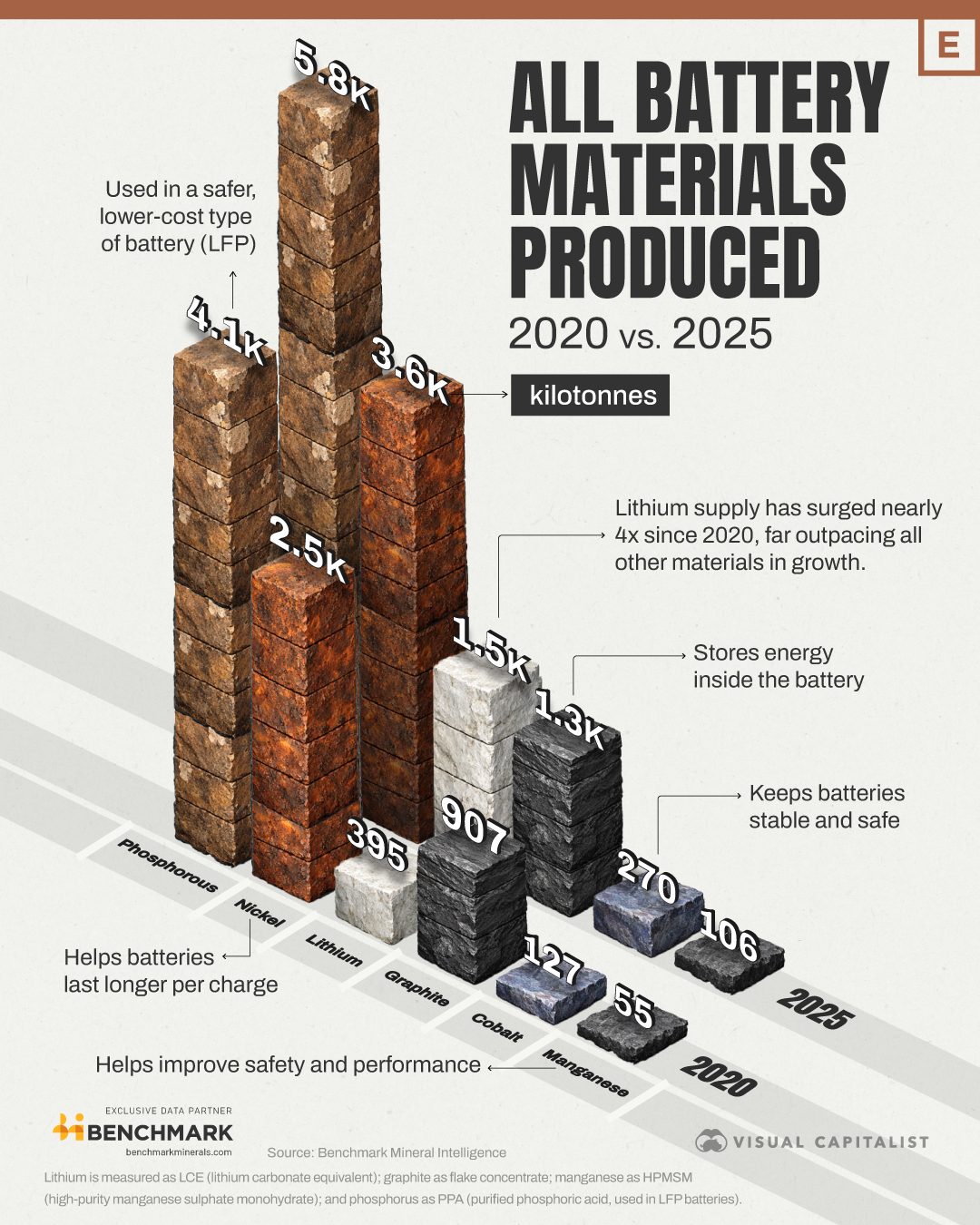
Lithium Battery Materials Growth
Lithium production has quadrupled between 2020 and 2025. This dramatic increase is driven by the growing demand for lithium-ion batteries, particularly in electric vehicles (EVs) and energy storage systems. The shift towards lithium iron phosphate (LFP) batteries is also reshaping the demand landscape, with a notable increase in the use of phosphorus and a decrease in nickel-heavy chemistries.
Context / Why This Matters
The surge in lithium production is a clear indicator of the global transition towards clean energy and the electrification of transportation. Lithium is a critical component in rechargeable batteries, powering everything from smartphones to electric cars. The materials used in these batteries—such as lithium, graphite, cobalt, manganese, phosphorus, and nickel—are essential for their performance, longevity, and safety. Understanding the growth and dynamics of these materials provides valuable insights into the future of battery technology and its role in the energy transition.
Main Discussion
Lithium: The Key Driver
Lithium supply has surged nearly 4x since 2020, far outpacing all other materials in growth. This surge is driven by the increasing demand for lithium-ion batteries, which are crucial for the development of electric vehicles (EVs) and renewable energy storage solutions. Lithium is measured as lithium carbonate equivalent (LCE), a standard unit for lithium content in various compounds.
Other Essential Materials
While lithium is the star of the show, other materials also play critical roles in battery performance.
Graphite
Graphite is a vital component in the anode of lithium-ion batteries. It helps store energy and is measured as flake concentrate. The production of graphite has also seen significant growth, although not as dramatic as lithium. Graphite's role in extending battery life and improving safety makes it an indispensable material in modern batteries.
Cobalt
Cobalt is another crucial material, often used in the cathode of lithium-ion batteries. It helps improve battery performance and longevity. However, the supply of cobalt has not seen the same level of growth as lithium, partly due to ethical and environmental concerns related to its mining.
Manganese
Manganese is used in various battery chemistries, including lithium-manganese-oxide (LMO) batteries. It is measured as high-purity manganese sulfate monohydrate (HPMSM). Manganese contributes to battery safety and performance, making it an important material in the battery supply chain. However, its production has not grown as rapidly as lithium.
Phosphorus
Phosphorus, measured as purified phosphoric acid (PPA), is a key component in LFP batteries. The rise of LFP batteries has shifted demand towards phosphorus, reducing the reliance on nickel-heavy chemistries. This shift is driven by the need for more sustainable and cost-effective battery solutions.
Nickel
Nickel is a critical material in nickel-cobalt-manganese (NCM) batteries, which are widely used in EVs. However, the shift towards LFP batteries has led to a decrease in nickel demand. Nickel contributes to battery energy density and performance, but its environmental and ethical concerns have prompted a search for alternatives.
Practical Tips
For anyone interested in the battery industry, whether as an investor, engineer, or policymaker, here are some practical tips:
Stay Informed
The battery industry is rapidly evolving, with new materials and technologies constantly emerging. Staying informed about the latest trends and developments can help you make better decisions.
Diversify Your Portfolio
Investing in a diversified portfolio of battery materials can help mitigate risks. While lithium is currently the star, other materials like graphite, manganese, and phosphorus are also essential for battery performance.
Consider Sustainability
The ethical and environmental concerns surrounding the mining of materials like cobalt and nickel are driving the shift towards more sustainable alternatives. Consider the sustainability of your investments and supply chain decisions.
Monitor Market Trends
The demand for battery materials is closely tied to market trends in EVs and energy storage. Monitoring these trends can help you anticipate changes in material demand and adjust your strategies accordingly.
Important Takeaways
The growth of key battery materials between 2020 and 2025 highlights the rapid transformation of the energy landscape. Lithium's surge is particularly notable, driven by the increasing demand for EVs and renewable energy storage. Other materials like graphite, manganese, phosphorus, and nickel also play crucial roles, each contributing to different aspects of battery performance.
The shift towards LFP batteries is reshaping the demand landscape, with increased use of phosphorus and decreased reliance on nickel. This trend is driven by the need for more sustainable and cost-effective battery solutions.
Conclusion
The future of battery technology is closely tied to the production and availability of key materials. Lithium's quadrupled production and the shift towards LFP batteries underscore the dynamic nature of this industry. By staying informed, diversifying investments, considering sustainability, and monitoring market trends, stakeholders can navigate this rapidly evolving landscape with greater confidence. The growth of these materials is not just a story of supply and demand; it's a testament to the world's transition towards a cleaner, more sustainable energy future.
Watch the Reel
Questions readers ask
What is driving the surge in global lithium demand?
The rapid expansion of electric vehicles (EVs) and energy storage systems is the primary driver. This is due to the increasing popularity of lithium-ion batteries, including lithium iron phosphate (LFP) chemistries, which are becoming more prevalent in the market.
How has lithium production changed from 2020 to 2025?
Lithium production has quadrupled between 2020 and 2025. This significant increase is a direct response to the growing demand for lithium-ion batteries, particularly in the electric vehicle industry and energy storage systems.
What is the impact of the shift towards lithium iron phosphate (LFP) batteries?
The shift towards LFP batteries is reshaping the battery materials market. There is a notable increase in the use of phosphorus and a decrease in nickel-heavy chemistries, such as nickel manganese cobalt (NMC) batteries.
What role does lithium play in energy storage systems?
Lithium is a critical component in rechargeable batteries, which are essential for energy storage systems. These systems are crucial for balancing the power grid and storing energy generated from renewable sources, such as solar and wind.
What does the surge in lithium production indicate about the global energy transition?
The surge in lithium production indicates a global transition towards clean energy and the electrification of transportation. This shift is driven by the increasing adoption of electric vehicles and the need for efficient energy storage solutions.
What are the key materials used in lithium-ion batteries besides lithium?
Besides lithium, key materials include graphite, cobalt, and manganese. Graphite is used in the anode, while cobalt is a key component in the cathode, often combined with other metals like nickel and manganese to form mixed metal oxides.
How is the lithium battery supply chain evolving to meet increased demand?
The lithium battery supply chain is expanding rapidly to meet the increased demand. This includes the development of new mining operations, refining facilities, and battery manufacturing plants to ensure a steady supply of lithium and other critical materials.
Related deep dives
Similar reads based on topic and creator.


Recent articles
Fresh deep dives from the latest Reels we unpacked.




Comments
Be the first to comment.